



Flashpoint Hormuz: U.S. Forces Launch Twin Strikes Against Iranian Assets as Chokepoint Standoff Intensifies
A Precision Engagement: High-Tech Interceptions and Aerial Strikes in Bandar Abbas
For the second time in a high-stakes seventy-two-hour window, the United States military executed a series of calculated, preemptive self-defense strikes against Iranian assets in the volatile coastal regions of southern Iran. This sudden escalation reached a critical nexus on Wednesday in the narrow, strategic waters of the Strait of Hormuz, where American forces successfully intercepted and destroyed four one-way attack drones launched by Iranian military units. According to a senior United States defense official speaking on the condition of anonymity to discuss highly sensitive operational details, these unmanned aerial vehicles (UAVs) posed an immediate, existential threat not only to the heavy concentration of American naval vessels patrolling the region but also to the highly restricted, fragile commercial maritime traffic still attempting to navigate the blockaded corridor. Shortly after these airborne threats were neutralized, American warplanes turned their precision munitions toward the Iranian coast, executing a devastating airstrike against an active drone ground-control station located in the strategic port city of Bandar Abbas. This countermeasure was launched mid-preparation, successfully neutralizing the facility just moments before operators could launch a fifth attack drone into the congested airspace. The strikes highlight a significant shift toward active, predictive defense by allied forces, as they grapple with increasingly aggressive asymmetric tactics designed to restrict access to one of the most vital naval passageways on the globe.
Sinking the Threat: The Monday Interdiction of Speedboats and Naval Mines
This mid-week kinetic encounter followed an equally intense engagement on Monday, representing a mounting campaign of deterrence by U.S. Central Command. During that initial confrontation, United States fighter jets targeted and sank two heavily armed speedboats operated by the Islamic Revolutionary Guard Corps (IRGC) as they actively attempted to deploy underwater contact mines along the shallow, congested shipping lanes of the Strait of Hormuz. Captain Tim Hawkins, a veteran spokesman for U.S. Central Command, confirmed the engagement in a detailed public release, emphasizing that these maritime interdictions were executed immediately after intelligence analysts detected a rapid surge in threatening military postures along the Iranian coastline over the preceding twenty-four hours. Naval mines represent an insidious, non-discriminatory danger to modern maritime security, capable of devastating commercial supertankers and military vessels alike with little to no warming. By sending specialized warplanes to confront the IRGC fast-attack craft before they could establish a subterranean minefield, the United States demonstrated a clear operational redline. This decisive maritime engagement underscored the intense nature of the current regional standoff, where the deployment of seemingly low-tech naval weaponry carries the imminent risk of igniting a broader, highly destructive conventional war between Washington and Tehran.
An Iron Ring: Enforcing the Naval Blockade and Braving Anti-Air Defenses
In the background of these sharp, localized clashes lies a massive, unprecedented deployment of allied naval power: a formidable fleet of nearly two dozen United States Navy warships currently arrayed across the strategic expanses of the Gulf of Oman and the Arabian Sea. This immense naval armada is tasked with a monumental strategic directive—enforcing a comprehensive, rigorous maritime blockade designed to choke off the flow of illicit weapons, oil, and contraband entering or leaving Iranian ports. The environment in which these crews operate is incredibly tense; on Monday, Iran launched a salvo of one-way attack drones directly into the path of patrolling allied aircraft and the warships guarding the mouth of the Persian Gulf. Simultaneously, U.S. military intelligence monitored a dangerous spike in electronic activity at several of Iran’s highly advanced, Russian-supplied surface-to-air missile (SAM) batteries positioned along the rocky cliffs overlooking the Strait of Hormuz. The tactical activation of these air-defense radars signaled a clear intent to target land-based and carrier-borne U.S. strike fighters, which have been operating around the clock to maintain the integrity of the blockade. This multi-domain pressure campaign forces American commanders to make split-second, life-or-death decisions as they balance the imperative of defensive vigilance with the terrifying potential of triggering a wider regional conflagration.
The Vital Chokepoint: The Economic Fallout of the Blockaded Strait
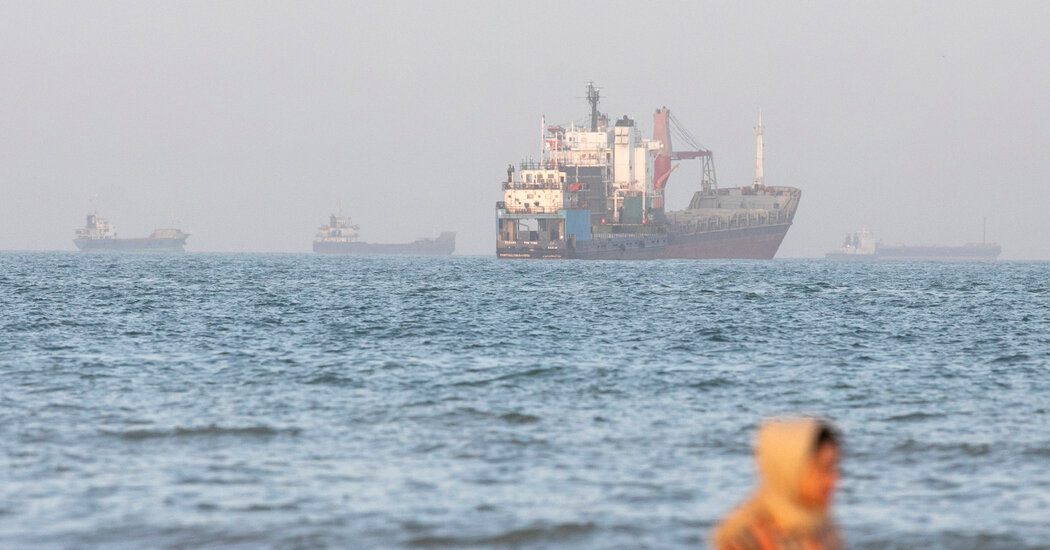
The geopolitical gravity of this ongoing military confrontation is directly tied to the geographic reality of the Strait of Hormuz, a perilous naval chokepoint that historically carried roughly twenty percent of the global daily supply of petroleum before the outbreak of hostilities. This narrow corridor, measuring just twenty-one miles wide at its tightest point, serves as the singular maritime superhighway connecting the massive oil fields of the Persian Gulf to the energy-hungry economies of Europe, Asia, and North America. In the wake of Iran’s highly effective naval blockade, this once-bustling artery of global commerce has been reduced to a ghost-choking corridor, with international shipping conglomerates largely diverting their multi-million-dollar cargo fleets around the southern tip of Africa to avoid the threat of rogue drone strikes and hidden sea mines. The economic reverberations of this blockade have been felt in every corner of the global marketplace, driving maritime insurance premiums to historic heights, disrupting fragile post-pandemic supply chains, and causing severe fluctuations in international energy futures. For the United States and its Western allies, maintaining the free flow of commerce through this waterway is not merely a regional security objective; it is a vital national security interest, as any prolonged closure of the strait threatens to trigger a devastating, systemic contraction of the global financial system.
Brinkmanship and Diplomacy: Testing the Boundaries of a Fragile Peace
As the smoke clears from the latest series of precision airstrikes, military analysts and intelligence officials in Washington are working to decode the strategic calculations behind the Islamic Revolutionary Guard Corps’ aggressive posture. A prominent consensus emerging among U.S. intelligence circles suggests that Iran’s hardline military commanders may be conducting high-stakes tests to gauge the limits and resolve of the United States, particularly in light of a highly sensitive, fragile potential diplomatic agreement that President Donald J. Trump has suggested could end the war and facilitate the reopening of the Strait of Hormuz. In the complex lexicon of Middle Eastern diplomacy, military escalation is frequently utilized as a crude form of leverage, designed to project strength on the international stage while signaling to domestic audiences that Tehran will not be intimidated by Western pressure. By aggressively deploying maritime mines, activating anti-aircraft systems, and launching sophisticated drone swarms in the immediate vicinity of American ships, the IRGC is likely attempting to establish a new operational status quo—carving out additional room to navigate and negotiate before the ink dries on any formal multi-lateral agreement. This high-wire act of geopolitical brinkmanship, however, carries an incredibly narrow margin for error, as a single miscalculated strike could instantly render any nascent diplomatic progress completely obsolete.
The Fragile Architecture of Maritime Deterrence
The unfolding drama off the coast of southern Iran highlights a profound, transformative epoch in modern naval warfare, where advanced unmanned aerial systems and low-cost asymmetric tactics are increasingly challenging the traditional hegemony of massive, multibillion-dollar carrier strike groups. As U.S. Central Command continues to walk a razor-thin line between active deterrence and direct escalation, the international community watches with mounting apprehension, fully aware that the stability of global energy markets remains tethered to the fragile peace of these contested waters. The success of the recent American self-defense strikes in disabling drone launch facilities in Bandar Abbas and neutralizing mining operations mid-stream highlights the unmatched technical precision of modern U.S. military intelligence. Yet, as long as the underlying geopolitical grievances remain unresolved, and the physical blockade of the Strait of Hormuz persists, this shadow war is bound to keep breaking out into open, dangerous conflict. The ultimate path forward will require not only unwavering military vigilance and tactical superiority on the high seas, but also a sophisticated, deeply coordinated diplomatic strategy capable of addressing the complex web of regional anxieties, trade disputes, and sovereign ambitions that continue to fuel this volatile Middle Eastern furnace.