


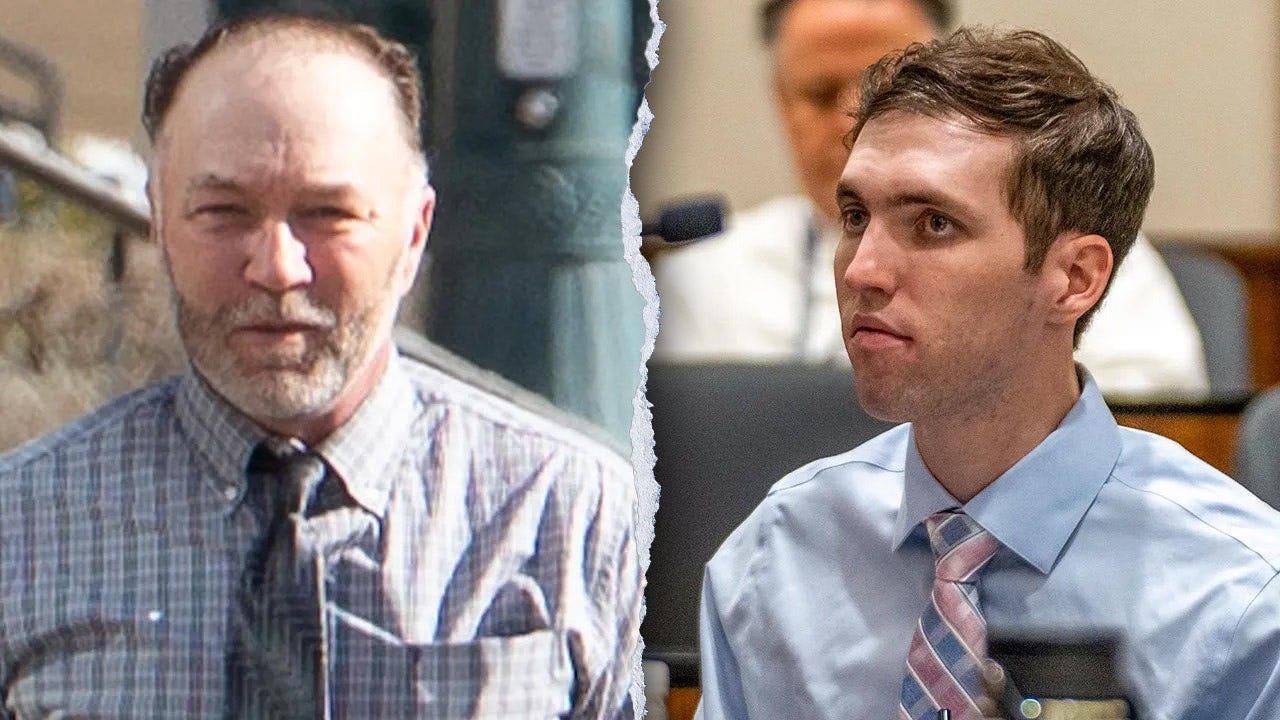
In the wake of a crime that has sent shockwaves through the conservative movement, Matthew Robinson, a local Utah mason, found himself back at work just days after sitting through a grueling preliminary hearing for his son, Tyler. Tyler Robinson stands accused of the high-profile assassination of conservative icon Charlie Kirk, a case that has thrown this quiet family into a harsh national spotlight. Despite the explosive evidence laid out by prosecutors, Matthew has chosen to stand resolutely by his son. His dedication was evident from the very beginning of this tragedy; it was Matthew who guided Tyler to the police station to surrender after the young man allegedly confessed to the slaying. Yet, as the family grapples with this personal nightmare, the public is left to grapple with the soaring financial cost of the legal fallout, which experts warn could eventually burden Utah taxpayers with a bill exceeding $10 million.
For Matthew, life has become a surreal balancing act of court dates and blue-collar labor. Neighbors have watched him quietly shuttle between his $600,000 home in southern Utah and his local masonry business, trying to maintain some semblance of normalcy in a life that has been completely upended. Because the masonry business relies almost entirely on word-of-mouth referrals and deeply rooted community trust, many wondered if the family’s association with such a notorious crime would destroy Matthew’s livelihood. Remarkably, the community has largely rallied around the father; colleagues and clients have chosen to separate the actions of the son from the character of the father, allowing Matthew’s business to stay afloat. On the rare occasions Matthew speaks to his employees or clients, he fiercely guards his privacy, seldom mentioning the tragedy or his son’s impending trial as he focuses on his day-to-day work.
This is not the first time Matthew Robinson’s business practices have faced intense scrutiny, though past controversies pale in comparison to his family’s current crisis. Court documents from a 2014 lawsuit reveal a painful family rift where Matthew was sued by his own brother and the co-founder of their company. The lawsuit accused Matthew of embezzling $100,000 over a two-year period, alongside allegations that he hid crucial financial records and bartered business services in exchange for personal favors. Though the brothers eventually resolved their bitter legal dispute through a confidential settlement, the re-emergence of these old allegations has added another layer of complexity to the public’s perception of a family now thrust into the center of a historic criminal trial.
As the state prepares for a lengthy and high-stakes prosecution, the escalating cost of defended representation has become a major point of contention for Utah residents. Tyler Robinson’s defense team, which is being funded by the state, recently requested an additional $2 million in government funding to prepare their case. Legal analysts and financial experts warn that this is just the tip of the iceberg, estimating that the total cost of defense fees, expert witnesses, and court administration could easily balloon past the $10 million mark before a verdict is reached. This staggering financial projection has sparked intense debate over the limits of taxpayer-funded legal aid, especially when the accused is charged with a crime of such political significance.
Meanwhile, inside the courtroom, prosecutors have begun laying out a mountain of devastating evidence that paints a chilling picture of the murder’s aftermath. During the recent preliminary hearing, the state played a video-recorded interview with Lance Twiggs, Tyler Robinson’s former roommate and romantic partner. Twiggs recounted the terrifying moments he realized the man he loved was allegedly a killer. This testimony was bolstered by a series of text messages retrieved by investigators, which revealed a heartbreaking and incriminating exchange between the two men as Tyler was actively trying to evade law enforcement.
In these text messages, Tyler attempted to reassure Twiggs, writing that he was stuck in Orem, Utah, but hoped to return home soon after retrieving his rifle. He wrote, “To be honest I had hoped to keep this secret till I died of old age. I am sorry to involve you.” When a panicked Twiggs responded by asking, “You weren’t the one who did it right????”, Tyler allegedly sent back a brief, devastating admission: “I am. I’m sorry.” As the trial looms, these intimate, electronic confessions remain the cornerstone of the prosecution’s case, leaving a father to pick up the pieces of his shattered family business while his son faces the very real possibility of spending the rest of his life behind bars.