


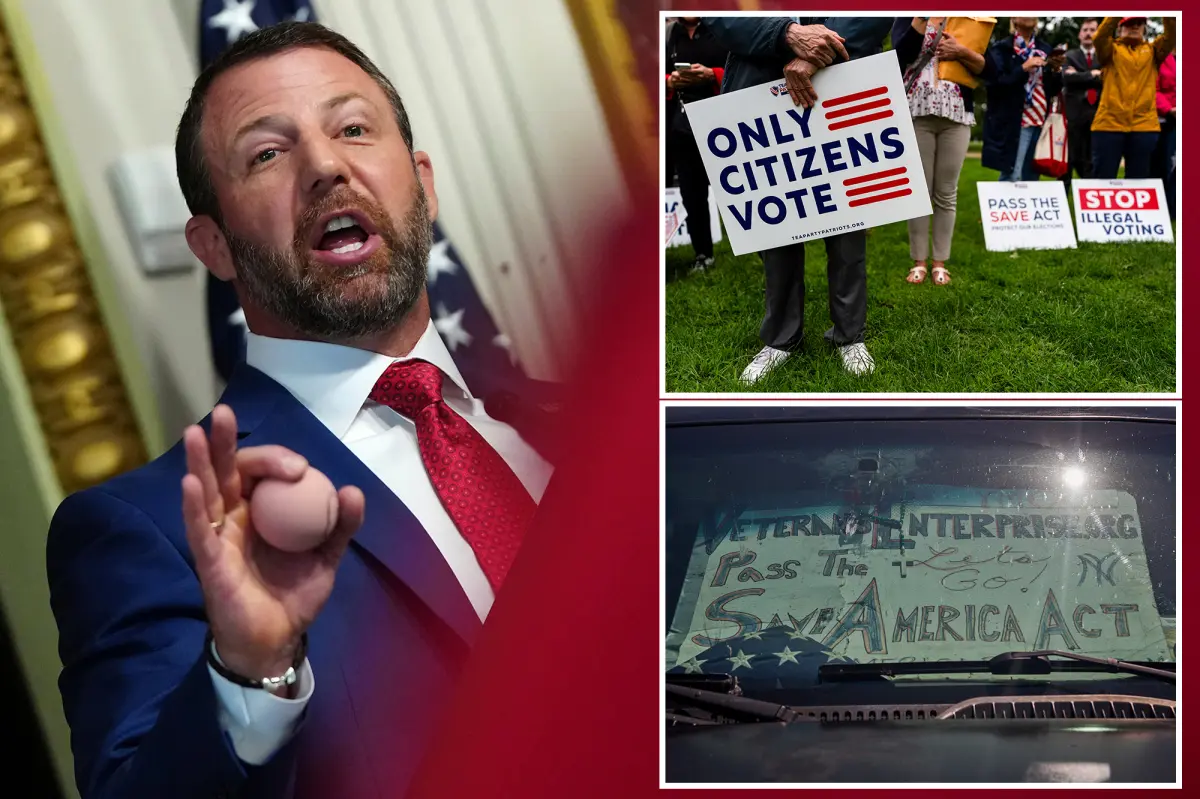
In an era of intense political division and escalating rhetoric surrounding our democratic institutions, the federal government is taking a much firmer, more muscular approach toward how states conduct and secure their elections. Standing at the forefront of this initiative is Homeland Security Secretary Markwayne Mullin, who delivered a stark and uncompromising warning to state election officials across the country on Friday. Mullin made it abundantly clear that the Department of Homeland Security (DHS) is no longer suggesting best practices, but is instead mandating them. In a move that signals a massive shift toward federal oversight of local voting systems, Mullin warned that non-compliance will carry severe financial consequences. For states that choose to ignore these newly established security benchmarks, the lifeblood of their electoral infrastructure—federal grants and crucial funding reimbursements—will be abruptly and entirely cut off.
The core of this aggressive new strategy lies in tying federal funding directly to compliance, hitting states where it hurts most: their budgets. Running elections is an incredibly expensive endeavor, requiring sophisticated technology, specialized staffing, and immense logistics, all of which are heavily subsidized by the federal government. Mullin outlined these stakes in no uncertain terms during his announcement, explaining that DHS is actively transforming their security enhancements into mandatory protocols. The message is clear: if states expect federal taxpayers to foot the bill for their electoral operations, they must play by the federal government’s rules. This targeted use of the federal purse strings is a powerful lever, designed to force quick compliance from state officials who might otherwise resist federal influence in what has historically been a state-controlled domain.
Under these strict new mandates, states will be required to execute specific, rigorous security measures designed to bolster public confidence in the electoral system. Chief among these requirements is a comprehensive upgrade to voting machine security, ensuring that the hardware and software used to tally votes are completely shielded from both physical tampering and sophisticated cyberattacks. Additionally, the federal government is demanding that states actively maintain and clean up their voter registration databases. This means states must implement aggressive procedures to scrub ineligible names from voter rolls, specifically targeting individuals who are not American citizens, those who have passed away, and anyone else who is no longer legally authorized to cast a ballot in that jurisdiction. Secretary Mullin and his allies argue these steps are vital to ensuring the integrity of every individual vote.
This development is already sending shockwaves through the political landscape, igniting a fierce debate over the constitutionally protected balance of power between local governments and Washington, D.C. Traditionally, the United States Constitution delegates the primary responsibility of organizing and administering elections to individual states, a decentralized system meant to prevent any single entity from controlling the democratic process. Critics of Mullin’s announcement are quick to label it as an unprecedented executive overreach that tramples on states’ rights and local autonomy. Opponents argue that by threatening to withhold vital funding, the federal government is effectively holding local election officials hostage, forcing them to adopt one-size-fits-all policies that may not fit the unique needs of their local communities.
Conversely, proponents of the DHS directive argue that centralized, mandatory standards are the only logical way to defend the nation’s critical infrastructure. In their view, since a vulnerability in one state’s voting system can undermine the integrity of an entire federal election, national security must take precedence over regional preferences. Supporters maintain that cleaning voter registration lists and hardening voting machines against foreign and domestic interference are common-sense measures that every citizen, regardless of their political affiliation, should enthusiastically support. From this perspective, the federal government has not only the right but the absolute duty to ensure that public funds are only used to support secure, transparent, and highly protected voting environments.
As this situation continues to unfold rapidly, it is poised to become a central battleground in the broader, ongoing fight over the future of American democracy. This developing story will undoubtedly spark legal challenges, as defiant states test the constitutional limits of the federal government’s authority to withhold promised election funds. The outcome of this high-stakes power struggle could fundamentally reshape how American elections are funded, secure, and run for generations to come. With both federal officials and state leaders digged into their respective positions, the nation will be watching closely to see how this dramatic clash between national security and state sovereignty ultimately plays out in courts and polling places across the country.