

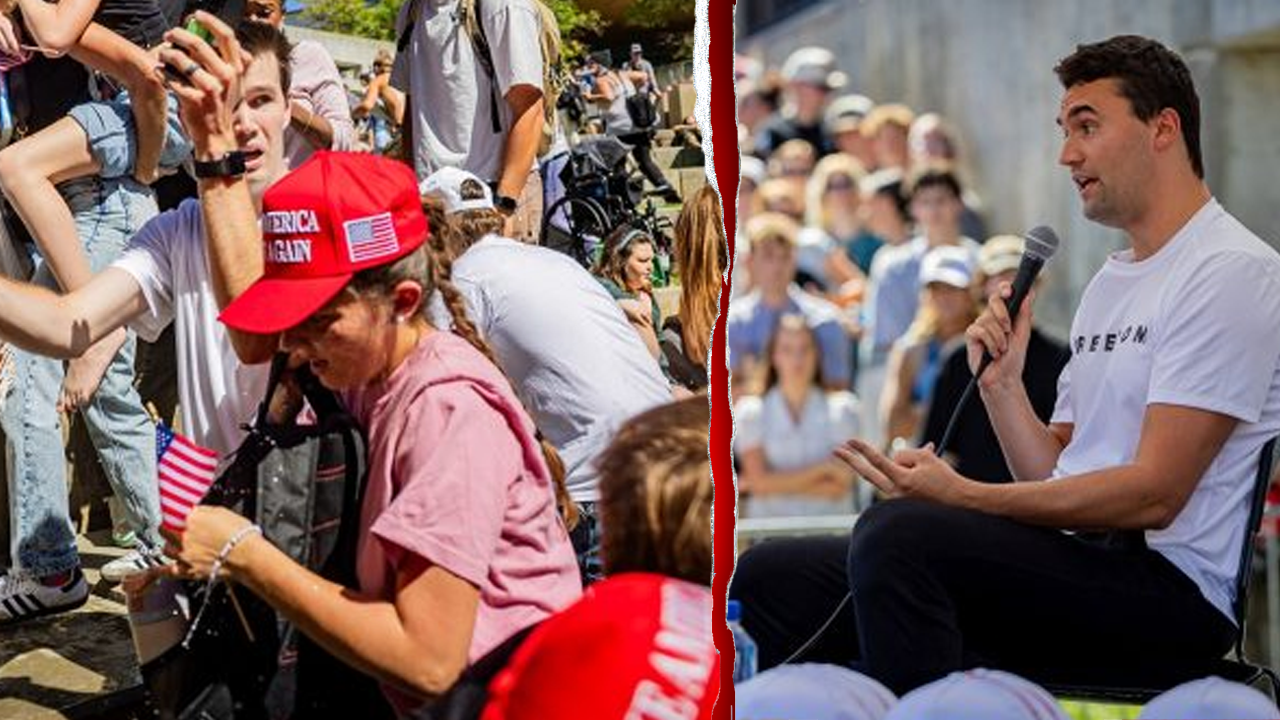
What was meant to be a routine Turning Point USA event at Utah Valley University on September 10, 2025, ended in sudden, unthinkable tragedy. Charlie Kirk, the 31-year-old conservative activist and founder of the organization, was shot and killed in what authorities are prosecuting as a targeted assassination. This week, the heavy emotional toll of that day hung over a Provo courtroom during the preliminary hearing for 23-year-old Tyler Robinson, the man accused of pulling the trigger. For Kirk’s grieving family, including his widow Erika, the hearing marked an agonizing milestone: their first time coming face-to-face with the man accused of shattering their lives, all while listening to the highly clinical, yet deeply personal, evidence of how the crime was allegedly carried out.
At the heart of the prosecution’s case is a trail of physical evidence that directly links Robinson to the crime scene, presented in meticulous detail by law enforcement and forensic experts. Authorities recovered a Mauser 98 bolt-action rifle, retrofitted to fire .30-06 rounds, which was found wrapped in a dark-colored towel in the woods near the university campus. Ballistics testing confirmed these rounds matched the bullet fragments recovered during Kirk’s autopsy. Nearby, on the rooftop of the campus’ Losee Center—the suspected sniper’s perch overlooking the event—investigators also recovered a screwdriver. Both the towel used to shroud the weapon and the screwdriver became key pieces of the puzzle when forensic scientists detected DNA on them, steering the investigation straight toward Robinson and his immediate social circle.
During Tuesday’s testimony, the courtroom heard from FBI forensic analyst Amanda Bakker and state investigators regarding the DNA profiles extracted from these items. The genetic material did not belong to Robinson alone; it also carried the DNA of Lance Twiggs, Robinson’s former roommate and romantic partner. Testing revealed Robinson as the majority contributor of the DNA on both the towel and the screwdriver, while Twiggs was identified as the minority contributor. Twiggs, who is actively status-cooperating with law enforcement and has not been charged with any crime, reportedly received a handwritten confession and text messages from Robinson. For the prosecution, the presence of both men’s DNA on the tools of the crime does not dilute Robinson’s culpability; instead, it anchors the weapon directly to his household and strengthens the chain of custody.
The atmosphere inside the courtroom was a study in contrasts, highlighting the profound human weight of the legal proceedings. As defense attorney Michael Burt extensively questioned forensic experts about complex DNA charts and markers, Erika Kirk leaned forward in the gallery, her head tilted, processing every technical detail about the instrument that took her husband’s life. At times, the strain was visible as she shook her head during the grueling cross-examination. Meanwhile, the accused sat nearby, occasionally fidgeting, while one of his own family members yawned in the gallery. The gravity of the potential outcome—an aggravated murder charge that carries the death penalty—loomed large over everyone in the room, balanced by brief, human moments of levity when the judge and attorneys sparred over the repetitive nature of the technical questioning.
With the prosecution presenting surveillance footage of Robinson’s Dodge Challenger moving around campus on the day of the shooting, alongside the forensic evidence and the defendant’s own alleged written confessions, legal experts view the state’s case as remarkably robust. In a preliminary hearing, prosecutors only need to establish probable cause to advance the case to a full trial, a threshold that observers say will almost certainly be met. Maryland attorney Randolph Rice, speaking on the strength of the state’s presentation, remarked that “barring the prosecutor somehow forgetting how to get to the courthouse,” there is virtually no chance the state fails to secure a trial.
Should the judge rule that there is sufficient probable cause at the conclusion of this week’s hearings, Tyler Robinson will finally be asked to enter a formal plea to charges of aggravated murder. For the public, the case represents a chilling flashpoint of political violence on a college campus. But for the family of Charlie Kirk, sitting quietly in the Provo courtroom and taking notes, the legal process is a painful, necessary journey toward accountability, transforming abstract forensic science and courtroom debate into a quest for justice for a life cut tragically short.