






Paragraph 1: The Oppressive Heat of a Monday Afternoon and the Echo of a Child’s Cry
The air in the Atlanta apartment complex hung thick and heavy, a suffocating blanket of late-summer humidity that made every breath feel labored. Meteorologists had recorded the temperature at a blistering 97 degrees Fahrenheit, and the asphalt beneath the officers’ boots seemed to shimmer with a dangerous, iridescent heat. But for the Atlanta Police Department, the physical discomfort was secondary to a far more urgent, visceral ache: the gut-wrenching fear that two tiny children, a four-year-old girl named Zola Cooper and her eleven-month-old baby sister, Norah, were somewhere out in this sweltering chaos, lost, hurt, or worse. The clock had been ticking mercilessly since Saturday night, a terrifying void of nearly forty-eight hours where the girls had simply vanished. Their mother, Elica Redding, had been consumed by a frenzy of panic, calling every hospital within driving distance, conjuring horrific scenarios with every unanswered ring. As the search team methodically combed the sprawling complex, their eyes scanned the shadows beneath stairwells and the spaces between parked cars, but their ears were their most valuable tool. It was in that profound silence, broken only by the drone of cicadas and distant traffic, that one officer froze. A faint, desperate sound cut through the heat—a wail, thin and reedy, the unmistakable cry of an infant. It was coming from a white trailer, beat-up and inconspicuous, nestled deep within the complex, its windows dark and its metal shell baking in the sun. The seemingly abandoned trailer had become a tomb of secrets, holding the answers to a family’s nightmare.
Paragraph 2: A Mother’s Trust, A Friend’s Betrayal, and the Fabrication of a Hospital Visit
To understand the sheer terror of that moment, one must rewind to the seemingly ordinary Saturday evening that started it all. At around 6 p.m., Elica Redding had made a decision that any parent makes countless times: she needed a few hours to herself, a chance to go out to dinner and decompress. She entrusted her two daughters to Lakesha Brown, a woman she considered a friend. Their connection had been forged in the digital trenches of a Facebook group designed for pregnant women, a modern-day support system where strangers become confidants and offer practical help. Brown had positioned herself as a reliable babysitter, a warm presence offering a helping hand to overwhelmed mothers. For a year, this arrangement had worked without issue, the trust built on a foundation of shared experiences and friendly smiles. But on that Saturday night, that foundation crumbled. At around 10 p.m., four agonizing hours after dropping off her children, Redding’s phone buzzed with a terrifying update. Brown claimed there was an accident. She alleged that she was taking the girls to a hospital. When Redding desperately asked which one, Brown’s responses became vague, evasive, and then—silence. The phone went dead, and calls went straight to voicemail. Fueled by a primal maternal dread, Redding dialed 911. Her voice, raw and breaking, can be heard in the dispatch audio, begging for help while explaining that she had called every medical facility in the area, and none of them had her daughters. The lie about the accident was just the tip of the iceberg; the reality was that a woman she had trusted with her entire world had seemingly vanished into the night with Zola and Norah, leaving behind a trail of broken promises and escalating panic.
Paragraph 3: The Climb, the Lock, and the Brutal Sight Within the Trailer
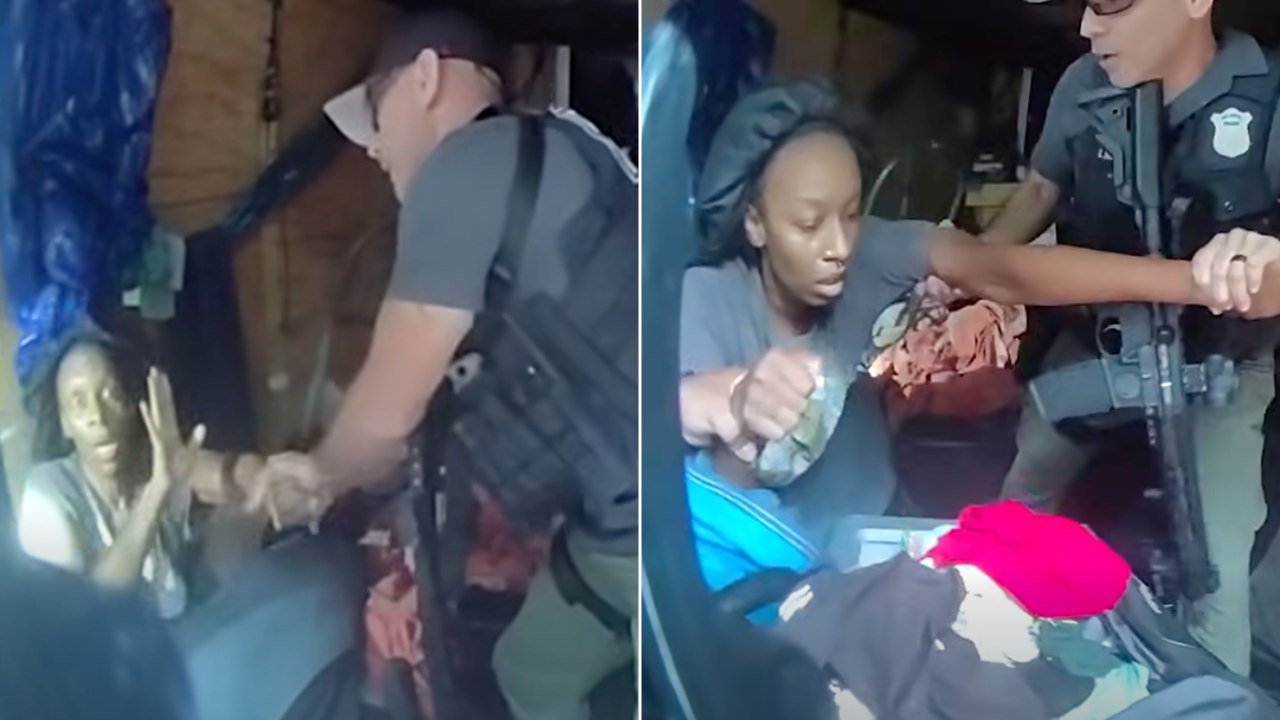
For two days, the search consumed the city. Detectives worked around the clock, following leads, analyzing traffic cameras, and interviewing neighbors. The case had shifted from a missing persons report to a grim kidnapping investigation, sparking an AMBER Alert and a community-wide effort to find the girls. As Monday afternoon wore on and the heat reached its peak, the search narrowed to the apartment complex. It was a location that had been canvassed, but perhaps not thoroughly enough. As the officers swept through the parking lot, the sound of the crying baby cut through the white noise of the city, a beacon in the oppressive heat. Homing in on the sound, they converged on the white trailer. It was locked, sealed tight against the elements. The body camera footage captured the frantic urgency of the moment. There was no time to wait for a locksmith. Spotting a heavy concrete cinder block nearby, the officers heaved it against the lock, the dull thud echoing in the stifling air. When that failed to give way completely, they retrieved bolt cutters, the metal shears gnawing through the hasp with a screech of resistance. The door swung open, and the blast of heat that hit them was like opening an oven. Inside, the trailer was a cluttered, chaotic mess that offered no respite from the heat—there was no air conditioning, only a single overhead ventilation fan whirring uselessly. And there, in the dim, stifling interior, they found the children. Zola and Norah were crying, their faces flushed from the heat and fear. Standing nearby, seemingly unable to move, was 42-year-old Lakesha Brown. For the officers, the sight of those two vulnerable children, held against their will in such brutal conditions, transformed professional duty into a deeply personal, furious urgency to get them out safe.
Paragraph 4: Rescue, Reunion, and the Weight of Cold, Hard Charges
The body camera footage showcases the raw, visceral relief of a successful rescue. Officers scooped the girls up, their tiny bodies trembling, and carried them out into the comparatively fresher air of the late afternoon. The transition from the dark, suffocating trailer to the sunlit parking lot must have felt like a rebirth. The police wasted no time in reuniting the sisters with their mother, Elica Redding. Despite nearly two days of unimaginable stress and the deplorable conditions they had survived, police confirmed that the children were found in “good health,” a testament to their resilience and the swift action of the rescue team. The emotional reunion between Redding and her daughters was undoubtedly a scene of tears, hugs, and profound gratitude. Meanwhile, the perpetrator of this nightmare, Lakesha Brown, was taken into custody without further incident. The charges brought against her were swift and severe: two counts of kidnapping and two counts of first-degree cruelty to children. The cruelty charge speaks to the specific, dangerous conditions she subjected the children to—locking them in a stifling metal box with no water, no air conditioning, and no way out, all while their mother was driven to the brink of madness with worry. The case had been brought to a swift resolution, but the trauma of the incident would linger for the family long after the headlines faded.
Paragraph 5: Unmasking the Babysitter: A Dark History and a Deeper Pattern of Predation
As the initial shock of the rescue began to subside, a darker, more disturbing picture of Lakesha Brown began to emerge from the shadows. When investigators ran a comprehensive background check on the newly arrested suspect, they uncovered an active arrest warrant from a state away. The warrant, issued in Alabama, was for failing to appear in court regarding a completely separate and chilling child kidnapping case that had occurred in August 2021. In that harrowing incident, a newborn baby—just four days old—had been taken. Brown had been a person of interest in that case, having allegedly denied any involvement, yet authorities had discovered that she had posted photographs of the missing newborn to her own social media accounts. The similarities between the two cases were glaringly obvious—a vulnerable infant, a mother’s trust, and a suspect who seemed to have a disturbing fascination with taking other people’s children. The current kidnapping, it seemed, was not a one-off, desperate act, but rather a potential pattern of predation. This revelation deepened the horror of the Atlanta incident. The family of Zola and Norah had narrowly escaped a nightmare that they hadn’t even known they were walking into. It turned a simple violation of trust into a chilling reminder that predators often wear the mask of a friendly, helpful neighbor—a lesson painfully learned by Redding, who had merely sought community support in a Facebook group for pregnant women, only to invite a potential monster into her life.
Paragraph 6: The Fragility of Trust and the Resilience of Innocence
In the quiet aftermath of the rescue, as the Cooper sisters slept safely in their own beds, the city of Atlanta exhaled a collective sigh of relief, yet a somber reflection hung in the air. The story of Zola and Norah Cooper is a powerful, dual-edged narrative. On one hand, it is a triumphant tale of heroic police work, of officers who refused to give up and listened to the faint cries of a baby in the heat. It is a story of a mother’s relentless fight against despair and the unwavering belief that she would see her children again. But on the other hand, it is a chilling cautionary tale about the 21st-century reality of modern parenting, where trust is often built through screens and virtual connections. Elica Redding did what many lonely or overwhelmed parents do—she sought a village, and found a wolf in sheep’s clothing. Lakesha Brown represents a terrifying archetype: the friendly helper who hides a cold, calculated criminal mind. Yet, the true heroes of this story remain the children, who emerged from a sweltering metal trap into the arms of their mother, their hearts still beating, their spirits intact. While Lakesha Brown now sits in a jail cell facing a prison sentence that could stretch for decades, and while she must still answer for her past crimes in Alabama, the Cooper family has been gifted a second chance. They must now navigate the long road of emotional healing, teaching their girls to trust again while simultaneously shielding them from the knowledge of how close they came to losing everything. This incident serves as a stark reminder that the most mundane moments can hide the most extraordinary dangers, and that the fierce love of a mother—combined with the diligent ears of law enforcement—remains the most powerful defense against the darkness that lurks in the shadows of everyday life.