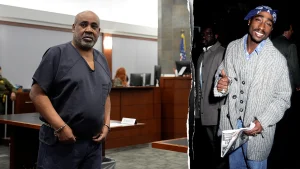





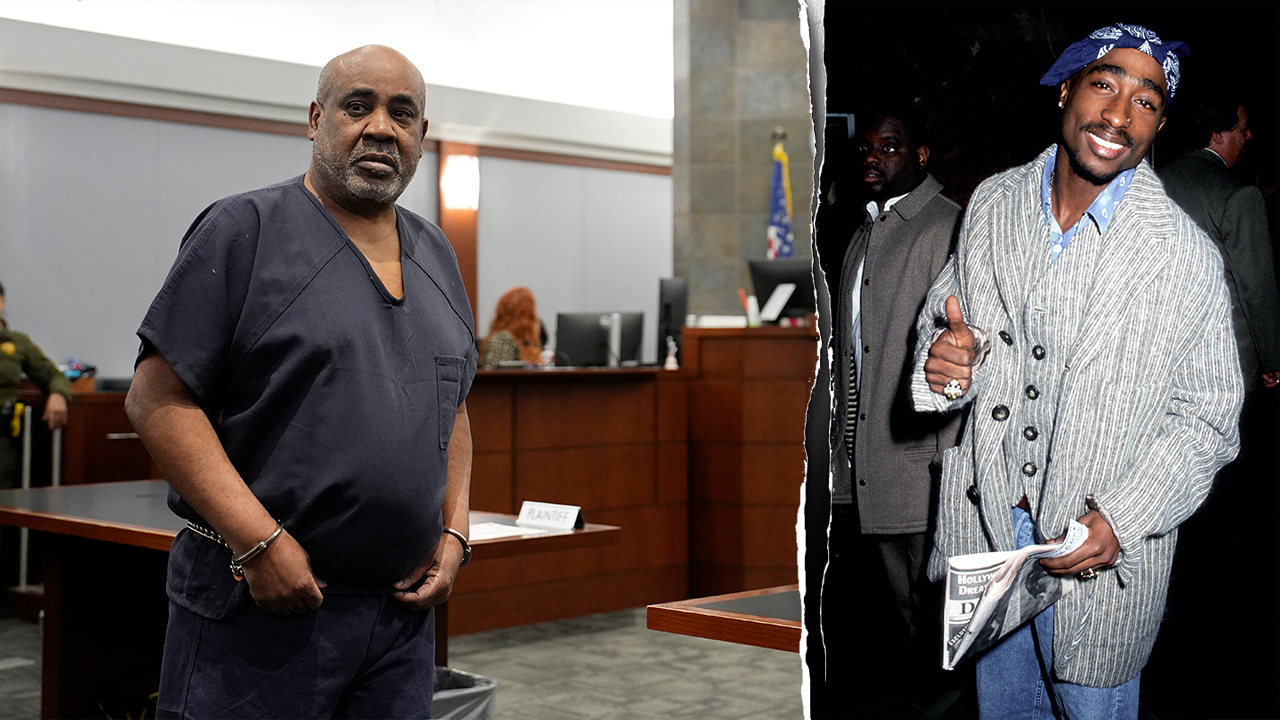
The ghost of September 7, 1996, has finally been summoned into a Las Vegas courtroom, and the weight of a three-decade-old cultural wound presses down upon every bench, every juror, and every breath taken within the Clark County courthouse. It is a peculiar kind of history unfolding here, not one of dusty archives, but of a living legend whose rhymes still echo in the streets while his murderer—or his confessed accomplice—sits just a few feet away. Duane “Keffe D” Davis, now in his sixties, is no longer the shadowy figure who once orchestrated chaos from the passenger seat of a Cadillac; he is an aging man in a suit, facing the final reckoning for a night that changed hip-hop forever. As the prosecution and defense deliver their opening statements, the air is thick with the tension of unresolved fury, the scent of betrayal, and a haunting question that has perpetually stalked the music industry: who truly pulled the trigger that sent Tupac Amaru Shakur to his grave? The trial is not merely a legal proceeding; it is a cultural exorcism, a fragile attempt to force justice from the mists of a time when the East Coast-West Coast feud was a radioactive warzone, and silence was not just a virtue but a survival instinct. The Ghost of Tupac hovers over the proceedings, his unhealed legacy serving as both the prosecution’s rallying cry and the defense’s greatest obstacle, as the world watches to see if the man who once claimed to know the truth can be held accountable for it.
For the prosecution, led by Clark County Chief Deputy District Attorney Binu Palal, the case is not built on forensic innovation or a smoking gun recovered from a lake, but on the staggering, almost ironic, volume of words that have poured forth from the defendant’s own mouth. Palal laid out a damning chronology in his opening statement, painting Davis as a man who could not resist the lure of his own infamy, who repeatedly confessed to his role in the shooting across decades of interviews, documentaries, and even a tell-all memoir. The prosecutor reminded the jury that in 1998, 1999, 2008, and again in 2009, Davis sat down with investigators and media outlets, describing in vivid detail how he orchestrated the retaliation that ended in a fusillade of bullets fired into the BMW carrying Tupac and Suge Knight. In a 2008 BET interview, Davis boasted of obtaining the murder weapon, a Glock, and later revealed that his nephew, a member of the Southside Crips, was the actual gunman who fired from the backseat of the white Cadillac. The prosecution’s narrative is chillingly straightforward: a man who sought the spotlight for three decades cannot now retreat behind the veil of ambiguity. Palal’s voice carried the righteous indignation of a community that has waited too long, emphasizing that Davis’s own admissions constitute the bedrock of the case—admissions that are corroborated by the ghostwriter who helped pen his book, Yusuf Jah, who is expected to testify that Davis willingly and accurately disclosed the mechanics of the murder. The judge and jury are being asked to simply listen to the defendant’s own voice, preserved in recordings and on paper, and trust that a man with a history of violence and street credibility would not have casually fabricated the intricate details of a murder he had no reason to invent.
Yet, as the prosecution laid its emotional foundation, the defense swiftly countered with a scalpel, aiming to dissect the perceived credibility of the very confessions upon which the state relies. Attorney Michael Sanft stood before the jury and presented a counter-narrative that reframed Davis’s admissions not as a confession, but as the opportunistic fabrication of a man seeking profit, notoriety, and a twisted form of legacy. Sanft argued that Davis’s memoir, Compton Street Legend, is a work of fiction—a gritty, Hollywood-style narrative designed to sell books to a public hungry for gangster lore, not a factual account of a homicide. He pointed his finger directly at Yusuf Jah, the ghostwriter, suggesting that Jah embellished, romanticized, and distorted the events to create a more cinematic product, blurring the line between reality and fantasy. The defense hammered away at the decades-long delay, questioning why investigators never vetted the claims, never interviewed the other witnesses allegedly present in the Cadillac that night, and why the state is now choosing to rely on the uncorroborated words of a man who was once a confidential informant and who has benefited financially from his tale. “What they are telling you,” Sanft argued, his tone dripping with skepticism, “they are representing it to be a fact when it reality it is fiction. It is up to you to determine what the facts are in this case.” The defense painted Davis as a tragic figure trapped by his own lies, a man who talked so much that he eventually convinced even the police of his guilt, but whose actual physical involvement in the shooting remains questionable, and whose testimony should be viewed as the unreliable ramblings of a self-serving storyteller.
The pivotal figure in this forensic showdown is undoubtedly Yusuf Jah, the ghostwriter whose pen may have inked the narrative that could either cement Davis’s conviction or undermine the entire prosecution. The legal clash now hinges on the intent and memory of a writer who sat across from a confessed gangster and translated his life into prose. Detective Moses Castillo, a retired LAPD veteran who has followed the case’s twists and turns, articulated the tension perfectly: “I suspect that the prosecution is going to have to call the writer of this book and ask him point blank and directly: ‘Did you write this based on what Davis told you?’ And if he says yes, and this is what he told me, then it’s going to be very hard to dispute that fact.” This interrogation of the ghostwriter will be a high-wire act; if Jah testifies that the book is entirely factual, Davis’s credibility takes a fatal blow, but if the defense can coax him into admitting that he took dramatic liberties, the case collapses into a heap of conflicting literary license. Furthermore, the witness list includes the enigmatic Suge Knight, the man who was sitting beside Tupac when the shots rang out. Knight, currently serving a lengthy prison sentence for an unrelated fatal hit-and-run, has publicly stated his reluctance to testify, citing his own fear of retaliation and his deeply held belief in the street code of silence. Castillo notes the inherent irony and tragedy of the case: “When you’re in this circle of gangs and gang involvement, you don’t want to be a snitch. You don’t wanna be that person that’s being classified as a rat. Because as they say, snitches get stitches, and that is really true.” This pervasive fear, which has haunted the investigation for three decades, now leaves the prosecution relying on the words of the very man who broke the code, while the survivor of the shooting refuses to speak.
To truly understand the weight of this moment, one must rewind to the chaotic night of September 7, 1996, when the glittering lights of the Las Vegas Strip were dimmed by the thunder of gunfire. Tupac and Suge Knight had just left a Mike Tyson bout at the MGM Grand, surrounded by an entourage thick with tension and bravado, when an altercation erupted with a group of Crips members, including Orlando “Baby Lane” Anderson, who was Keffe D’s nephew. The violence was quick, a scuffle that bruised egos and stoked the flames of vengeance. Within hours, as the convoy cruised down the Strip, a white Cadillac pulled alongside Tupac’s black BMW at a red light near Flamingo Road. Witnesses later described the eerie silence before the window rolled down, the glint of a Glock, and then a rapid succession of shots that tore through the night. Tupac, ever the mortal icon, was struck multiple times—in the chest, the hand, and the thigh—while Suge Knight suffered only superficial wounds from the shrapnel of a bullet graze. The subsequent six days were a global vigil, a frantic vigil held outside the University Medical Center as fans prayed for the survival of a poet, actor, and revolutionary. His death on September 13, 1996, officially from respiratory failure and cardiac arrest, plunged the world into a state of mourning that never truly ended. The immediate investigation was hampered by a wall of silence; virtually no one in the hip-hop community was willing to cooperate, terrified of the consequences of speaking to investigators, allowing the case to go cold for decades despite the known identities of several suspects.
As the trial draws to a conclusion in the coming weeks, the closing arguments will ultimately ask the jury to perform a Herculean feat: to sift through three decades of mythology, fear, and fragile memory and decide whether the pseudonymous confessions of a man named Duane Davis are the honest reflection of a guilty conscience or the desperate pleas of a profiteer. The physical evidence is almost nonexistent—no ballistic match, no recovered weapon tied directly to the defendant, no reliable eyewitness testimony from the vehicle itself—leaving the state’s case entirely dependent on the credibility of a self-described “shot caller” who has spoken freely to cameras, law enforcement, and a ghostwriter, all while securing immunity for his earlier admissions and a book deal that promised financial gain. The defense will continue to hammer the notion that Davis was merely a braggadocious street figure embellishing his own story to capitalize on the tragic death of a legend, while the prosecution will steadfastly insist that the sheer volume and consistency of his statements across multiple formats prove their veracity. Outside the courtroom, the broader community watches with bated breath, treating this trial as a last chance for closure in a case that has haunted not only the families of the victims but the entire cultural landscape of American music. Whether the jury believes in the fiction of the book or the authenticity of the confession, the legacy of Tupac Shakur remains intact—a soul forever frozen in the amber of youth and rebellion. But for Keffe D, the culmination of this trial will decide whether his next chapter is written in the free world or within the confines of a prison cell. In the end, as the sunlight fades over the Strip, the truth will travel down the tangled web of street codes, artistic embellishment, and personal accountability, reminding us all that in the world of Tupac, the words we speak can cast a shadow that never truly fades away.