






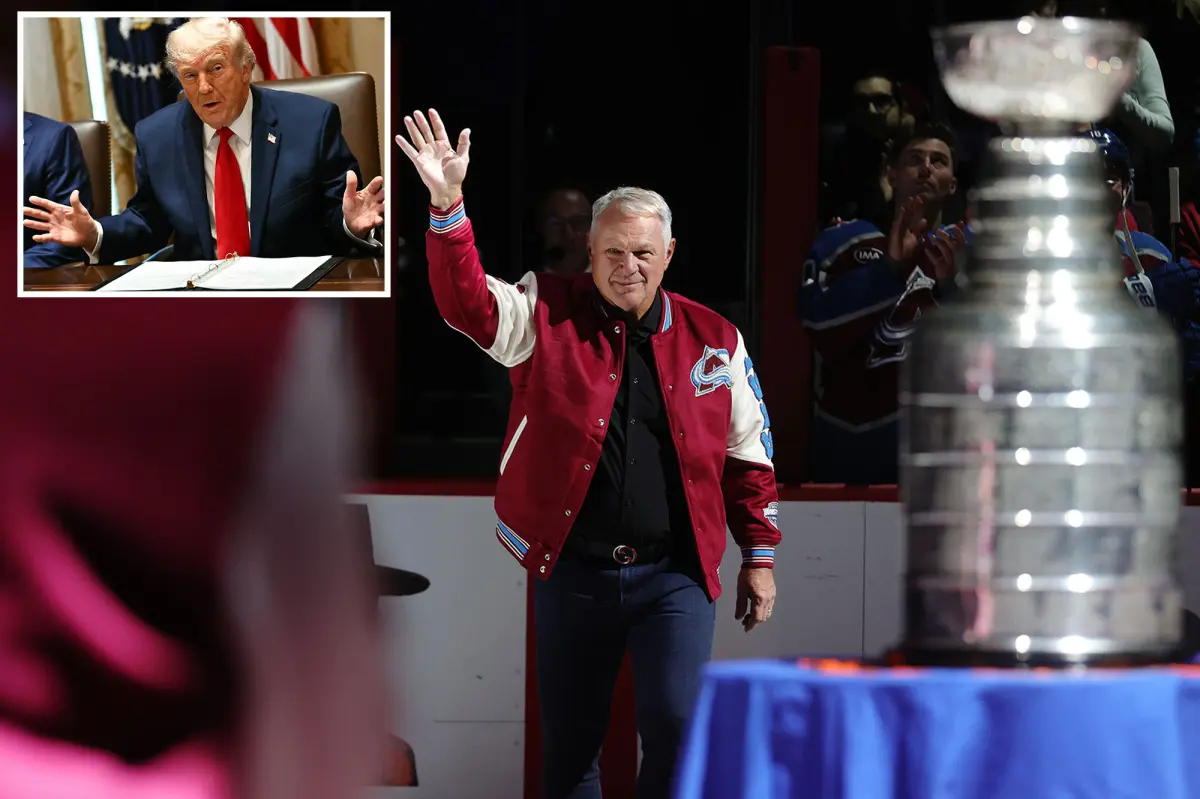
The sudden, tragic, and incredibly heart-wrenching departure of Claude Lemieux, a legendary figure whose name is permanently etched into the very granite of professional hockey history, has left the sports world, political circles, and his immediate family in a state of profound shock and inconsolable grief. At sixty years old, the ferocious competitor who once commanded the icy, high-stakes battlefields of the National Hockey League was found deceased by his adult son in the early hours of Thursday morning. The setting of this deeply heartbreaking discovery—the quiet, dim, and hollow warehouse of a family-owned furniture store in Florida—stands in a stark, agonizing contrast to the roaring, brightly lit arenas where Lemieux spent decades cementing his immortal sporting legacy. His family had grown increasingly anxious after he failed to return home on Wednesday evening, prompting a frantic and worrisome search that ultimately led them to the devastating scene around 3:00 a.m. This shocking event immediately strips away the impenetrable armor of a public athletic icon, reminding us with quiet, painful clarity of the fragile humanity that exists beneath the customized jerseys, the sparkling championship rings, and the adoring cheers of millions of fans. The initial news of his passing by suicide transformed what was once a legacy defined by sheer physical dominance, stubborn resilience, and unwavering strength into a heartbreaking narrative of hidden, silent battles, forcing an immediate, solemn pause among those who had revered his on-ice tenacity for decades. It reminds us that behind the public-facing bravado of our heroes lies a vulnerable human heart, often navigating storms that the outer world cannot see, making his passing not just a loss for the sports community, but a deeply human tragedy that resonates on a universal level. We are left to grapple with the painful reality that those who appear the strongest on the outside are often carrying the heaviest burdens on the inside.
To truly appreciate the magnitude of this immense loss, one must examine the indelible and highly impactful mark that Claude Lemieux left on the sport of professional ice hockey during his storied tenure in the NHL. Renowned as one of the most ruthless, clutch performers the game has ever witnessed, Lemieux was the quintessential player that opposing teams absolutely dreaded facing, yet his own teammates and coaches cherished with absolute devotion. Over his illustrious and storied career, he achieved the pinnacle of hockey success by capturing the ultimate prize—the Stanley Cup—four separate times, demonstrating an uncanny and almost supernatural ability to elevate his gameplay when the stakes were at their absolute highest. Whether he was clad in the classic red, white, and blue of the Montreal Canadiens, the menacing red and black of the New Jersey Devils, or the burgundy and blue of the Colorado Avalanche, he was a postseason warrior through and through. His crowning individual achievement occurred in 1995 when he was awarded the prestigious Conn Smythe Trophy as the playoffs’ most valuable player, a testament to his unmatched grit, timely scoring, and psychological dominance over his opponents. He was a player defined by “toughness” in its most authentic, traditional sense—a man who willingly threw his body into harm’s way, engaged in fierce physical battles along the boards, and stubbornly refused to back down from any opponent. For millions of dedicated hockey fans across North America, Claude Lemieux represented a golden, unapologetic era of hockey where victory was earned through sacrifice, sweat, and an unyielding will to win, making his sudden absence feel like the extinguishing of a great, fierce fire. His legacy was more than just a list of statistics; it was a testament to what can be achieved when raw determination is channeled into a singular, burning passion for greatness.
The ripples of Lemieux’s tragic passing traveled far beyond the borders of the sports world, reaching the highest echelons of American political and social life, where it prompted a deeply personal, solemn, and public tribute from former United States President Donald J. Trump. Late Thursday evening, Trump took to his social media platform, Truth Social, to express his profound grief and pay homage to a man he considered not just an extraordinary athlete, but a loyal personal friend and an unwavering political ally. In a characteristic yet exceptionally heartfelt post, Trump lauded Lemieux as a “true legend of the game” and “one of the fiercest competitors hockey has ever seen,” highlighting the immense respect they shared. The former president illuminated the strong, personal bond that Lemieux had maintained with the Trump family over the years, proudly referring to him as a “tremendous ‘TRUMP’ supporter” who stood firmly by his side through various endeavors. Trump concluded his digital eulogy by noting that Lemieux would be missed by “all who love winning and toughness,” signing off with a signature MAGA hashtag. This public display of grief underscored a side of Lemieux that existed far outside the boundaries of the ice rink—a man of deep-seated convictions, intensely loyal personal friendships, and an unyielding willingness to stand up for his beliefs or allies, no matter the public discourse. The tribute illustrated how the realms of sports celebrity and political movement often intertwine, showing that Lemieux’s fierce loyalty was not confined to his teammates, but was generously extended to those he loved and supported in his private life. It humanized the political connection, highlighting how shared values of strength and perseverance welded a bond between a former president and a hockey icon.
Beneath the statistics, the political statements, the championship rings, and the nostalgic highlight reels lies a far more fragile, human reality that this tragedy forces us to confront: the silent, devastating crisis of mental health, particularly among men and elite professional athletes who are celebrated for their physical invincibility. For generations, the culture of competitive sports has conditioned athletes to believe that showing vulnerability is a fatal weakness, teaching them to suppress pain, ignore emotional distress, and internalize their struggles in the name of performance. We raise these individuals onto pedestals as modern-day gladiators, applauding them when they play through broken bones and traumatic brain injuries, yet we often fail to recognize the psychological toll that such lifestyle demands. When the cheering crowds disperse, the locker rooms empty, and the retired athlete is left alone with the quiet reality of everyday life, the loss of identity, chronic physical pain, and the sudden drop in adrenaline can create a perfect storm of isolation and depression. Humanizing Claude Lemieux’s final hours means acknowledging that his physical toughness on the ice was not a shield against the heavy, invisible burdens of mind and spirit. His tragic end serves as a poignant, urgent wake-up call to dismantle the outdated archetype of the stoic, unbreakable male hero, replacing it with a compassionate culture that encourages open dialogue, vulnerability, and the understanding that seeking assistance is an act of profound bravery rather than a surrender to weakness. We must realize that the strength required to ask for help far exceeds any strength demonstrated on the playing field, and it is a strength we must foster in everyone.
Ultimately, amidst the media storm and the public outpourings of grief from political leaders and hockey enthusiasts alike, there remains a deeply private, shattering sorrow that belongs solely to the Lemieux family, who now must navigate the agonizing aftermath of an unimaginable loss. The raw, heartbreaking image of an adult son searching for his father in the dead of night, only to make such a traumatic discovery at 3:00 a.m. inside their own family furniture business, brings the tragedy down from the heights of myth and into the quiet reality of household grief. Before he was a multi-time Stanley Cup champion, an NHL MVP, or a prominent political supporter, Claude Lemieux was a father, a husband, a business partner, and a human being trying to cultivate a peaceful, meaningful life in Florida away from the glare of the relentless public spotlight. The transition from the high-stakes, adrenaline-fueled world of professional sports to the quiet, mundane operations of a retail furniture company represents a profound shift in lifestyle—one that can bring its own invisible anxieties, struggles with self-worth, and existential questions. As his loved ones begin the painful process of mourning, they are forced to carry a heavy, dual burden: navigating their own devastating personal trauma while the world dissects his life and death. This delicate dynamic demands our deepest sense of empathy, restraint, and respect, reminding us to honor their privacy as they pick up the pieces of an existence forever altered by a silent struggle. They are not merely the family of a celebrity; they are grieving individuals who have lost a cornerstone of their lives.
In remembering the complex life and sudden, tragic death of Claude Lemieux, we are challenged to hold two contrasting truths in our hearts simultaneously: celebrating the fierce, uncompromising warrior who brought immense joy to millions of sports fans, while tenderly acknowledging the vulnerable, hurting man who ultimately succumbed to the heavy weight of his personal struggles. His legacy should not be reduced solely to his aggressive playstyle, his political affiliations, or the tragic manner of his passing; instead, it must be viewed as a rich tapestry of a passionate, multifaceted human life. His story must serve as an urgent, enduring beacon that illuminates the vital importance of checking on those we love, particularly those whom we assume are “tough” enough to handle anything life throws their way. We must strive to build a more compassionate world where mental health is prioritized openly, where the stigma surrounding depression is thoroughly dismantled, and where individuals feel safe to voice their pain before it becomes too heavy to bear. If you or someone you know is currently struggling with thoughts of self-harm, depression, or emotional despair, please remember that support is always within reach by calling or texting the suicide prevention lifeline at 988. In the end, the most meaningful tribute we can pay to Claude Lemieux is to let his memory inspire more kindness, more active listening, and a deeper commitment to protecting and supporting one another through the darkest, most difficult chapters of our lives. By transforming this moment of immense sorrow into a catalyst for empathy and mental health advocacy, we can ensure that Claude’s enduring legacy is one of healing, hope, and humanity, far overshadowing the darkness of his final night.