





The Soccer Jersey Diplomacy: How a Sporting Gesture Opened a High-Stakes G7 Summit
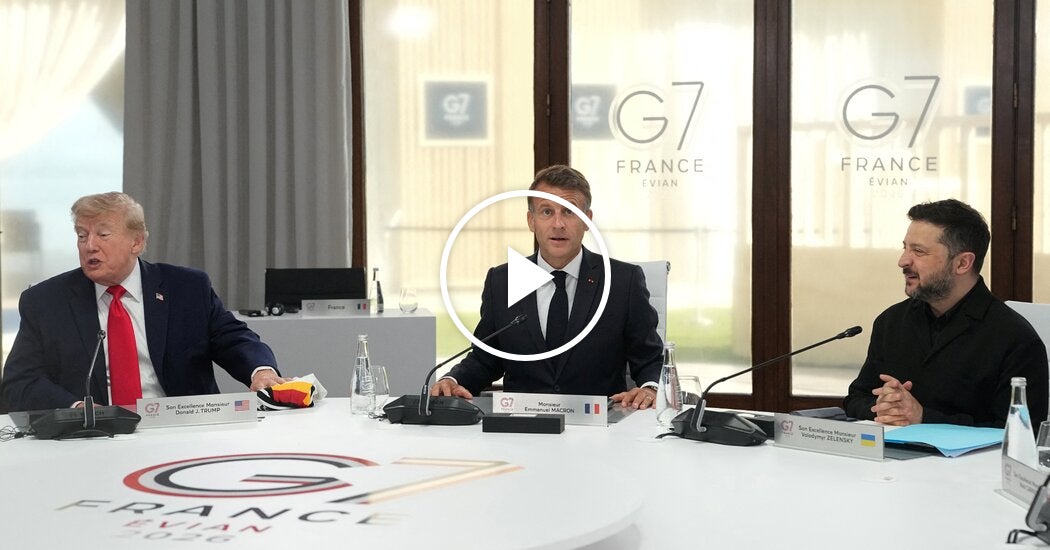
The annual gathering of the Group of Seven (G7) has long served as a prestigious theater for high-stakes geopolitical maneuvering, where the leaders of the world’s most industrialized and advanced democracies attempt to align their economic, security, and diplomatic agendas against a backdrop of global instability. Yet, as the 2026 summit commenced, the initial tension in the room was momentarily softened by an exercise in classic public diplomacy: the German chancellor presenting President Donald Trump with a custom German national soccer jersey. This carefully choreographed offering, while seemingly lighthearted, was loaded with symbolic weight, reflecting a calculated effort by European leaders to establish a cooperative and personalized rapport with an American president notoriously skeptical of traditional multilateral alliances and institutional commitments. In the arena of international relations, such gifts are rarely mere tokens of goodwill; instead, they serve as strategic instruments of statecraft designed to disarm tension, appeal to personal vanity, and create a shared cultural reference point before the grueling work of closed-door negotiations begins. For Germany, a nation navigating complex economic pressures and carrying heavy defense responsibilities within the European theater, the gesture was a subtle nod to the power of soft-power diplomacy—a brief, festive overture before the conversation inevitably shifted toward the grim, compounding crises of global warfare, strained trade relationships, and the fragile state of Western democratic solidarity.
The Chiaroscuro of Trump-Zelensky Dynamics on the Global Stage
Underneath the superficial camaraderie of the summit’s opening ceremonies lay the urgent, unresolved crisis of the war in Eastern Europe, a conflict that has thoroughly tested the limits of transatlantic defense coordination and domestic political resolve. When questioned by reporters regarding the scheduling of his highly anticipated bilateral discussions with Ukrainian President Volodymyr Zelensky, President Trump responded with characteristic rhetorical flair, offering an enigmatic timeline that blended past achievements with future expectations by declaring that an initial meeting had already transpired, with subsequent sessions still on the horizon. This characteristically unorthodox communication style highlights the complex, often unpredictable nature of the administration’s foreign policy, wherein informal channels and spontaneous diplomacy frequently bypass established diplomatic protocols to the consternation of career diplomats. For President Zelensky, who sat near French President Emmanuel Macron and President Trump around the summit’s central drafting table, navigating these fluid diplomatic currents requires an extraordinary degree of strategic agility, as he must continuously advocate for sustained military aid and robust security guarantees while adapting to a Washington leadership that favors transactional, result-oriented dealmaking over open-ended geopolitical commitments. The physical optics of these leaders gathered together—alternating between intense, hushed whispers and formal statements for the press pool—captured the profound uncertainty that hangs over the future of Western aid to Ukraine, illustrating the delicate diplomatic tightrope walked by those seeking to maintain a unified front against authoritarian aggression.
Deconstructing the Anatomy of a Potential Ukraine Peace Agreement
At the very heart of the summit’s agenda was the elusive search for a viable resolution to the devastating conflict, a task that President Trump approached by directly acknowledging the staggering, tragic human toll that has hollowed out communities across both Russia and Ukraine over years of relentless attrition. In his address to the press, the President emphasized the sheer scale of the losses suffered by both combatant nations, pointing to the unsustainable human cost as a primary catalyst that should compel the Russian federation to seek an immediate diplomatic exit ramp. However, the precise blueprint of what a durable peace deal would entail remains one of the most contentious and heavily debated questions within contemporary global politics, pitting those who advocate for a swift, negotiated settlement against those who argue that any compromise involving territorial concessions would merely embolden future revisionist aggression. Within the corridors of the G7, European allies remain deeply concerned that a prematurely forced settlement could compromise Ukraine’s sovereign integrity and undermine the foundational principles of international law, while the American perspective increasingly emphasizes fiscal pragmatism, burden-sharing, and the strategic necessity of pivoting defense resources toward containment efforts in the Indo-Pacific. Consequently, the discussions around the negotiation table focused not only on the physical frontlines of the Donbas and Crimea, but on the intricate architecture of post-conflict security guarantees, economic reconstruction funds, and the long-term containment of Russian influence across the European continent.
The Nuclear Red Line: Rhetoric, Deterrence, and Global Proliferation
While the territorial disputes of Eastern Europe dominated the strategic briefings, President Trump drew an uncompromising, absolute boundary regarding the threat of nuclear proliferation, delivering a stark warning that elevated the stakes of current diplomatic maneuvers to existential proportions. Reaffirming his core foreign policy doctrine, Trump declared that the absolute prevention of nuclear weapons acquisition remained his paramount objective—the defining objective that motivated his participation in these high-stakes international negotiations and guided his willingness to sign off on comprehensive strategic agreements. His warning that “all hell will rain down” should adversaries attempt to develop, purchase, or acquire nuclear arsenals reflects a return to a doctrine of maximum pressure and strategic ambiguity, designed to deter foreign adversaries through the explicit projection of overwhelming military superior capability and unpredictable retributive action. This aggressive rhetorical stance serves a dual purpose: it reassures nervous domestic constituencies and foreign allies of America’s unwavering commitment to global counter-proliferation, while simultaneously sending an unambiguous message to volatile regimes, particularly in Tehran and Pyongyang, that any expansion of their nuclear programs will be met with immediate and devastating consequences. By framing the entire peace process and the broader stability of global security around the absolute containment of nuclear technology, the administration seeks to re-establish a clear, immutable global hierarchy of deterrence, prioritizing the prevention of catastrophic strategic escalation above all other diplomatic compromises.
Transatlantic Solidarities and the Strategic Realities of European Autonomy
As the summit progressed beyond symbolic gifts and rhetorical warnings, the European leaders present, spearheaded by French President Emmanuel Macron and German Chancellor Olaf Scholz, confronted the pressing challenge of adapting their defense strategies to an era of increasingly transactional American leadership. This shift has forced a profound reassessment within European capitals regarding the concept of “strategic autonomy”—the capacity for the European Union to defend its own borders, secure its supply chains, and project stabilizing power in its immediate periphery without relying solely on the security umbrella of the United States. While the gift of the soccer jersey to President Trump was a lighthearted attempt to foster goodwill, the serious policy discussions behind closed doors centered on concrete commitments, specifically the mandate for European nations to dramatically increase their domestic defense budgets to meet or exceed NATO’s spending targets. The prevailing consensus among Washington policymakers is that the era of American-funded European security must transition into a more balanced partnership, a reality that is driving rapid modernization of defense industries from Warsaw to Paris, even as leaders strive to preserve the vital intelligence-sharing and joint military command structures that have anchored the transatlantic alliance since the end of the Second World War.
The Future of Global Governance in an Era of Personalized Diplomacy
Ultimately, the 2026 G7 summit will likely be remembered as a vivid case study in the evolution of modern global governance, illustrating a profound transition from the rule-based, institutionalized multilateralism of the late twentieth century to a highly personalized, transactional model of international statecraft. The traditional diplomatic model, characterized by highly structured civil service negotiations and predictable, consensus-driven communiqués, has increasingly been supplanted by direct, executive-level interactions where personal chemistry, public posturing, and spontaneous dealmaking dictate the course of geopolitical history. While critics argue that this personalized approach risks undermining long-standing treaties, alienating traditional allies, and introducing dangerous instability into the international system, proponents maintain that it provides a necessary, pragmatic disruption to stagnant bureaucratic processes, allowing for swift breakouts in deadlocked conflicts and direct communication between primary decision-makers. As the world’s leaders departed the summit, leaving behind the imagery of soccer jerseys, formal roundtables, and stern warnings of nuclear retaliation, the global community was left to ponder whether this new era of personalized diplomacy can successfully navigate the systemic rivalries of the twenty-first century, or whether the delicate balance of international peace will splinter under the weight of competing national interests and unpredictable executive wills.