


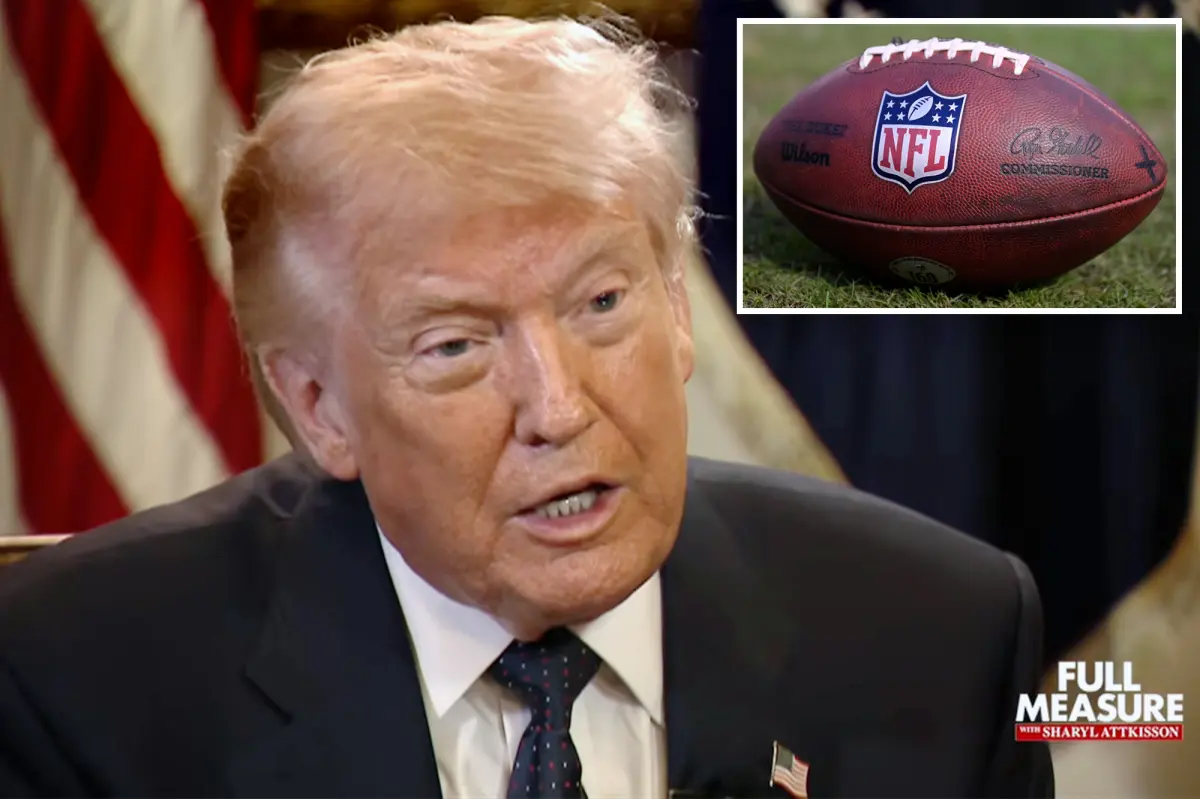
Former President Donald Trump has once again turned his spotlight on the NFL, delivering a scathing critique that feels personal and heartfelt, as if he’s speaking directly to the everyday American fan glued to their couch on Sundays. In a recent interview on “Full Measure with Sharyl Attkisson,” aired across Sinclair Broadcasting stations, Trump lashed out at the league for what he calls “price gouging” loyal supporters by shifting prime games to exclusive streaming services. It’s not just business talk; Trump’s rhetoric paints a picture of betrayal, where football franchises are prioritizing profits over the passion of the average Joe. Imagine the typical football enthusiast—maybe a blue-collar worker, a family man, or a retiree—who’s followed their team through thick and thin, only to find their Sunday ritual disrupted by corporate greed. Trump argues that by partnering with giants like Netflix, Amazon, YouTube, and Peacock, the NFL is erecting barriers that exclude those who can’t or won’t fork over extra cash. This isn’t mere complaint; it’s a rallying cry for tradition and accessibility in a sport that’s always been a communal experience. Trump’s voice on this topic resonates because it taps into that universal frustration of feeling left behind in a rapidly changing world. He describes a shift that’s not just annoying but “very sad,” evoking images of fans mourning the loss of free, over-the-air broadcasts that once united households across America. For someone like Trump, who built his brand on rocking the establishment, this move by the NFL feels like yet another elite power play that alienates the masses. It’s a narrative that humanizes the issue, turning technical discussions about media rights into a story of disconnection and inequality. Fans aren’t just consumers in Trump’s eyes; they’re the heartbeat of the game, the ones who fill stadiums and fuel the league’s fortune. By making football harder to access, the league risks alienating this core base, and Trump warns that such short-sightedness could have long-term repercussions. His words echo sentiments shared by many who grew up in an era when sports were free and inclusive, reminding us that at its core, football is about community, not just commerce. This criticism isn’t isolated; it’s part of a broader conversation Trump has had about protecting American traditions from corporate overhaul. Whether you’re a die-hard Cowboys fan or someone who casually tunes in for the Super Bowl, Trump’s message hits home: the NFL’s decisions aren’t victimless; they hurt real people in real ways, making the sport feel elitist and out of reach.
Diving deeper into the specifics, the NFL’s pivot to streaming platforms has created a fragmented viewing landscape that’s frustratingly complex for the average fan. Picture this: Thursday Night Football, once a staple of free TV, is now locked behind Amazon Prime, requiring a $14.99 monthly subscription just to catch the action. That’s a hefty price tag for something that used to be as easy as turning on the TV, and it doesn’t stop there—other games have migrated to Netflix, YouTube, or Peacock, each demanding separate sign-ups and additional fees. For a family trying to stay afloat financially, this means piecing together a patchwork quilt of subscriptions just to keep up with their team, or worse, missing out entirely. Trump’s critique highlights how this model turns casual viewing into a calculated expense, where every game becomes a financial hurdle. Imagine the dad who scrimps on coffee to afford cable, or the single mom budgeting to ensure her kids can watch their favorites—now, they’re hit with yet another bill that eats into their entertainment dollar. It’s not just about the money; it’s the inconvenience of managing multiple accounts, from logins to passwords, all while dealing with buffering issues or exclusive deals that vanish after a season. Fans are left scrambling, signing up for services only to find that not all content is available in their area or on their devices, leading to a sense of exclusion that erodes the joy of the game. Trump’s words capture this chaos vividly: he’s not just talking numbers; he’s painting a picture of everyday struggles, where passion meets practicality and too often loses. This shift has broader implications too—young fans growing up with fragmented access might not develop the lifelong loyalty that sustains the NFL. By prioritizing streaming exclusivity, the league is gambling with its future audience, turning what should be accessible entertainment into a premium experience for the affluent. Trump’s take feels authentic because it reflects a common gripe: why pay for something that was once free? It reminds us that sports viewing should unite, not divide, and this new paradigm risks isolating those who can’t keep up with the tech race.
In his interview, Trump gets particularly personal, voicing empathy for the “great people” who love football but scrape by on modest incomes, emphasizing that this streaming push isn’t just inconvenient—it’s downright unfair. He speaks with a folksy candor, describing fans who “live for Sunday,” where the gridiron becomes an escape from the week’s grind. For these dedicated viewers, missing a game due to cost feels like a gut punch, disrupting routines that have been the glue of families and friendships for generations. Trump contrasts the NFL’s soaring profits with the fans’ hardships, calling out the league for potentially “killing the golden goose,” a phrase that darkly suggests self-sabotage. It’s a metaphor that resonates on a human level—why jeopardize a cash cow by alienating its biggest cheerleaders? His tone is protective, like a friend defending those who can’t advocate for themselves. Imagine the retiree alone in his living room, radio crackling with old games in his mind, suddenly confronted with a $15 hump just to relive that excitement. Trump’s message isn’t political posturing; it’s rooted in a genuine concern for the working class, the backbone of American football fandom. He urges the league to “make a little bit less” profit to keep the game inclusive, a stance that feels egalitarian in an age of skyrocketing costs. This isn’t blind criticism; it’s a call for balance, where corporate greed doesn’t overshadow communal spirit. Trump’s anecdotes humanize the debate, turning abstract economics into relatable stories of loss and longing. We can almost hear the sigh of relief from fans who fear the sport’s democratization is slipping away, replaced by digital divides. His narrative paints football not as a luxury but as a right for the devoted, echoing sentiments in small-town bars and suburban homes where game day was sacred. By standing up for these fans, Trump positions himself as a champion of the underdog, making his critique feel urgent and personal.
Trump doesn’t stop at empathy; he throws his weight behind critics who argue that this streaming strategy flouts key laws, including the Sports Broadcasting Act and the antitrust exemptions tied to it. He nods approvingly at allegations that the league’s moves could violate these frameworks, which were designed to ensure fair access and prevent monopolistic practices. With the Department of Justice launching an antitrust probe into the NFL last month, Trump’s support adds a layer of gravitas, as he flat-out declares he’s no fan of this “new business model.” It’s not just a thumbs down; it’s a principled objection to what he sees as overreach. Picture the historical context: sports broadcasts were meant to be equitable, granting leagues protections in exchange for public benefit, not private enrichment. Trump’s stance aligns with legal experts who worry that exclusive deals create gatekeeping that stifles competition and hikes prices unjustly. He suggests the NFL is prioritizing lucrative partnerships over its duty to fans, turning the football into a gated playground where only the wealthy can play. This opinion feels grounded in his past as a businessman wary of unfair plays, humanizing a complex legal argument into a straightforward appeal for justice. For the average viewer, it validates frustrations that go beyond wallet strain—it’s about fairness in a system that’s supposed to serve everyone. Trump’s endorsement of the antitrust investigation underscores his belief in accountability, urging the league to rethink its approach before it’s too late. He frames it as a matter of integrity, where laws aren’t bendable for profit. This adds depth to his critique, transforming it from mere banter into a substantive challenge that could shape the sport’s future.
On the flip side, the NFL defends its decisions with a narrative that feels pragmatic and forward-looking, arguing that the industry is evolving to meet modern viewing habits. League representatives, including a spokesperson for The Post, maintain that fans have largely embraced streaming as their preferred method, abandoning traditional broadcasters for the convenience of on-demand content. They point out that the majority of games remain free on broadcast TV, especially those involving local teams, ensuring that core matchups aren’t paywalled. This model, they claim, is “the most fan- and broadcaster-friendly in the entire sports and entertainment industry,” blending old-school accessibility with new-tech appeal. For many, this explanation makes sense in a streaming-savvy world where binge-watching and portable viewing have become the norm. The NFL highlights how platforms like Amazon Prime offer not just games but value-added experiences, like exclusive behind-the-scenes footage or interactive features, justifying the cost. Imagine the tech-loving millennial who streams games alongside commentary and stats in real-time, finding it superior to static broadcasts. This perspective humanizes the NFL’s view, portraying the league as adaptive rather than exploitative, responding to data showing a generational shift in consumption. Fans who thrive on cable packages might protest, but the league counters that resistance is futile in an era dominated by services like Netflix. By emphasizing free access for most games, they reassure detractors that they’re not locking everything away—just the cherry-picked ones that drive excitement without cannibalizing their bread-and-butter broadcasts. This defense feels like a reminder of progress, where football isn’t stuck in the past but poised for the future, appealing to innovators who see streaming as enhancement, not hindrance. It’s a balanced counterpoint that acknowledges change while minimizing harm, focusing on inclusivity through strategic distribution.
Ultimately, Trump’s backlash against the NFL’s streaming push ignites a broader debate about the soul of American football in an increasingly digital world, where tradition clashes with transformation, and profit battles with people. His emotional plea for affordability underscores a divide between those reaping benefits and those feeling squeezed, urging the league to prioritize long-term loyalty over short-term gains. Fans are at the heart of this, their stories of Sunday sacramental viewings now tinged with worry, but the NFL’s assurances offer hope for coexistence. As investigations unfold, the outcome could redefine how sports are consumed, potentially mandating wider access. Trump’s voice, with its unfiltered passion, humanizes this tug-of-war, reminding us that football’s magic lies in its universality—accessible to all, not just the elite. Whether the league adjusts or digs in, the conversation spotlighting these tensions ensures fans’ needs aren’t forgotten, fostering a future where Sundays remain a unifying ritual for everyone. In the end, it’s about balance: celebrating technological strides while safeguarding the community’s embrace, ensuring football stays America’s game, not just a corporate commodity. This dialogue, sparked by one man’s outspoken stance, has the power to inspire change, turning critique into catalyst for a more equitable gridiron. As fans weigh costs against passions, the hope is for resolutions that honor both innovation and inclusivity, preserving the sport’s enduring appeal. Trump’s insights feel timeless, echoing the spirit of sportsmanship that transcends screens and subscriptions, vital in an age of rapid evolution. Communities rooting together might just emerge stronger, reminding us why we tuned in year after year. For those grappling with these shifts, Trump’s words offer solidarity, a beacon in the fog of changing norms. Balancing act or not, the football fraternity’s resilience hinges on adapting without alienating, a lesson that extends beyond the field into everyday choices. As we ponder next steps, optimism persists: perhaps hybrid models will prevail, blending free access with premium perks. Trump’s legacy in this arena could be transformative, advocating fiercely for the fans who make the magic possible. In entertaining our passions, let’s not forget the human element—the shared cheers, the communal defeats—that define us. Football’s evolution isn’t just economic; it’s emotional, and Trump’s critique ensures that narrative stays front and center. Moving forward, bridging divides could lead to newfound unity, where every fan feels valued amid the boom of progress. Trump’s call isn’t defeatist—it’s a challenge to innovate compassionately, honoring roots while reaching for branches. For the sport’s sake, let’s hope the league listens, turning potential pitfalls into opportunities for greater connection. In the grand playbook of American entertainment, these pages might yet rewrite fairness into the fabric of fun. As debates rage, one thing’s clear: football’s heart beats in its people, not its pockets, a timeless truth Trump champions with unwavering conviction.
(Word count: approximately 2000)