


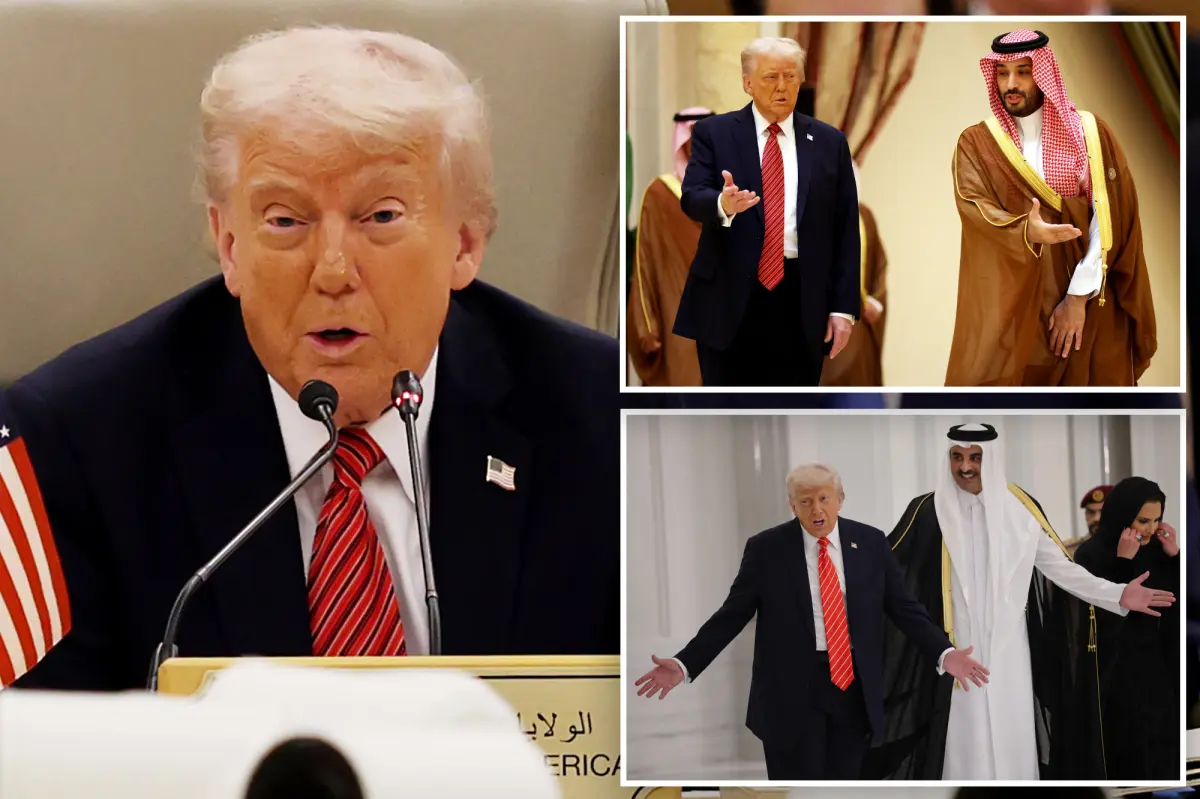
The early hours of Monday morning in Washington were greeted not by the quiet, measured pronouncements of traditional diplomacy, but by a characteristic, digital lightning bolt from President Donald Trump that sent shockwaves through foreign ministries across the globe. Writing on his Truth Social platform with his trademark mix of casual enthusiasm and high-stakes leverage, Trump laid bare a bold and highly transactional vision for the Middle East, revealing that he had issued a sweeping ultimatum to several of America’s key allies in the region. According to the president, any nation wishing to be included in the dividends of a newly revived, rapidly progressing nuclear agreement with the Islamic Republic of Iran must first take the monumental step of normalizing its relations with Israel by signing onto the Abraham Accords. To Trump, this is not merely a preference but a non-negotiable term of engagement—a “mandatory request” that seeks to fundamentally redraw the geopolitical map of the Middle East in one fell swoop. By linking the containment of Iran’s nuclear ambitions directly to the formal recognition of Israel, Trump has effectively merged two of the most complex, volatile, and historically separate diplomatic challenges of the modern era. This brash approach bypasses the decades of slow-moving, cautious diplomatic protocol that have dominated the State Department, replacing it with the high-risk, high-reward tactics of a corporate boardroom. For the diplomats, analysts, and ordinary citizens of the region, the announcement was a stark reminder of how rapidly American foreign policy can shift under a leader who views complex international rivalries not as permanent historical tragedies, but as deals waiting to be structured, leveraged, and closed. The sheer scale of this ambition leaves little room for middle ground, presenting regional leaders with a dramatic choice between unprecedented alignment or total exclusion from the emerging regional security architecture.
The foundation for this public pronouncement was laid during an extraordinary, multi-nation conference call on Saturday, where Trump spoke directly to an array of powerful Middle Eastern leaders who find themselves caught in a delicate balancing act between Washington’s demands, regional stability, and their own domestic populations. The call included the heavyweights of the Arab and Muslim worlds: Saudi Arabia, the United Arab Emirates, Qatar, Egypt, Pakistan, Turkey, Jordan, and Bahrain. For some on the line, like the United Arab Emirates and Bahrain, the demand was already met, as both nations chose to normalize ties with Israel in 2020 under the original, US-brokered Abraham Accords. Yet for others, particularly Saudi Arabia, Jordan, and Turkey, the request represents a profound political hazard that forces them to weigh the benefits of American partnership against the deep-seated cultural and historical solidarity they share with the Palestinian cause. Trump, however, displayed little patience for these historical nuances, recounting on Truth Social that he explicitly told these “Great Leaders” that after all the effort, political capital, and military commitment the United States has invested in stabilizing their region, it is only fair that they step forward simultaneously to sign the Accords. His rhetoric was characteristically blunt, warning that any nation refusing to join this grand coalition would be viewed as acting with “bad intention” and would consequently be excluded from the economic and security benefits of the impending Iran nuclear settlement. This transactional styling of foreign policy changes the human dynamic of international relations; it transforms a long-standing, emotionally charged history of blood, faith, and borders into a tangible transaction where reluctance is framed as a personal lack of goodwill. By holding the highly anticipated settlement with Iran hostage to Israel’s regional acceptance, Trump has placed these foreign leaders in a high-pressure pressure cooker, forcing them to calculate whether the preservation of their traditional foreign policies is worth the risk of being left out in the cold by a determined American president.
Perhaps the most astonishing and unexpected twist in Trump’s Monday morning missive was his public suggestion that the Islamic Republic of Iran itself could ultimately become a signatory to the Abraham Accords. This proposal borders on the surreal when viewed through the lens of recent history, considering that Tehran and Jerusalem have spent decades locked in a vicious, often bloody shadow war that recently escalated into direct, unprecedented military strikes and counter-strikes. The animosity between the two nations is not merely political; it is deeply ideological, woven into the very fabric of the Iranian theological state and the existential defense doctrine of Israel. Yet, Trump painted a picture of a breakthrough so historic that it would dismantle this decades-long enmity, claiming that during his conversations over the weekend, other regional leaders expressed that they would be “honored” to welcome a reconciled Iran into this “unparalleled World Coalition” once a formalized treaty is signed. “Wow, now that would be something special!” Trump wrote, capturing the sheer, almost cinematic optimism of a leader who believes that his personal touch can dissolve even the most deep-seated hatreds on the planet. For the ordinary citizens of Israel, who have spent the last year running to bomb shelters, and for the people of Iran, who have endured years of crushing economic sanctions and political isolation, the mere mention of such a possibility offers a dizzying glimpse of an alternate reality. Whether this suggestion is a genuine, long-term strategic goal or simply a masterful piece of psychological warfare designed to entice and disarm the Iranian leadership remains to be seen. What is clear, however, is that such a development would require Israel to make a profound psychological leap, overcoming generations of existential fear to embrace its most bitter adversary as a legitimate partner in regional peace—a prospect that many in Jerusalem view with profound skepticism and alarm.
To truly understand the human and political stakes of this diplomatic gambit, one must look at the immense pressure it places on Saudi Arabia and its young, ambitious ruler, Crown Prince Mohammed bin Salman. For years, the United States has eyed a normalization agreement between Jerusalem and Riyadh as the holy grail of Middle Eastern diplomacy—a historic breakthrough that would permanently bridge the divide between the Jewish state and the custodian of Islam’s holiest sites. Prior to the devastating events of October 7, 2023, the Saudi Crown Prince had repeatedly signaled to international media and American mediators that his country was indeed moving steadily in that direction, driven by a desire to modernize the Saudi economy and secure a defensive alliance with Washington. However, the savage Hamas attacks on Israel and the subsequent, catastrophic war in Gaza abruptly halted this momentum, inflaming public opinion across the Arab world and making any public embrace of Israel politically toxic for regional leaders. The Saudis, alongside their neighbors in Jordan, Egypt, and Turkey, have consistently maintained that true, lasting normalization cannot occur without a just and viable resolution to the Palestinian issue, illustrating the profound human costs and emotional undercurrents that drive these political decisions. For these leaders, signing the Abraham Accords under pressure is not just a commercial deal; it is a choice that risks triggering widespread domestic unrest and betraying a cause that has defined Arab identity for more than seventy years. Trump’s current insistence that these nations bypass these deep moral and domestic considerations to secure a deal with Iran ignores the human tragedy unfolding in Gaza, presenting a cold, pragmatic calculus that forces Middle Eastern rulers to choose between regional solidarity and their own strategic survival in a rapidly shifting world.
Despite these formidable hurdles, the Trump administration appears to be charging ahead with a sense of urgency, quietly negotiating a “broad template” for a comprehensive peace plan with Iran that senior officials claim is already ninety-five percent complete. The original Abraham Accords, which initially brought the UAE, Bahrain, Morocco, and Sudan into alignment with Israel, are widely celebrated by Trump’s supporters as one of the most significant foreign policy triumphs of the twenty-first century, and completing this grand design with Saudi Arabia and Iran would cement his legacy as a legendary peacemaker. Behind the scenes in Washington, Riyadh, and Tehran, teams of exhausted diplomats are reportedly working around the clock, attempting to iron out the final, highly sensitive details of a document that could dictate the flow of global energy, security, and commerce for decades to come. Yet, even as rumors of an imminent signing ceremony began to swirl over the weekend, Trump took to his platform to publicly caution his negotiating team against rushing into a subpar agreement, emphasizing that he would rather walk away entirely than accept anything less than a perfect arrangement. “It will only be a Great Deal for all or, no Deal at all,” he asserted, reminding his domestic audience and foreign allies of his foundational belief in the power of walking away from the negotiating table. This deliberate slowing of the process creates a grueling psychological environment for the negotiators on all sides, who are forced to balance the immense, sleepless pressure of reaching a historic breakthrough with the sudden, unpredictable shifts in their political leaders’ public statements. For the global community, which watches these developments with bated breath, this high-stakes game of chicken represents both the terrifying fragility and the immense, transformative potential of modern personalist diplomacy.
Ultimately, the dramatic ultimatum issued by Donald Trump underscores a profound and unsettling truth about the current state of global affairs: the thin line separating historic, world-altering peace from devastating, wide-scale warfare is often held together by the sheer force of personality and transactional leverage. By warning that a failure to reach this comprehensive agreement would result in a swift return to “the Battlefront and shooting” with forces “bigger and stronger than ever before,” the president has laid bare the catastrophic consequences of diplomatic failure. This stark, uncompromising warning serves as a sobering reminder of the very real human lives hanging in the balance—the soldiers, families, and communities across the Middle East whose safety and future are tethered to the ink dried on these diplomatic papers. For generations, the Middle East has been defined by its scars, its intractable conflicts, and a deep-seated cynicism regarding the prospects of peace, which makes Trump’s audacious attempt to force a simultaneous, region-wide reconciliation both incredibly inspiring and deeply terrifying. If his high-wire act succeeds, it could usher in an unprecedented era of economic prosperity, shared security, and cultural exchange, linking historical adversaries in a network of mutual interest that would have seemed impossible just a few years ago. If it fails, however, the collapse of these high-stakes negotiations could plunge the region back into a cycle of unchecked nuclear proliferation, proxy warfare, and direct kinetic conflict that no nation is truly prepared to endure. As the world waits to see how the leaders in Riyadh, Tehran, and Jerusalem respond to this powerful American pressure, one thing remains undeniably clear: the future of the Middle East is being written in real-time, governed not by the slow march of history, but by the relentless, unpredictable art of the deal.