





The Art of the Absolute Deal: How Trump’s High-Stakes Iran Strategy Redefined the G7 and United States Foreign Policy
The G7 Summit and the Clash of Diplomatic Visions
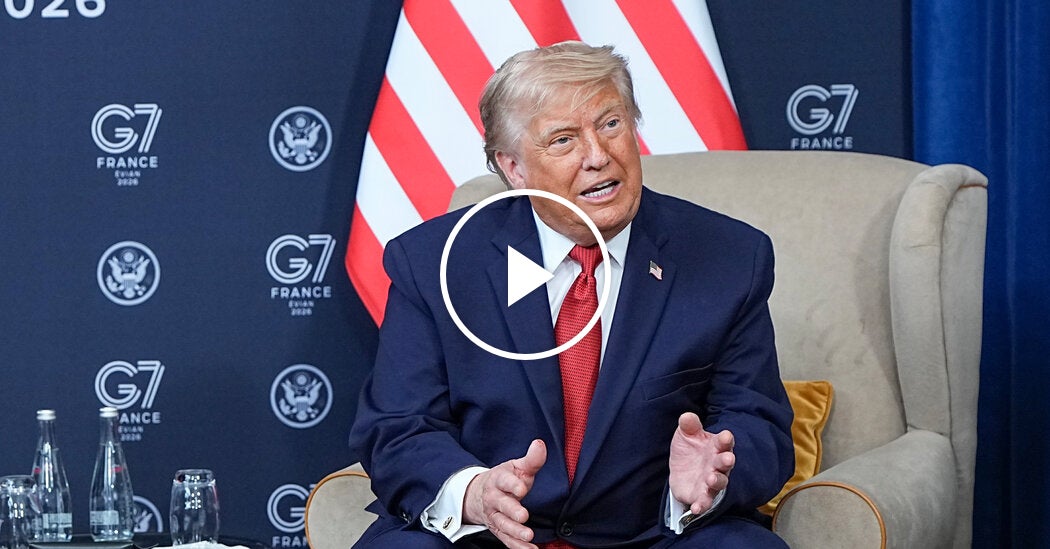
The picturesque coastal town of Biarritz, France, historically known for its tranquil waves and aristocratic retreats, became the pressure cooker of modern international diplomacy during the final hours of the annual G7 summit. Beneath the polished veneer of multilateral cooperation lay a simmering, high-stakes ideological clash over the future of the Middle East, with United States President Donald J. Trump occupying the absolute center of the geopolitical storm. For three days, European allies—chiefly led by French President Emmanuel Macron—attempted to guide the American administration back toward a consensus-based approach regarding Iran’s nuclear ambitions. However, Mr. Trump utilized the summit’s concluding press conference to break sharply from domestic and international norms, using raw, unfiltered language to dismiss the landmark 2015 nuclear agreement brokered by his predecessor, President Barack Obama. Under mounting domestic and international pressure to demonstrate that his unilateral “maximum pressure” doctrine could yield a superior alternative to war, Trump sought to frame his hardline posture not as a reckless march toward military conflict, but as the aggressive groundwork for an unprecedented, far more lucrative diplomatic victory.
              THE G7 DIPLOMATIC CROSSROADS

   [ Macron's Multilateralism ] <---> [ Trump's America First ]
                                          /
                                         /
                 v                       v
           [ European Mediation ]   [ Maximum Pressure ]
                                        /
                  v                     v
             ===============================
             THE FUTURE OF INTERSTATE DIPLOMACY
             ===============================
Rhetorical Warfare and the Demolition of the JCPOA
At the heart of the President’s performance was a calculated, highly personal effort to thoroughly discredit the Joint Comprehensive Plan of Action (JCPOA), a cornerstone of the Obama administration’s foreign policy legacy. Speaking before a packed room of international reporters, Trump did not merely criticize the mechanics of the original deal; he target-demolished its psychological and symbolic credibility by claiming that Iranian leadership held utter contempt for the previous American administration. He pointedly referenced the highly controversial $1.7 billion cash settlement delivered to Iran in 2016—a repatriation of frozen non-nuclear dispute funds—as evidence of an amateurish, submissive American negotiation strategy that left the regime in Tehran laughing at Western leadership. By utilizing coarse, expletive-laden framing to describe how Iranian officials allegedly viewed President Obama, Trump aimed to tap into a deeply rooted populist narrative that positions traditional American diplomats as easily manipulated elites. This rhetorical strategy serves a dual purpose: it energizes his domestic political base by drawing a stark contrast with his predecessor, while simultaneously raising the stakes for his own administration, which must now deliver a comprehensive agreement that is visibly superior to the one he dismantled.
   =================================================================
                      TRUMP'S RHETORICAL REFRAMING
   =================================================================

   [ Obama's JCPOA Approach ]            [ Trump's Proposed Approach ]
   --------------------------            -----------------------------
   * Multilateral consensus              * Unilateral leverage
   * Repatriation of assets ($1.7B)      * Economic blockade & sanctions
   * Gradual integration of Iran         * Complete behavior modification
   * Perceived as "weakness" by critics  * Framed as "strength & transaction"
Sifting Through Rumors of Sovereign Subsidies
As rumors swirled through the hallways of the Biarritz summit regarding the potential details of a replacement accord, reporters quickly pressed the President on reports of a massive $300 billion reconstruction fund allegedly destined to revitalize Iran’s crippled economy. According to these emerging reports, the enormous capital injection would not come directly from Washington’s coffers, but would instead be heavily subsidized by wealthy U.S. allies in the Persian Gulf, who have long viewed Tehran as an existential security threat. Trump swiftly and unequivocally rejected any direct American financial involvement, asserting that “not ten cents” of U.S. taxpayer money would be committed to stabilizing the Islamic Republic’s economy. While he conceded that third-party private entities and sovereign allies were entirely free to make their own investment decisions within a post-sanctions environment, his absolute refusal to offer American financial guarantees highlighted an ironclad tenant of his “America First” philosophy. This posture underscores a complex geopolitical paradox: the United States aims to completely dictate the structural terms of global security pacts while systematically shifting the immense financial burdens of stabilization, containment, and reconstruction onto regional partners.
             =================================================
                      PROPOSED IRAN FUNDING DYNAMICS
             =================================================

             [ United States ] --------> $0.00 Direct Funding
                                           |
                                           v
             [ Gulf State Allies ] ----> Coerced Capital Support ($300B)
                                           |
                                           v
             [ Sanctioned Iran ] -------> Structural Economic Reform
The Unending Debate Over Obama’s Signature Accord
To understand the immense gravity of the diplomatic standoff in France, one must examine the deep structural modifications Trump introduced when he withdrew the United States from the JCPOA in May 2018. Designed by the Obama administration alongside five global powers, the original nuclear deal was constructed as a highly specialized, technical transaction: in exchange for verifiable limits on Iran’s uranium enrichment and intrusive monitoring by the IAEA, the international community agreed to lift the sweeping economic sanctions that had crippled the Iranian economy for decades. Critics of the 2015 agreement argued that its structural “sunset clauses” allowed key restrictions on enrichment to expire too quickly, while completely failing to address Iran’s proliferating ballistic missile program or its aggressive regional proxy operations in Yemen, Syria, and Lebanon. By initiating his unilateral campaign of economic isolation, Trump wagered that the sheer weight of American treasury sanctions would eventually force Tehran to choose between total economic collapse or returning to the negotiating table to sign a much broader, permanent treaty. However, this high-stakes brinkmanship has pushed the global community to the edge, leaving European allies struggling to keep Iran compliant while the risk of miscalculation escalates daily in the critical shipping lanes of the Persian Gulf.
 =====================================================================
                  THE TWO STRATEGIC PATHWAYS TO TEHRAN
 =====================================================================

 PATHWAY A: The JCPOA Blueprint (2015)
 [Narrow Focus] ---> Uranium Limits ---> IAEA Inspections ---> Sanctions Relief

 PATHWAY B: The Maximum Pressure Blueprint (Trump)
 [Broad Focus]  ---> Economic Blockade ---> Total Capitulation ---> New Treaty
                     (Missiles + Proxies)
European Mediation and the Shifting G7 Dynamics
The tense atmosphere of the summit was further electrified by President Macron’s high-risk, unconventional diplomatic maneuvering, which culminated in the surprise arrival of Iranian Foreign Minister Mohammad Javad Zarif in Biarritz on a French government aircraft. This dramatic, unannounced visit signaled a desperate, highly coordinated effort by European powers—including the United Kingdom and Germany—to establish a viable diplomatic off-ramp before the economic blockade triggered an irreversible military escalation. While Trump chose not to meet directly with Zarif during his brief tenure on the margins of the summit, the presence of the Iranian diplomat underscored France’s determination to act as a crucial mediator between Washington’s financial leverage and Tehran’s strategic patience. The French initiative highlighted the widening rift within the transatlantic alliance, as European leaders struggled to preserve the core architecture of the nuclear deal while simultaneously managing an unpredictable American president who favors direct, highly transactional bilateral negotiations over traditional, multilateral treaty frameworks. Despite these profound tactical disagreements, the summit concluded with a fragile, uneasy understanding: while the U.S. would continue its aggressive economic blockade, it would not actively block European attempts to carve out narrow financial channels for humanitarian trade.
          =======================================================
                     THE TRIANGULAR MEDIATION NETWORK
          =======================================================

                         [ France / Europe ]
                            /
                           /
               (Mediation & Diplomacy)  (Economic Lifelines)
                         /
                        v                   v
                [ United States ]       [ Islamic Republic ]
                (Maximum Pressure)     (Strategic Patience)
The Path Forward: Diplomacy, Warfare, or Stalemate?
As the fallout from the G7 summit continues to reverberate across global capitals, the international community is left to contemplate the ultimate outcome of Donald Trump’s high-stakes gamble in the Middle East. The President remains under immense pressure to deliver a tangible, verifiable diplomatic breakthrough that can successfully justify his confrontational approach, especially as critics warn that his single-handed dismantling of the JCPOA has left the United States increasingly isolated from its traditional democratic allies. If his aggressive strategy succeeds in forcing Iran to negotiate a new, highly comprehensive treaty that permanently addresses its regional expansionism and missile programs, Trump will have secured a defining, historic foreign policy victory that far eclipses his predecessor’s achievements. However, if Tehran chooses to maintain its policy of defiant resistance, the world face a precarious, highly volatile landscape characterized by ongoing asymmetric warfare, cyber-attacks, and periodic disruptions to global energy markets. Ultimately, the high-wire act performed in Biarritz reveals a fundamental truth about modern geopolitics: the thin line dividing a historic diplomatic breakthrough from a devastating, region-wide military conflict has never been more fragile.