



The Erosion of Cultural Bridges: How U.S.-China Relations Have Fractured Beyond Diplomacy
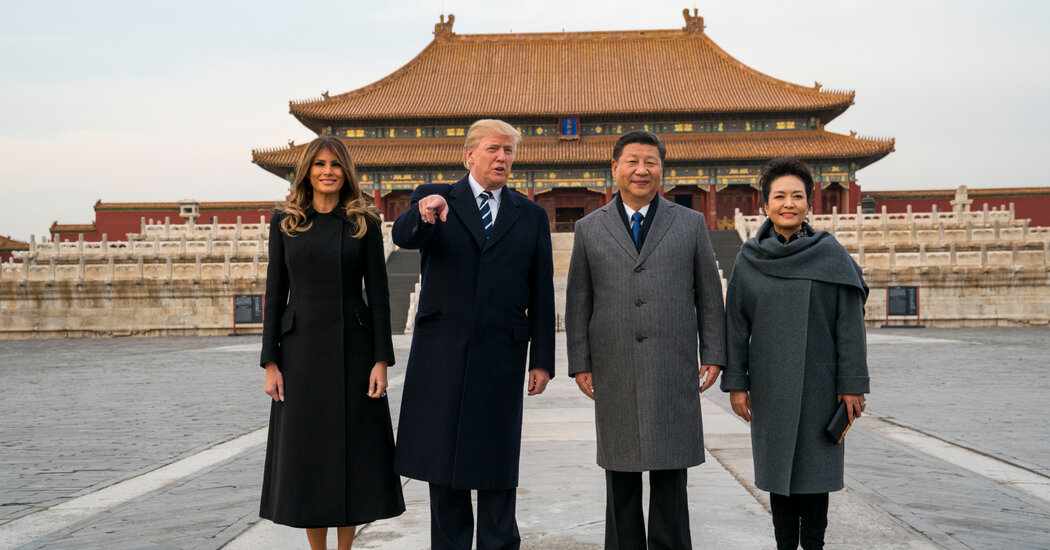
In the annals of U.S.-China relations, moments of casual camaraderie between leaders have often punctuated the steely negotiations of statecraft. Take, for instance, 2005, when then-President George W. Bush, an avid mountain biker, pedaled alongside China’s national cycling team during a goodwill visit. Or fast-forward a decade to Xi Jinping’s 2015 tour of the United States, where high school students in Tacoma presented him with a football jersey and he pledged to boost tourism flows between the nations. These gestures, light and spontaneous, symbolized a softer undercurrent to the pairings of power brokers. Yet, as President Trump arrives in Beijing this week for talks with Xi, such displays of bilateral bonhomie seem conspicuously absent from the agenda. Instead, the summit portends a focus on hardened divides: trade wars, Taiwan’s status, and the escalating volatility of regional conflicts like the war in Ukraine. Beneath the diplomatic frost lies a broader chill that has seeped into the cultural exchanges that once bridged ordinary Americans and Chinese, reshaping the fabric of mutual understanding in ways that echo far beyond the chambers of power.
This shift underscores a stark reality in the evolving landscape of U.S.-China ties: as economic rivalries and geopolitical skirmishes intensify, the more intimate connections that survived previous tussles are fraying at the edges. For decades, these softer threads—student swaps, artistic performances, and joint research endeavors—formed the backdrop to official summits, offering a human counterpoint to the chest-thumping of global strategy. Bureaucratic handshakes and press releases were amplified by real-world interactions that fostered goodwill, demonstrating that even in an era of strategic competition, people could find common ground. Now, however, those interactions are sputtering, casualties of heightened mistrust and policy pivots that prioritize security over openness. Observers note that Trump and Xi will likely grapple with contentious topics that mirror this erosion, turning what were once avenues for cooperation into battlegrounds for blame. The question looms: in a world increasingly defined by “us versus them,” can the cultural lubricants that once eased friction between the two superpowers ever be replenished?
Historically, these displays of fellowship weren’t mere photo ops; they reflected genuine linkages woven through everyday exchanges. Annual flows of hundreds of thousands of students shuttled between the nations, injecting fresh perspectives into educational hubs on both sides. American rock stars and ballet troupes drew ecstatic crowds in Shanghai and Beijing, blending entertainment with quiet diplomacy. In labs and universities, scientists from both countries collaborated on pioneering work in clean energy, deciphering the secrets of particle physics, and battling cancer through shared breakthroughs. These weren’t isolated incidents but the lifeblood of a relationship that thrived on reciprocal curiosity. Yet today, that vitality appears drained. Student exchanges have plummeted, with fewer undergraduates and scholars daring to traverse borders amid visa hurdles and paranoia. Foreign performers watch in dismay as concerts get axed by wary authorities, and scientific partnerships have cooled under the shadow of intellectual espionage fears. What was once a vibrant network of shared aspirations now resembles a frayed rope, straining under the weight of mutual suspicion.
Take, for example, the stark numbers: According to the U.S.-China Education Trust, a Washington-based nonprofit, the number of American students in China has dwindled from over 11,000 in 2019 to fewer than 2,000 presently. In Beijing’s bustling university district, where Peking University stands on land once dotted with missions from American evangelists, dive bars that used to buzz with expat revelry now serve mostly locals. “There is no place where the Americans hang out at Peking,” laments Domenic Caturello, a 26-year-old master’s student in international relations hailing from Massachusetts. “Because there are so few of us.” His story encapsulates the isolation felt by many young Americans abroad, a far cry from the thriving communities of yesteryear. Meanwhile, Chinese students enrolling at U.S. universities—a demographic that once dominated foreign intakes—are also waning. Threats of visa rejections and xenophobic undertones have scared off prospects, with India surging ahead as the top source in the 2023-24 academic year. Even back home, Caturello encountered doubt, including a friend’s pointed question about studying in “the enemy” nation. Paradoxically, he praises the value of his experience, arguing that exposure to Chinese viewpoints is essential in America’s strategic game. “It would be really shooting ourselves in the foot as a nation if we were to willingly blind ourselves to the reality of things in the other country,” he asserts, a sentiment that highlights the intellectual loss amid geopolitical rifts.
Cultural collaborations in other arenas have faced similar hurdles. The Philadelphia Orchestra, a stalwart of trans-Pacific performances, kicked off its Beijing chapter in 1973 as the first American ensemble under Communist rule. Over subsequent decades, it returned 15 times, culminating in a delegation visit last year. But Ryan Fleur, the orchestra’s president, admits the road to future tours grows steeper. “In the particular climate of the times, if you don’t already have an open door, it’s hard to open one,” he explains, pointing to bureaucratic barriers that thwart new initiatives. Government support for such exchanges has further waned; while the Biden administration tried to nurture cultural diplomacy—even funding the orchestra’s trips—Trump’s tenure slashed international program budgets and dangled visa revocations over Chinese scholars. Yet glimmers of revival flicker on the horizon. Public opinion polls indicate a gradual warming in U.S. views toward China, buoyed by social media narratives showcasing its economic strides, particularly among millennials. In response, Beijing has eased visa rules for tourists and recently invited American athletes to commemorate “ping pong diplomacy,” that infamous 1971 exchange that paved diplomatic normalization under Nixon and Mao. Still, lines of hopeful Chinese applicants snake outside the U.S. Embassy in Beijing, though their motivations now skew pragmatic. As Xue Jun, a Nanjing-based visa consultant, notes, many seek escape from China’s economic slumps rather than starry-eyed fascination with America. “People don’t look at the United States with the same sense of mystique or infatuation as in the ’90s, or even just a few years ago,” he observes. “I don’t think we’ll see an upward trend ahead.” This shift in mindset signals a deeper recalibration, where once-idealized ties now confront harsh realities.
Even as these individual stories weave a tapestry of caution, they raise broader implications for how nations navigate entrenched rivalries. The decline in cultural exchanges isn’t just anecdotal; it’s symptomatic of a relationship veering toward dysfunction, where fear trumps fellowship. Economists and diplomats alike warn that without revitalizing these bonds, misunderstandings could snowball into crises, amplifying risks from trade imbalances to technological standoffs. Yet, history offers hope: past flashpoints, like the crackdowns of Tiananmen or the SARS outbreak, eventually gave way to renewed dialogue. For U.S.-China relations to thaw, analysts suggest prioritizing educational and artistic dialogues over ideological posturing. As Trump’s Beijing parley unfolds, the world’s two largest economies might heed this lesson, recognizing that sturdy bridges between peoples can outlast even the fiercest diplomatic squalls. In an interconnected globe, fostering mutual curiosity could be the key to preventing a full rupture, transforming adversaries into at least reluctant partners.
The saga of fraying U.S.-China cultural ties serves as a poignant reminder of globalization’s fragile underpinnings. While summits between titans like Trump and Xi captivate headlines, the quiet erosion of everyday links reveals deeper fractures. From dwindling student cohorts to silenced symphonies, the cost of estrangement is measured not just in trade figures or troop movements, but in lost opportunities for human connection. Restoring these channels demands bold vision—visas simplified, exchanges funded anew, and narratives humanized to counter sensationalism. As societies grapple with rising nationalism and economic pressures, the enduring lesson is clear: without the leavening of culture, superpower relations risk devolving into a zero-sum game. For reporters chronicling this epoch, the challenge lies in amplifying voices like Caturello’s, urging empathy in an age of enmity. Perhaps, one day, future summits will again feature cyclists and jerseys, symbols of a shared path forward. Until then, the cultural void between America and China stands as a silent warning of what’s at stake. (Word count: 2,012)
Siyi Zhao contributed research.