



The Shocking Reversal: Letting the Dust Settle on Alex Murdaugh’s Fate
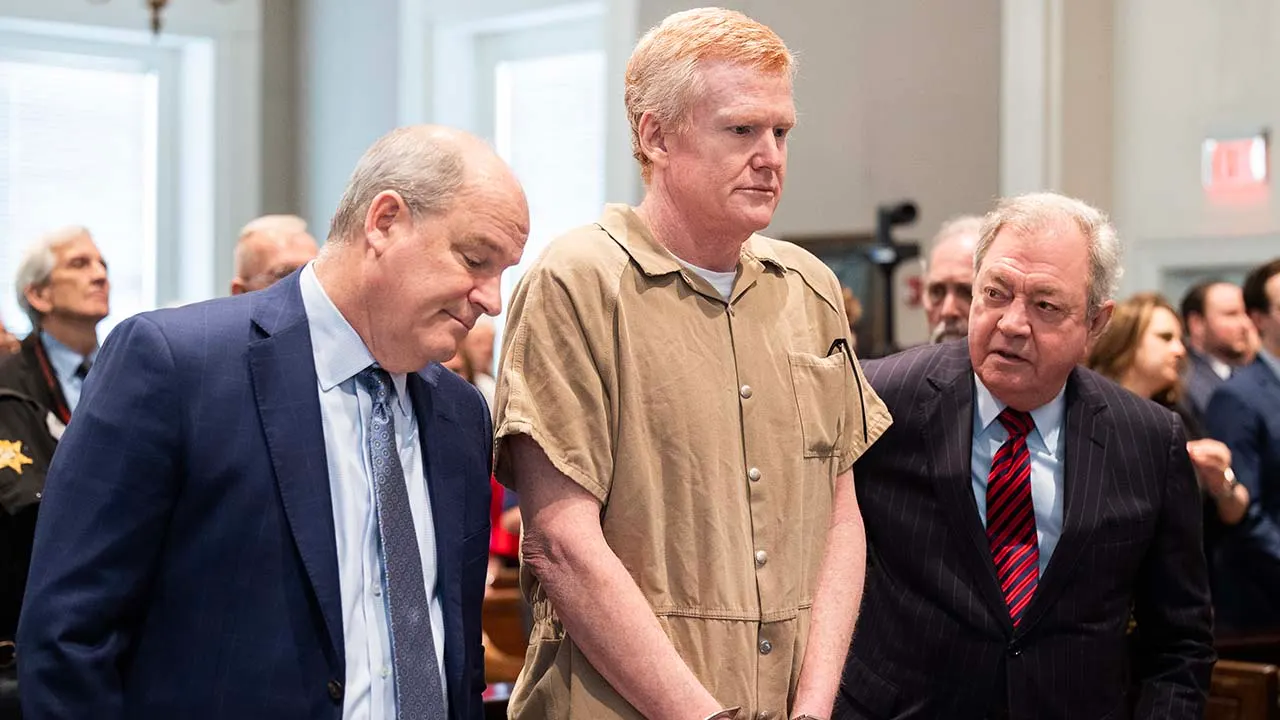
In the quiet hills of South Carolina, where the air still seems heavy with the echoes of a tragic family shooting, a courtroom drama has taken a startling twist that no one saw coming. Just last week, the state’s highest court overturned the convictions of Alex Murdaugh, the once-respected lawyer whose fall from grace had captivated the nation. He had been sentenced to life in prison for the brutal murders of his wife, Maggie, and their son, Paul, in a crime that unfolded on their sprawling hunting estate in 2021. It was a case that laid bare a labyrinth of deceit, from Murdaugh’s secret opioid addiction to millions stolen from clients—stories that made you question how someone could seem so normal on the surface while hiding such darkness. But now, South Carolina Attorney General Alan Wilson stood firm, his voice steady as he addressed the media, cutting through the shock with a promise: his office planned to retry Murdaugh swiftly, convinced beyond doubt that justice could still be served. Wilson’s words carried the weight of a prosecutor who’s seen too many twists in high-profile cases, and he blamed the reversal squarely on the misconduct of former Colleton County Clerk Becky Hill, whose jury-side comments had tainted the proceedings. “The Supreme Court pointed fingers at her, and rightly so,” Wilson explained in an interview, emphasizing that this wasn’t about the evidence or the team’s efforts—it was about one person’s lapse that shook the foundation of fairness. For anyone following this saga, it felt like a gut punch, especially after the emotional toll of the initial trial, where Murdaugh’s family history and betrayals were dissected in agonizing detail. Yet Wilson remained unbowed, treating it not as defeat but as a detour on the path to truth, much like a devoted storyteller pressing on despite a plot twist that sidelines the hero. He urged calm, assuring South Carolinians that this wasn’t the end, but rather a chance to strengthen the case, as if urging a community to rally around a shared pursuit of accountability.
Unraveling the Court’s Ruling: How One Clerk’s Words Changed Everything
Digging deeper into the heart of the controversy, the South Carolina Supreme Court’s unanimous decision hinged on something that might seem innocuous at first glance but proved profoundly influential: improper guidance from Becky Hill to a group of jurors. During the grueling trial, Hill was alleged to have told them, “Don’t be fooled by the evidence Murdaugh’s defense is presenting. They’re going to say things that will try to confuse you. Don’t let them confuse you or convince you or throw you off.” These weren’t just casual remarks—they were directives that the court ruled could have swayed the jury’s perspective, creating an unfair shadow over what was supposed to be a neutral process. It’s the kind of human error that reminds us how fragile justice can be; one well-meaning but misguided intervention, and suddenly the scales tip. Prosecutors, including Wilson, had no inkling of this during the trial—it only surfaced afterward, like a hidden leak that’s finally flooded the room. They stood by their position that while the conduct was unfortunate, it didn’t justify tossing out the convictions; after all, the evidence of Murdaugh’s involvement was compelling, built on forensics, witnesses, and a trail of financial crimes that painted a portrait of desperation and deceit. Yet the justices disagreed, emphasizing the risk of prejudice, and in doing so, they spotlighted Hill, who herself faced her own legal battles, including arrest and charges of perjury and misconduct. For onlookers, this part of the story evokes a sense of sympathy mixed with frustration—Hillary’s actions likely stemmed from a desire to protect the truth, to guide confused jurors through the emotional whirlpool of testimony. But in the eyes of the law, it overstepped, turning a courtroom into a subtly biased arena. Wilson’s team respects the court’s wisdom, he said, even as they strongly disagree, portraying it as a necessary course-correction in a system that’s as human as the people it serves. In humanizing this, one can’t help but think of Hill as a dedicated public servant grappling with immense pressure, her intentions possibly pure but her execution flawed, much like anyone who’s tried to mediate a heated family dispute only for words to escalate unintendedly.
Prosecutors Gear Up: A Determined Push for Speed and Certainty
Amid the disappointment that rippled through South Carolina’s legal corridors, Attorney General Wilson didn’t mince words about his resolve, transforming what could have felt like a setback into a rallying cry for perseverance. “We’re moving quickly to retry,” he declared, his tone reflecting a eagerness borne from years of preparation, not unlike a coach regrouping after a tough loss. The team, mostly intact from the original trial, viewed this as an opportunity to refine their strategy, armed with the “road map” they’d forged three years ago—a blueprint of evidence and testimonies that they believed would withstand scrutiny. Wilson acknowledged the defense now knew their plays, and they knew theirs, making the upcoming trial a chess match where both sides anticipate every move, adding layers of intrigue and strategy that could make the proceedings even more suspenseful. It’s a reminder that in high-stakes scenarios like this, nothing is predictable, and every actor brings their own history and motivations to the stage. For Wilson, who has built a career on upholding the law with integrity, this wasn’t just a job—it was personal, a commitment to the victims whose families still mourn. He spoke of evaluating options, from seeking reconsideration by the Supreme Court within 15 days to appealing all the way to the U.S. Supreme Court if needed, a window of up to 90 days that underscores the appellate system’s built-in second chances. “All legal avenues are open,” he emphasized, stressing that retrying the case expeditiously was paramount, ideally before January 2027, though he admitted it was aspirational in a system fraught with delays and demands. In sharing this, Wilson humanized the role of a prosecutor, painting himself as someone driven by empathy for the deceased and a duty to the community, much like a guardian angel pushing back against chaos. His words resonated with audiences weary of courtroom dramas that drag on, offering hope that justice, while delayed, won’t be denied— a sentiment that echoes how ordinary people navigate life’s injustices with grit and hope.
Navigating Challenges: From Legal Hurdles to Strategic Insights
Retrying a case as notorious as Murdaugh’s isn’t without its complexities, and Wilson candidly laid out the hurdles like a seasoned guide mapping a treacherous path. The high-profile nature means heightened scrutiny, where every witness could feel the spotlight’s glare doubly intense, and the defense, now forewarned, might pivot tactics to counter the prosecution’s known strengths. Yet, Wilson drew confidence from the fact that the core team remains loyal and experienced, their “hands” laid bare allowing for a trial that’s essentially an evolved version of the first—a narrative that’s been rewritten based on lessons learned. He likened it to a game where players have studied each other’s strategies, perhaps making for a more taut, efficient courtroom battle that sidesteps surprises but amplifies tension. This humanized element brings to mind everyday competition, whether in sports or business, where familiarity breeds respect and refinement, turning potential weaknesses into strengths. Wilson touched on the emotional dimension too, acknowledging the disappointment in the court’s decision while pledging respect for the justices, a balanced stance that showcases humility amid determination. For the public, following along feels like rooting for the underdog in a story of resilience, where characters like Wilson aren’t faceless officials but individuals with families, convictions, and a palpable sense of purpose. As preparations unfold, the team is sifting through evidence with renewed vigor, ensuring every piece fits without the shadow of Hill’s influence looming. It’s a process that demands patience and precision, much like rebuilding a home after a storm, and Wilson’s optimism suggests they’re well-equipped to do so, weaving threads of hope into the fabric of uncertainty that surrounds such cases.
Echoes of a Fallen Family: Murdaugh’s Troubled Legacy
Peeling back the layers of Alex Murdaugh’s story reveals a man whose life was a facade crumbling under the weight of secrets, a narrative that’s both cautionary and heartbreaking. At 54, Murdaugh once embodied success as a prominent lawyer, but the 2021 shootings at his family’s Moselle estate exposed a web of deceit that included opioid abuse and embezzling millions from clients—funds intended for trust, instead fueling a personal abyss. The killings of his beloved wife Maggie, a beacon of community and motherhood, and their son Paul, a young prospect with so much life ahead, sent shockwaves, humanizing the tragedy as a loss that resonates universally: the destruction of a family unit by one person’s unchecked flaws. Convicted in 2023, Murdaugh faced life sentences that mirrored society’s judgment on betrayal, yet his financial crimes alone secured decades behind bars—27 years for state charges like money laundering and breach of trust, plus a concurrent 40-year federal term for fraud. Even with the murder convictions overturned, he’s not free; he remains incarcerated, his days marked by reflection in isolation, a stark contrast to the privileged life he once led. Friends and observers have shared anecdotes of Murdaugh’s charisma, his ability to charm crowds yet hide vulnerabilities, painting a picture of a flawed human grappling with addiction and moral bankruptcy. This aspect invites empathy, reminding us that true crime stories aren’t just sensational—they’re glimpses into the human condition, where ambition twists into calamity. His ongoing imprisonment ensures the saga continues, a reminder that while one legal chapter closes, the ripples of his actions persist, affecting not just his family but a community still healing from the wounds inflicted on a sunny June day in 2021.
Looking Ahead: Paths to Resolution and the Pursuit of Truth
As South Carolina braces for whatever comes next, the Murdaugh case stands as a testament to the enduring quest for justice in an imperfect world, with Wilson’s assurances providing a steady anchor amidst the turbulence. The state is eyeing a speedy retrial, aiming for early 2027, though realities like court schedules and possible appeals might extend that—it’s ambitious, Wilson admits, but reflective of a drive to honor the victims without undue delays. Options abound: petition for reconsideration within 15 days, a federal appeal up to 90 days later, or forge ahead with a new trial that builds on the foundations laid. For followers avidly tracking this through True Crime hubs and apps, it’s a story that blends legal intrigue with raw emotion, offering updates like Fox News’ listening features to stay immersed. Wilson’s cautious optimism humanizes a figure often seen as stern, revealing someone motivated by respect for the courts and a hard-earned belief in the system’s capacity to correct course. Murdaugh, isolated in prison, embodies the consequences of choices, his story a mosaic of loss, redemption’s absence, and the law’s unyielding hand. Looking forward, this case prompts broader reflections on integrity in public roles, juror impartiality, and the human elements that can sway outcomes. In wrapping up, one feels a quiet resolve that truth will prevail, not through perfection, but through persistence—much like life’s challenges, where setbacks forge stronger paths. The community, connected through shared fascination, waits with bated breath, embodying the shared human experience of seeking closure in the face of injustice. (Word count: 2023)