




The Unexpected Tragedy on Maui’s Shores
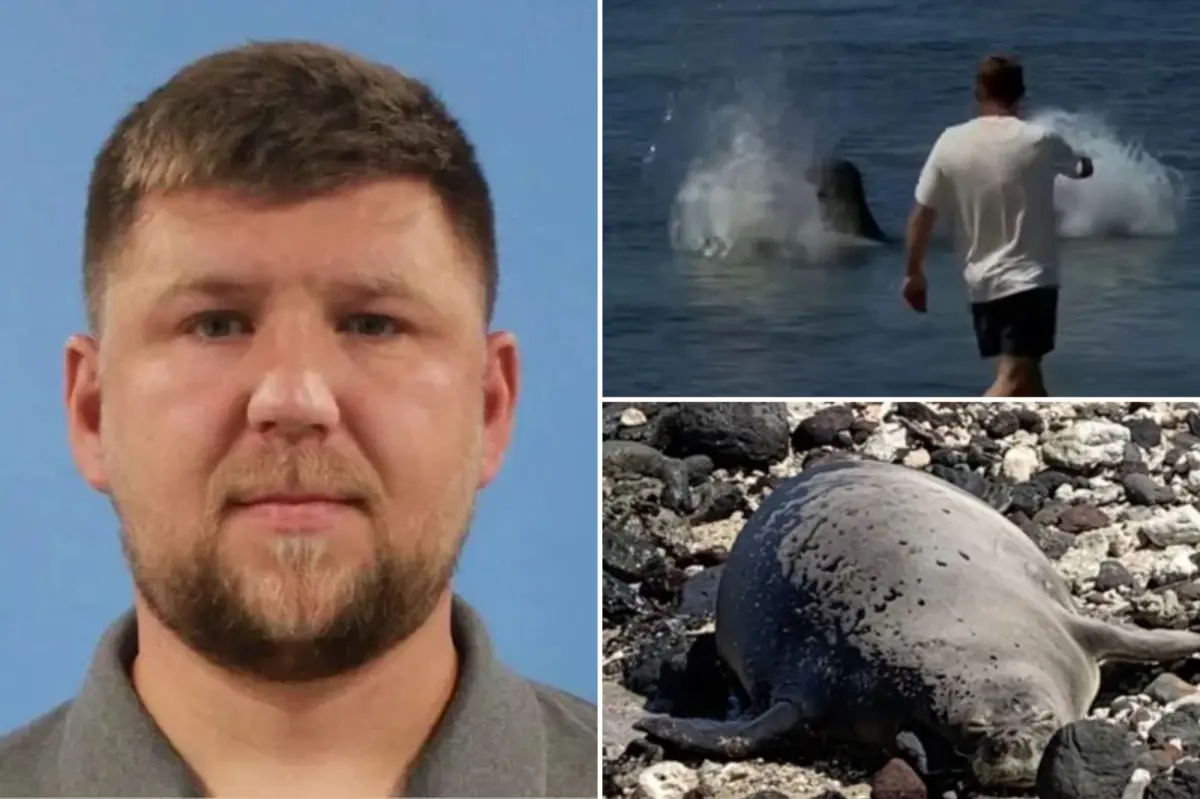
In the shimmering turquoise waters off a pristine Maui beach in Lahaina, a moment of pure cruelty shattered the fragile peace of a community still healing from the scars of wildfire devastation. Igor Mykhaylovych Lytvynchuk, a 38-year-old man from Covington, Washington, stood on the shore, his eyes fixed on “Lani,” a gentle Hawaiian monk seal who had become a beacon of hope for locals after the 2023 fires that ravaged the island. These wildfires, fueled by fierce winds and dry brush, had claimed lives, destroyed homes, and left behind ash-covered ruins. Amid the grief, Lani’s presence in the shallow waters symbolized resilience and renewal, a living testament to the natural world’s enduring spirit. Tourists and residents alike felt a deep connection to this creature, whose serene swims in the bay brought joy and a sense of normalcy back to the traumatized area. But on that day, Lytvynchuk’s actions betrayed that fragile harmony, as a witness captured the appalling scene on video: a man who had perhaps traveled thousands of miles to escape his own worries, now indulging in a twisted thrill. Holding a rock the size of a coconut in one hand, he aimed carefully, like a predator lacking any empathy, and hurled it toward Lani. The rock whizzed through the air, splashing into the water just inches from the seal’s head, causing her to jolt in fear and alter her peaceful glide. It was a breach of trust, not just against an animal, but against the collective healing of a people who had lost so much. The witness, horrified and moved by a moral instinct to protect the vulnerable, confronted Lytvynchuk immediately. His response was chilling—a dismissive shrug and boastful words: “I don’t care, I’m rich enough to pay any fines.” In that instant, the witness saw not a man, but a symbol of recklessness, privilege, and disregard for life’s delicate balance. This encounter highlights how human actions, often driven by ignorance or entitlement, can ripple out to affect ecosystems we barely comprehend. Hawaiian monk seals, with their sleek, puppy-like features and curious eyes, have survived millennia in these isolated islands, but now face threats from habitat loss, disease, and human interference. Lytvynchuk’s throw was more than a rock; it was a violent intrusion into a sanctuary. The onlooker’s video became a digital lifeline, preserving the truth and sparking outrage across social media, where people shared stories of their own encounters with wildlife, emphasizing the need for respect and boundaries in nature’s domain. As the footage spread, it humanized Lani’s vulnerability, turning her into a beloved figure akin to a family pet or a cherished community icon. This incident forced thousands to reflect on how tourism, while economically vital, can sometimes bring thoughtless visitors who prioritize personal amusement over shared stewardship. For the witness, it was a reminder of the courage it takes to speak up against wrongdoing, even in the face of arrogance. Lahaina’s beaches, once bustling, now carry echoes of both their fiery past and their aquatic guardians, urging everyone to tread lightly and lovingly on borrowed land.
The Investigation and the Seal’s Symbolic Return
Days after the disturbing event, the Hawaii Department of Land and Natural Resources acted swiftly to investigate reports of harassment toward this endangered species, understanding the gravity of protecting such a sensitive creature in a post-disaster landscape. A diligent officer from the department met with the witness, who tremblingly recounted the details while showing the cellphone video. In the footage, the calm ocean gave way to chaos: Lani, an adult Hawaiian monk seal, floated gracefully in shallow, crystal-clear waters, her gray fur glistening under the Hawaiian sun as she navigated the familiar bayside. From the shore, Lytvynchuk loomed like a shadow, his relaxed posture belying the malice in his gesture. The video captured him, a tall figure with wind-swept hair, evaluating the distance, then launching the hefty rock with precise aim, his arm a blur of motion. The projectile, described vividly by the witness as akin to the hard, fibrous husk of a coconut—rough, heavy, and capable of harm—missed Lani’s head by a fraction but disrupted her tranquil existence nonetheless. The seal, startled, veered sharply, her body language conveying fear and confusion, a heartbreaking mimicry of human panic in the face of unseen danger. For island residents, this wasn’t just an attack on an animal; it was an assault on the emotional fabric of their recovery. After the wildfires that turned Lahaina into a blackened wasteland, killing over 100 people and displacing thousands, Lani’s reappearance had been profound. She embodied hope, swimming back into the waters as if to say the ocean’s rhythms persisted despite the flames. People shared personal stories of spotting her, feeling a cathartic release as they watched her surf the waves, a reminder that nature heals when given space. The officer, perhaps drawing from his own ties to the land, felt the weight of preserving this legacy. He documented the complaint meticulously, noting how the rock’s impact forced Lani to abandon her routine, potentially stressing her further in an environment already strained by pollution and human encroachment. This act of cruelty peeled back layers of apathy, revealing how some individuals, insulated by wealth or detachment, fail to see the interconnectedness of all life. For the witness, reliving the video was cathartic yet painful, reinforcing a call to vigilance. Officials emphasized that such incidents aren’t isolated; they’ve seen countless tourists approach seals too closely, ignoring signs warning of protected status. Lani, with her endearing, wide-eyed gaze and curious demeanor, attracts admirers, but also risks harm from those who don’t comprehend her endangered plight. The investigation underscored a broader narrative: healing from disaster requires not just rebuilding infrastructure, but fostering empathy for the wildlife that shares our spaces. As the case built, it became a cautionary tale of human folly, contrasting the destructive impulse with the quiet strength of living beings like Lani, who navigate losses of their own in the wild.
The Arrest and a Journey of Accountability
Federal agents from the National Oceanic and Atmospheric Administration, known for their dedicated work in safeguarding marine life, apprehended Igor Mykhaylovych Lytvynchuk near Seattle, Washington, just days after the Maui incident drew international scorn. The arrest marked a pivotal moment in holding individuals accountable for actions that threaten biodiversity, especially in remote places like Hawaii where law enforcement relies on collaboration across agencies. Lytvynchuk, a man who had shifted so abruptly from a beachside accuser to a fugitive figure, was taken into custody without incident, his hands and feet perhaps still carrying the imaginary weight of the rock he threw. Dressed in casual attire befitting a tourist turned defendant, he faced the reality of his choices, his wealthy boasts now paling against the stern machinery of justice. A phone call to a number linked to him yielded silence, a refusal to comment that spoke volumes about the internal turmoil or calculated avoidance of scrutiny. He was slated to appear in US District Court in Seattle, where the sterile courtroom would contrast sharply with the open, oceanic expanses of Maui. This transition from Hawaiian shores to Pacific Northwest halls symbolized how environmental crimes cross borders, demanding federal intervention to protect species like the monk seal. Prosecutors, driven by a shared passion for conservation, detailed how Lytvynchuk’s throw wasn’t mere mischief but a deliberate harassment, endangering a creature whose survival hangs by a thread. They painted a picture of his mindset—callous, entitled, dismissive of the seal’s worth or the community’s pain—contrasting it with the seal’s innocence. For Lytvynchuk, raised in a world where success might equate to invincibility, this arrest could be a wake-up call, forcing introspection on privilege and responsibility. The agents, seasoned veterans with stories of storms and rescues at sea, saw beyond the charges: a man whose actions disrupted not just an animal’s day, but the collective trust in humanity’s ability to cohabit harmoniously. As word spread, supporters of wildlife shared their own tales of confronting poachers or polluters, humanizing the fight against such indecency. The arrest reassured the public that even affluent outsiders aren’t above the law, fostering a sense of justice in an era of inequality. Lytvynchuk’s journey from Maui to mainland custody highlighted the interconnectedness of global ecosystems, where a single reckless act can echo far. In interviews, former agents recalled parallel cases, like rescuing seals ensnared in fishing nets, emphasizing how human hubris often underscores the need for humility. This wasn’t just legal redress; it was a reminder that protecting vulnerable beings like Lani requires unwavering vigilance, transforming potential tragedy into teachable moments for all.
The Endangered Beauty of Hawaiian Monk Seals
Amid the swirling tides of the Pacific, the Hawaiian monk seal stands as a poignant emblem of resilience, its existence a delicate thread woven through centuries of isolation and adaptation on the volcanic islands. With fewer than 1,600 individuals left in the wild, these seals are critically endangered, facing an uphill battle against poaching, climate change, and human encroachment that threatens to sever their ancient lineage. Lani, one such seal named for her ethereal presence, embodies this struggle, her sandy shores excursions a bittersweet dance of survival. Native Hawaiians revere the monk seal as ‘Ilio-holo-i-ka-uaua, or “dog that runs in rough water,” a creature deeply intertwined with cultural lore, symbolizing strength and the ocean’s enigmatic depths. Their gray, blubbery bodies, adorned with white bellies and expressive eyes, evoke a canine charm, yet they’re master divers and swimmers, plunging up to 1,500 feet in search of squid and fish. Breeding primarily in isolated beaches, away from human bustle, they nurse their pups with unparalleled devotion, a maternal bond that resonates with universal human emotions. But threats loom large: entanglement in marine debris, competition for food from invasive species, and the ever-present specter of habitat degradation caused by coastal development. The 2023 wildfires, which scorched Maui with apocalyptic fury, displaced seals like Lani, forcing them to adapt to altered ecosystems riddled with ash and runoff. Yet, her return was miraculous, a phoenix rising from the flames, swimming into shallower waters as if offering solace to the grieving. Encounters with tourists often amplify these perils; while some approach with awe, others, like Lytvynchuk, bring harm, disrupting feeding or resting patterns that weaken the species. Conservationists work tirelessly, monitoring haul-outs, rescuing strays, and educating the public on the seals’ intelligence, which rivals that of dogs, with their problem-solving abilities and social bonds. Stories abound of seals beaching themselves to shed skin or heal wounds, a vulnerable process that demands human respect. Lani’s ordeal humanizes this urgency, turning her into a global ambassador for endangered wildlife, her near-miss with the rock underscoring how close we are to irreversible loss. Families with children share tales of educational beach walks, where spotting a monk seal sparks wonder and lessons in stewardship. Without intervention, this species could vanish, echoing extinct lineages like the Japanese sea lion. Efforts by groups like NOAA involve satellite tracking and habitat restoration, blending science with hope. The human cost is emotional—witnesses weep over treatment that mirrors animal abuse everywhere, urging us to cherish what remains. Lani’s story is a rallying cry, reminding us that protecting the ocean’s wonders isn’t abstract; it’s personal, a shared responsibility to ensure futures where seals swim free, unbound by fear.
Voices of Healing and Unwavering Resolve
In the wake of this heart-wrenching incident, Maui Mayor Richard Bissen emerged as a steadfast guardian of the island’s spirit, his voice trembling with a mix of outrage and hope as he addressed the community through an emotional statement. A longtime resident shaped by the aloha ethos of compassion and unity, Bissen recalled the wildfires that ravaged Lahaina, transforming paradise into a smoldering nightmare where winds howled like anguished voices and homes crumbled like sandcastles. Over 100 lives lost, thousands displaced, the landscape a charred testament to nature’s wrath compounded by human neglect. Yet amidst the despair, Lani’s reappearance had been a balm, her daily swims drawing families and tourists alike to the beach, fostering a collective healing through shared wonder. Bissen, with his weathered hands and eyes reflecting the ocean’s endless blue, saw Lani not as a mere animal but as an inspiration, a living reminder that in vulnerability lies strength, and in protection, humanity’s best self. Her presence post-fire brought tears of joy, reuniting people in quiet moments of reflection by the water’s edge. When reports of the rock-throwing surfaced, Bissen felt a personal affront, channeling the energy of survivors who had rebuilt their lives from ashes. He picked up the phone, calling the US Attorney in Honolulu with an impassioned plea, his words echoing the cries of constituents: “We must stand against cruelty to protect our symbols of hope.” His involvement underscored a leader’s duty to advocate for the voiceless, blending political resolve with heartfelt empathy. In his emailed message, he articulated how incidents like this test society’s core values, urging unity around the instinct to shield the vulnerable. Supporters flooded his office with stories of their own encounters with monk seals, from snorkeling alongside them to volunteering in rescues, each testament to a deepening connection. Bissen’s call for prosecution wasn’t vindictive; it was redemptive, a step toward ensuring tourists understand accountability. His words resonated globally, inspiring activists to push for stricter wildlife protections. For locals, punishing such acts validated their pain, proving that even in tourism-dependent economies, ethical boundaries matter. Bissen’s narrative wove personal anecdotes—memories of post-fire vigils by the sea—into a broader vision of perpetual healing, where humanity unites not in division but in defense of shared wonders. His unwavering stance humanized the response, transforming a legal case into a moral imperative, reminding all that true aloha means loving without reservation.
Facing the Scales of Justice
As Igor Mykhaylovych Lytvynchuk prepared for his court appearance in Seattle, the charges against him loomed like storm clouds over a troubled sea, each count a stark reminder of the consequences for harming protected wildlife under federal laws. Harassing and attempting to harass an endangered Hawaiian monk seal, as outlined in the criminal complaint, carried not just legal weight but the moral heft of endangering an entire species teetering on extinction’s brink. Prosecutors, articulate voices for justice tempered by years in the courtroom, described the incident with forensic detail, painting Lytvynchuk as a man who, in a moment of hubris, weaponized a simple rock against an unarmed creature, his actions exposing a dangerous entitlement. If convicted, he faced up to one year in prison for each charge, a sentence that could strip away freedoms he once took for granted, turning idleness into isolation behind bars. Additionally, fines loomed: up to $50,000 under the Endangered Species Act and $20,000 under the Marine Mammal Protection Act, penalties designed to deter others by hitting deep into wallets privileged enough to boast as his did. For Lytvynchuk, a 38-year-old whose background remains shrouded in silence, this could mark a life-altering reckoning, forcing reflection on how a reckless deed snowballed into federal scrutiny. Court officials noted the docket’s anonymity, no attorney listed, perhaps indicative of a solitary stand against mounting evidence. Victims’ advocates, drawing parallels to animal abuse cases, emphasized that punishments like these validate survivors’ rights, humanizing the process by restoring balance. Communities online speculated on his mindset—was it boredom, anger, or indifference?—yet the focus shifted to prevention, with calls for educational campaigns in tourism hubs. Those close to wildlife law shared stories of reformed offenders turned advocates, highlighting redemption’s possibility. For Lani and her kin, justice might mean fewer disturbances, allowing natural behaviors to flourish. Families affected by similar crimes shared emotional impacts, from sleepless nights to advocacy efforts. The verdict would send ripples, either as a triumph for conservation or a cautionary tale of leniency’s folly. In this narrative, Lytvynchuk’s path from perpetrator to defendant underscores accountability’s human essence, where one act’s repercussions echo through ecosystems and souls alike. As the case unfolds, it invites broader dialogues on empathy, urging society to weigh actions against the fragile tapestry of life. Ultimately, such prosecutions aren’t about punishment alone; they’re about preserving the wonder that makes places like Maui worth protecting, ensuring future generations can witness seals like Lani in peaceful arcs through the waves.