



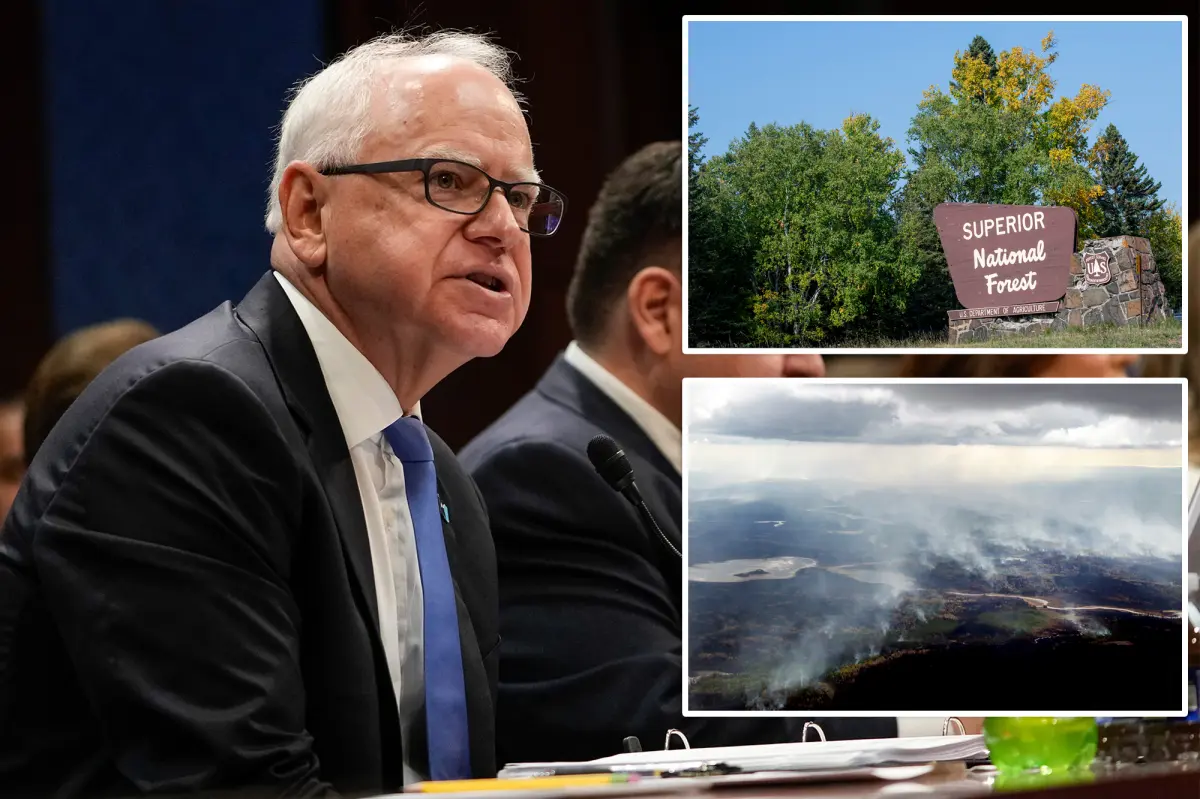
In a swift response to a rapidly escalating crisis on Minnesota’s northern border, Governor Tim Walz officially declared a peacetime emergency on Sunday, mobilizing the state’s National Guard to combat a series of aggressive wildfires. The blazes, which have been fueled by unseasonably hot and dry conditions, have already scorched over 800 acres of land in just five days. Despite the relentless efforts of local emergency crews, the fires remain entirely uncontained, prompting state officials to call in military reinforcement to help regain control of the perimeter before the situation worsens.
The environmental catalyst behind this sudden outbreak is a powerful El Niño weather pattern, which has blanketed much of the North American continent in a prolonged dry spell. This lack of moisture, combined with spiking summer temperatures, has turned the region’s dense forests into a tinderbox, mirroring a larger, worrying trend of increased wildfire activity across the United States this season. Governor Walz expressed his deep appreciation for those on the front lines, stating that Minnesotans owe their profound gratitude to the brave first responders who are working around the clock under grueling conditions to protect local communities and halt the destruction.
Currently, the crisis is concentrated within the pristine wilderness of the Superior National Forest, a beloved natural landmark that typically draws upwards of 150,000 outdoor enthusiasts and tourists during the peak summer months. A total of 16 active wildfires are presently tearing through different pockets of the forest, creating a complex and highly unpredictable hazard. To ensure public safety, park rangers spent the weekend conducting urgent sweeps of the area, locating and safely escorting campers, hikers, and other visitors out of the danger zones as smoke and ash began to cloud the horizon.
According to latest updates from the National Weather Service, the battle to contain the flames remains uphill. Over the weekend, a spike in regional temperatures created a high-risk environment, with dry winds threatening to carry embers and ignite new hot spots. As the National Guard integrates with local forestry and emergency services, the immediate priority remains securing the boundaries of the Superior National Forest, safeguarding nearby residential areas, and hoping for a shift in the weather to assist their containment efforts.