

Netanyahu’s Political Resurrection: How Israel’s Prime Minister Defied the Odds Again
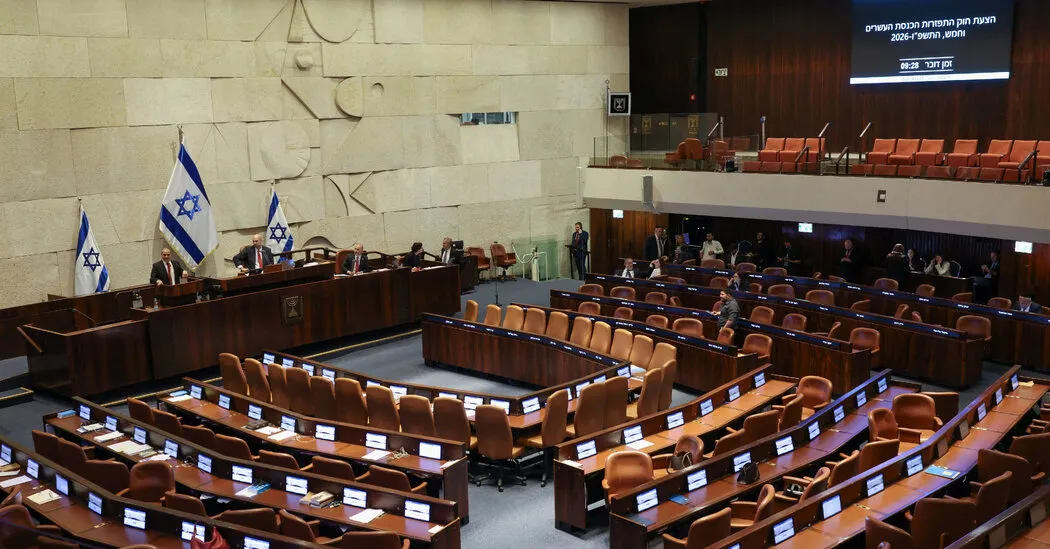
JERUSALEM — In a dramatic turn of events that has stunned political observers on both sides of the aisle, Prime Minister Benjamin Netanyahu emerged from Tuesday’s national election without the outright victory he had sought — yet he finds himself remarkably positioned to retain his grip on power, proving once again why he has earned the reputation as the indomitable survivor of Israeli politics.
The 77-year-old prime minister’s Likud party has defied pre-election polling projections to remain the largest faction in Israel’s 120-member Parliament (Knesset), a testament to the enduring political appeal of a leader many had written off following the darkest day in Israel’s history. Despite falling short of a commanding majority, Netanyahu’s performance has left his rivals, spearheaded by former military chief Gadi Eisenkot, scrambling to piece together a credible path forward. The opposition secured considerably less support than anticipated, and their alliance appears more fractured and demoralized than the cohesive challenge many had predicted. Political analysts suggest the results point toward extended weeks—or even months—of negotiation, tactical maneuvering, and potential stalemate, a scenario that plays directly into Netanyahu’s carefully crafted strategy of maintaining political relevance regardless of the electoral arithmetic.
A Political Masterclass in Survival
The election outcome represents a spectacular reversal of fortune for Netanyahu, whose political obituary was being written in earnest after the devastating Hamas-led assault on October 7, 2023. That attack, which claimed approximately 1,200 lives and saw 250 individuals taken hostage, triggered the ongoing war in Gaza and sparked widespread condemnation of the prime minister’s failure to prevent what many consider the most catastrophic security failure in the nation’s history. Yet Netanyahu, a political animal whose instinct for survival has been honed over more than three decades at the highest levels of power, has managed to clamber back from the political brink without ever accepting responsibility for the security lapse that many believe should have ended his career. Instead of accountability, he pursued a strategy of deflection and aggressive action. He blamed the assault on Israel’s intelligence and security leadership, green-lit a series of successful military campaigns against enemies in Lebanon and Iran that eliminated several of Israel’s most dangerous adversaries, and focused his electoral messaging on amplifying fears about the influence of Arab parties within Israeli politics. On election night, substantial numbers of Jewish Israelis responded to this approach, delivering a rebuke to Netanyahu’s detractors both domestically and internationally. As initial exit polls painted a picture of unexpected success, a visibly energized prime minister delivered an impassioned late-night address on Wednesday, vowing to establish “a patriotic, strong, right-wing government.”
The Fragile Balance of Power
However, for all the declarations of victory, Netanyahu’s political landscape remains riddled with complications and potential pitfalls. The hard-line coalition he assembled in 2022, widely characterized as the most right-wing and religiously conservative government in Israeli history, appears destined to lose its majority in parliament. This loss of control creates opportunities for his opponents, though perhaps fewer than they might have hoped for. Gadi Eisenkot’s bloc currently trails Netanyahu’s coalition by several seats, and one potential avenue to unseat the prime minister would involve forging an unprecedentedly broad alliance that includes the Arab parties that achieved their strongest-ever electoral showing. Yet such a coalition faces enormous practical and societal barriers. The Israeli public’s general sentiment has shifted dramatically to the right since the October 7 attacks, and while Arab political leaders in Israel largely condemned the assault and its horrific violence, a substantial segment of Jewish Israeli voters continues to view partnership with Arab parties as beyond the pale of acceptable political collaboration. This calculation was evidently central to Netanyahu’s thinking as he navigated the electoral landscape. “Netanyahu knew he was going to have a weaker bloc, but he also understood that his primary objective, even if he couldn’t secure a 61-seat majority, was to prevent his rivals from ever forming a government,” observed Mazal Mualem, a journalist who has penned a biography of the prime minister. “And that appears to be precisely what he has accomplished.”
The Comeback Nobody Expected
It’s genuinely remarkable to reflect that just three years ago, Netanyahu’s political standing appeared irreparably damaged. The aftermath of the October 7 massacres created a national trauma and pushed the prime minister’s approval ratings to historic lows. Even his most devoted supporters privately conceded that his time in office was likely at an end, and that Israel stood at the threshold of a fundamental political transition. Yet Netanyahu has demonstrated, with breathtaking consistency, that his capacity for resilience and political jujitsu should never be underestimated. He has effectively consolidated his base by redirecting public anger outward — toward the military establishment, toward Israel’s external enemies, and toward the persistent threat landscape that has defined the region for decades. By transforming himself from the man who failed to protect his people into the strongman willing to project force across the region, he has succeeded in rewiring the political conversation. The entire framework of the election shifted from one of accountability for past failures to one of strength and security for the future. This narrative construction, combined with his ability to paint his opponents as either weak or unreliable, has kept him in the political arena far longer than any of his mentors, contemporaries, or critics ever imagined possible.
The Road Ahead: Uncertainty and Calculated Risk
With the final vote tallies potentially subject to slight adjustments that could still alter the electoral landscape, Netanyahu finds himself in a position of relative strength, yet all his options forward involve navigating significant complexity. One potential strategy would be to employ obstructionist tactics, actively preventing any new government from being successfully formed and thereby forcing Israel into yet another round of national elections. Given that the opposition poured extensive time, energy, and financial resources into this campaign only to fall short, analysts believe they would struggle to exceed their current performance in a subsequent vote, providing Netanyahu with a compelling rationale to gamble on fresh elections. “There’s a general sense that this was the opposition’s one big chance,” noted Natan Sachs of the Washington-based Middle East Institute. “From Netanyahu’s perspective, he can throw the dice again and again because he genuinely has nothing to lose and everything to gain.”
Alternatively, Netanyahu might extend an offer of a unity government to one of his rivals, though such a proposal faces considerable hurdles so long as he insists on retaining the prime minister’s office. Eisenkot has explicitly promised not to serve under Netanyahu’s leadership, although the landscape could shift dramatically in the event of a genuine national emergency, such as renewed military confrontation with Iran. A third approach would involve attempting to entice right-wing defectors from Eisenkot’s opposition grouping, a strategy with historical precedent. Potential targets include Naftali Bennett, the former prime minister who now leads the center-right Together party, and Avigdor Liberman, who heads the right-wing Yisrael Beitenu faction. Both men support continued Jewish settlement in the Israeli-occupied West Bank and have deliberately avoided offering their explicit endorsement to Eisenkot as the opposition’s candidate for prime minister. However, any reconciliation with Netanyahu would require overcoming substantial personal and political baggage. Both Bennett and Liberman have deep-seated antagonism toward the prime minister stemming from past political betrayals and personal conflicts, and both have been persistent and vocal in demanding the establishment of an independent state commission of inquiry into the failures surrounding the October 7 catastrophe—an accountability mechanism Netanyahu has repeatedly resisted, fearing it would implicate him directly.
A Nation in Limbo
As Israel now enters a period of prolonged political uncertainty, the wider implications of Tuesday’s vote extend far beyond the fortunes of any single politician. The prolonged stalemate raises legitimate concerns about governance effectiveness during a period when the nation continues to face active military threats, ongoing conflict in Gaza, persistent tensions with Hezbollah in the north, and the ever-present shadow of Iran’s nuclear ambitions. A caretaker administration, by definition, lacks the political mandate to make the kinds of decisive choices that the current strategic moment demands. Meanwhile, the Israeli electorate remains deeply polarized between those who view Netanyahu as an essential national security asset and those who consider him a dangerous liability whose judgment and priorities have been fundamentally compromised. The absence of a clear mandate from the people, combined with the uncertain path toward coalition building in the emotionally charged aftermath of war, suggests that Israeli democracy is likely to experience continued turbulence. For Netanyahu, however, turbulence is the environment in which he has always thrived most. He has outlasted countless security threats, multiple criminal indictments, relentless international pressure, and even the existential political threat posed by the worst intelligence failure in his country’s history. Regardless of how the next phase unfolds—whether through coalition negotiations, a fresh election, or an unexpected opposition breakthrough—one conclusion seems inescapable: Benjamin Netanyahu’s extraordinary political career refuses to end quietly. Whether this persistence is a source of salvation or stagnation for the State of Israel remains the profound and deeply contested question at the heart of its current political moment.