






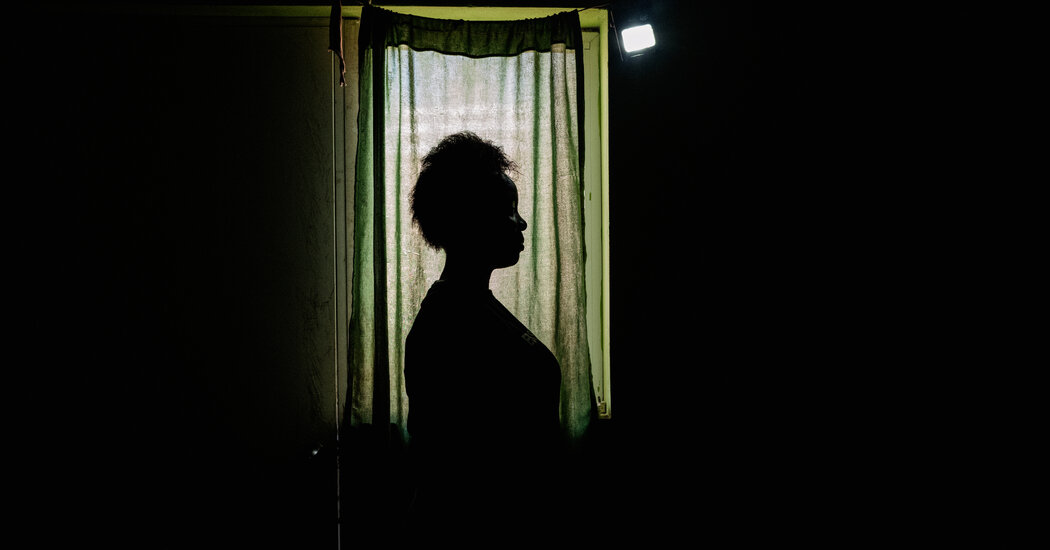
Across the sun-drenched landscape of the Dominican Republic, a silent terror has crept into the lives of pregnant Haitian women, forcing them to choose between basic medical care and the threat of permanent separation from their newborns. For twenty-year-old Katty Joseph, this agonizing reality culminated on the grease-stained concrete floor of a car repair shop’s backroom in Puerto Plata. Fleeing the catastrophic collapse of her home country, Katty had sought refuge in the Dominican Republic a year prior, only to find herself living in the shadows, paralyzed by the fear of immigration officials patrolling public maternity wards. When her labor began in late October, there were no clean sheets, sterile instruments, or reassuring words from a medical team; instead, under the suffocating weight of the Caribbean heat, she relied on the assistance of a single friend. Propped up on a thin blanket amid the tools of a mechanic’s trade, Katty endured the grueling physical ordeal of childbirth alone, ultimately cutting her newborn son’s umbilical cord with a simple, unsterilized razor blade. But the triumphant cry that signals a new life never came. Despite desperate efforts by the shop owner to seek help from a local pediatrician hours later, the baby’s vital signs faded into silence. Deprived of a sterile environment, oxygen, or immediate neonatal care, the infant passed away within hours, leaving a devastated young mother to dig a shallow grave on a nearby hillside to bury her child. Katty’s tragedy is not an isolated incident of misfortune, but a stark, heartbreaking manifestation of a systemic campaign that has transformed pregnancy—a universal symbol of hope—into a perilous gamble with survival, exposing the devastating human cost when political agendas override fundamental human compassion.
This quiet crisis is the direct consequence of one of the most aggressive mass deportation operations in the Western Hemisphere, as the Dominican Republic attempts to insulate itself from the relentless violence and instability gripping neighboring Haiti. Shared across the island of Hispaniola, the two nations have long maintained a complex, codependent relationship, with the robust Dominican economy relying heavily on undocumented Haitian labor to sustain its agricultural, tourism, and construction sectors. However, as gang warfare and humanitarian collapse in Haiti pushed thousands more across the 240-mile border, a wave of nationalist anxiety swept the Dominican public. Capitalizing on these fears, President Luis Abinader secured his reelection by promising hardline border security, implementing strict weekly deportation quotas, and constructing a heavily guarded 100-mile border fence. The most contentious policy of this sweep, however, bypassed the physical border entirely to target public hospitals—spaces globally recognized as neutral sanctuaries of healing. Enacted in April 2025, the directive mandates that public healthcare facilities report undocumented patients to immigration authorities immediately after treatment. While government officials defend these actions as national security imperatives designed to relieve overburdened public resources, international bodies, including the United Nations, have condemned the hospital dragnet as a profound violation of human dignity. By stationing armed immigration agents in maternity wards to arrest, detain, and deport mothers within days or even hours of giving birth, the state has effectively weaponized healthcare, creating a climate of absolute dread that deters the most vulnerable from seeking lifesaving medical attention.
The immediate public health fallout of this hospital crackdown has been swift, measurable, and catastrophic. Official health statistics reveal a harrowing reality: in the year following the deployment of immigration agents to public wards, births among Haitian women in Dominican hospitals plummeted by nearly sixty percent, dropping from over thirty-two thousand to just under fourteen thousand. This dramatic decline does not mean fewer babies are being born; rather, it indicates that thousands of laboring mothers have been driven deep into the shadows, delivering in fields, unfinished construction sites, and squalid tenement rooms without any medical supervision. Medical professionals and local advocacy groups, such as the National Board for Migration and Refugees, warn that this massive shift is generating a quiet tide of maternal and infant mortality. Without skilled birth attendants, clean water, or proper sanitation, both mothers and their newborns are exposed to lethal, preventable complications, such as postpartum hemorrhages, systemic infections, neonatal tetanus, and severe oxygen deprivation during prolonged labor. For these women, the natural anxieties of childbirth are compounded by the psychological torment of knowing that a trip to the emergency room to save their child’s life means almost certain detention in a military-style camp and deportation back to a country they fled in terror. The metrics of the policy may satisfy political quotas, but the human ledger is written in preventable deaths and fractured families.
The ultimate tragedy of this state-sponsored fear is captured in the heartbreaking story of Linline Poleis, a twenty-eight-year-old Haitian mother whose desperate bid to avoid deportation cost her her life. Pregnant with twins and living without permission in a concrete house under active construction, Linline watched the growing hospital raids with mounting terror. When her labor unexpectedly began in November, she refused to go to a clinic, choosing instead to bring her children into the world in the cold, dusty interior of an uncompleted building. She delivered the twin boys, Duleyson and Dudleyca, completely alone, with an informal midwife arriving only after the birth to help sever the umbilical cords. The physical toll of the unassisted double delivery was immediate and severe; Linline began to bleed heavily from her pelvis as she developed a raging internal infection. Terrified neighbors frantically pooled together their meager savings, raising roughly seventy-five dollars to send her to a private clinic for emergency blood pressure treatment, but the intervention came too late. The following day, Linline collapsed and died on a dusty sidewalk in Santo Domingo, her body succumbing to septic shock, septicemia, and severe endometritis—a painful and highly treatable uterine infection that stands as a leading cause of postpartum death worldwide. Today, her infant twins survive only as orphans, raised by their father’s relatives, a devastating living legacy of a policy that systematically values immigration compliance over a mother’s right to survive.
As the formal healthcare system becomes an active danger zone for Haitian women, an underground network of survival has emerged to fill the vacuum, reviving an old tradition of community midwifery. Recognizing the mounting danger, local activists and traditional midwives, or parteras, have stepped into the breach to offer whatever care they can supply in makeshift clinics and private homes. Twenty-eight-year-old Kenya Degraff is emblemic of this underground resistance, traveling across the island to deliver more than two dozen babies free of charge for families who cannot afford the exorbitant cost of private hospital births, which can reach up to two thousand dollars. In hidden, crowded rooms throughout the northern regions of the country, midwives offer services ranging from basic sanitary cord-cutting to traditional postpartum steam baths to soothe recovering mothers, operating entirely in secret to protect their patients from the ever-watchful eyes of the law. Yet, even within these spaces of solidarity, the physical risks remain alarmingly high. Young mothers like twenty-one-year-old Islan Luis find themselves giving birth abruptly on bathroom floors with no medical support, suffering from severe postpartum complications but unable to consult professional physicians. This shadow network of midwifery, while born from beautiful acts of community resilience and love, serves as a tragic indictment of a society that has forced women to rely on makeshift, underground medicine to survive one of the most vulnerable moments of human existence.
For those desperate enough to risk the public hospitals, the journey is often paved with exploitation, financial corruption, and deep-seated systemic discrimination. Investigative documentation reveals an informal economy of bribery operating within the shadow of the deportation policy, where Haitian families must scrape together hundreds of dollars to pay hospital staff to turn a blind eye and prevent immigration agents from receiving notifications. For those who manage to pay these bribes, the experience of care remains starkly unequal; while Dominican mothers are provided individual beds to bond with their newborns, undocumented Haitian mothers are frequently segregated, forced to share single, crowded hospital beds with other patients and their babies. This stark disparity in care underscores a deep anti-Haitian sentiment that has long plagued the island of Hispaniola, now codified into official healthcare policy. Ultimately, the crackdown on pregnant women in public hospitals is more than a dispute over national sovereignty or economic burden; it is a fundamental test of common humanity. When safety is outlawed, when the act of giving birth becomes a criminalized offense, and when hospitals are transformed into traps for the vulnerable, society strips away the basic human rights of both mother and child. Until the international community and local policymakers address the humanitarian tragedy occurring in these maternity wards, the most basic human experience of bringing new life into the world will continue to carry a potential sentence of exile, separation, or death.