


In the grinding, high-stakes ecosystem of New York City’s gig economy, a $75 cash payment for a few hours of light physical labor can feel like a vital lifeline. For dozens of aspiring actors, physical performers, and creatives scraping by in one of the most expensive cities on Earth, a seemingly innocuous casting notice posted online offered just such an opportunity. The prompt was simple, even fun: an unnamed nonprofit was looking for roughly forty people to play “zombies” in a “mock demonstration” for an instructional video. The instructions felt standard for a low-budget, creative hustle—wear tattered clothing, be prepared to have your face painted with fake blood and decay, and show up ready to shuffle. For students and artists struggling to pay next month’s utility bills, buy groceries, or secure subway fare, it seemed like a dream gig—a chance to practice one’s craft, indulge in a bit of theatrical play, and walk away with cash in hand. But as the sun began to bake the pavement of Downtown Brooklyn on a sweltering Thursday evening, the illusion of a harmless, creative exercise dissolved into a deeply disorienting reality.
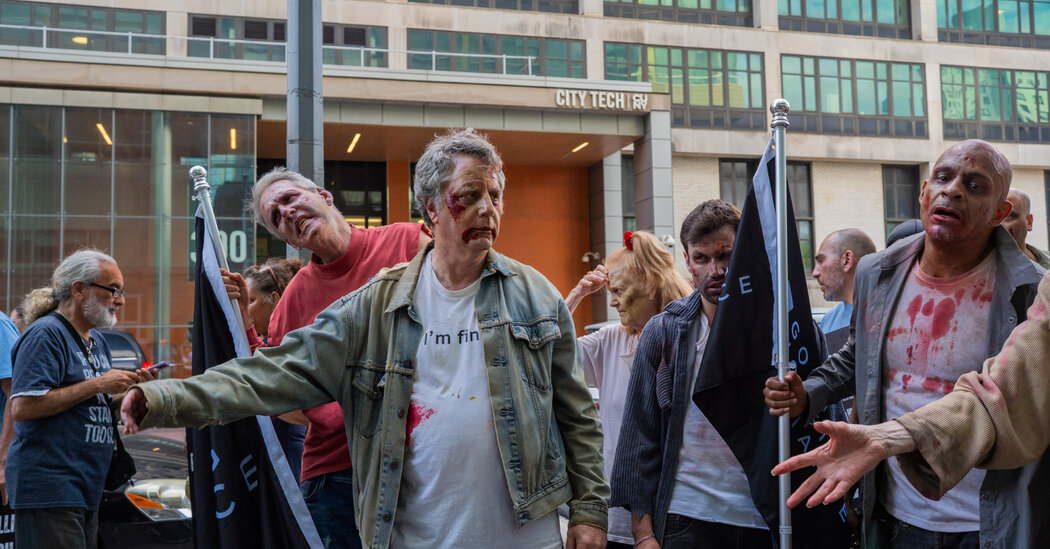
As the eclectic group of forty actors gathered at the designated filming site, the atmosphere quickly shifted from the lighthearted camaraderie of a makeup chair to a cold, stomach-churning realization. There was no film crew directing an educational video; instead, the puppet master behind the event was revealed to be the Gotham Housing Alliance, a powerful, pro-landlord advocacy group. The “zombies” were not meant to populate a horror flick or a safety training seminar, but rather to serve as a walking, groaning metaphor for the supposed “death” of the housing industry. Their target was Mayor Zohran Mamdani, a prominent democratic socialist who has championed aggressive rent-regulation and rent-freeze measures. To their cumulative horror, the actors realized that the “mock” demonstration was entirely real. They were ordered to march down Jay Street into the oppressive summer heat, dragging their limbs and moaning alongside actual landlords carrying political flags, effectively weaponized to lobby against the very rent protections that kept many of the performers from being homeless themselves.
The physical and emotional discomfort reached a boiling point when the march culminated outside a city building where a high-stakes Rent Guidelines Board public hearing was underway to decide whether to freeze rents for nearly one million rent-stabilized apartments. There, the zombie troupe was thrust directly into the path of a passionate, shouting crowd of at least fifty pro-tenant counter-protestors. The space became a pressure cooker of flying expletives and political rage, trapping the actors in a grotesque masquerade. While one actor, stubbornly clinging to professional commitment, snarled and barked at the tenants in character, many of his peers were visibly dying inside. Renters themselves, they began ducking behind their cardboard signs, pulling down their hats, and desperately trying to hide their faces from onlookers and cameras. The irony was suffocating. Ian Cobb, a twenty-five-year-old actor who actually lives in a rent-stabilized apartment, expressed the profound violation felt by many, noting the deep disturbance of discovering that his passion for performance was being hijacked and weaponized against his own survival.
Why, then, did they not simply drop their signs and walk away? The answer lies in the unforgiving power dynamics of the modern gig economy, where the threat of blacklisting looms large over vulnerable workers. The casting call, distributed through an agency called Characters for Hire, contained an explicit and coercive warning: anyone who accepted the gig and failed to show up or complete the job would be placed on a dreaded, industry-wide “Do Not Cast” list and reported to major online casting platforms. For a young creative, such a mark can ruin a career before it even begins. Erik Rivera, a twenty-nine-year-old actor and skateboarder who pays $2,800 a month to share a rent-stabilized Brooklyn three-bedroom with roommates, felt utterly trapped by this economic leverage. He lamented the ethical compromise, stating that he would have gladly stood on the opposite side of the barricades for free, rather than being forced to march for the landlords under the threat of losing his livelihood and being blacklisted from the craft he loved.
From the perspective of the Gotham Housing Alliance, however, the human cost of their theatrical stunt was merely collateral damage in a mercenary public relations war. Jovian Lopes, the alliance’s operating officer, admitted he conceived the zombie gimmick as a direct retaliation to what he termed “socialist theatrics”—such as marching bands—deployed by tenant advocates at previous city hearings. Seeking to fight fire with fire, he shelled out between $3,000 and $4,000 to Characters for Hire to orchestrate the spectacle, declaring that “zombies are dope” because they represent a dying industry. When confronted with the actors’ distress and accusations of deception, both the alliance and the casting agency engaged in a classic round of finger-pointing. H.L. Lopes, the alliance’s president, dismissed the complaints by asserting that anyone who felt uncomfortable was free to leave, while the casting agency’s owner, Nick Sarelli, maintained that his company had been misled by the landlords into believing the event was a “mock” demonstration, promising to perform better due diligence in a future plagued by increasingly deceptive bookings.
In the end, the protest disintegrated, leaving behind a bitter, lingering trail of moral compromise and systemic exhaustion. A few brave performers, like twenty-two-year-old Darby O’Donnell, chose to walk away mid-march despite the financial risk, waiting out the protest in the heat just to wash her hands of the pro-landlord agenda. While all the actors were eventually paid their meager $75 fee, the money felt like a hollow victory. The incident stands as a stark, tragic metaphor for the broader housing crisis gripping New York City, where the battle over rent stabilization is treated as a theatrical sandbox by wealthy property owners. As the Rent Guidelines Board prepares for its crucial June 25 vote, the real-world stakes remain terrifyingly high for millions of working-class New Yorkers. For the actors who were forced to play the walking dead, the evening was a chilling reminder of a dystopian reality: in a city run by capital, even your art can be bought, hollowed out, and used to tear down the very roof over your head.