


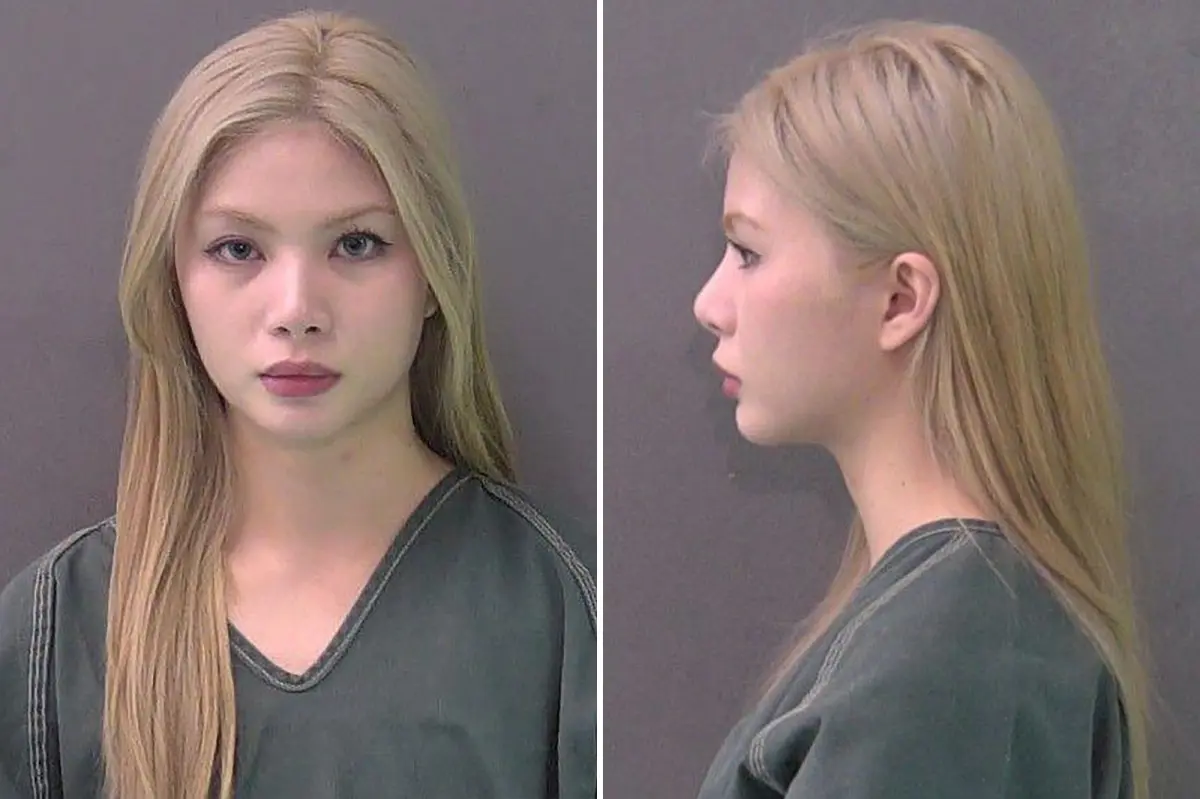
In the quiet town of Llano, Texas, where the school days blend into the rolling hills and everyday routines, a shocking disruption has shaken the community’s trust in the educators who shape young lives. Angela Palmares, a 27-year-old substitute teacher, was someone many students might have passed in the hallways or greeted with a smile in the classroom. She seemed ordinary, a temporary figure stepping in to fill gaps when regular teachers couldn’t, but beneath that facade, authorities allege something far more troubling. On a Wednesday that felt heavier than most, she was arrested without any fuss in Bell County, facing charges that have left families reeling and questioning the safety of their children. It’s a story that hits home because education is supposed to be a sanctuary, a place where kids learn math and manners, not one where personal boundaries are crossed. For parents, this isn’t just news—it’s a personal threat to the innocence they strive to protect, making them wonder how well they really know the people entrusted with their kids’ futures. As details trickle out, the human element surges forward: the fear in a parent’s heart when they hear whispers of inappropriate chats, the confusion of students who might have thought nothing of a friendly message on social media, and the teachers who now doubt the colleagues they’ve shared break rooms with. Life in small-town Texas often feels predictable, with Friday night football games and church suppers, but incidents like this remind us how fragile that trust can be, pulling the community together in a mix of outrage, support, and a desperate need for answers that might never come fully into the light.
The arrest painted a picture of swift justice in a system that doesn’t play favorites, even for someone as young as Angela Palmares. At just 27, she embodies the generation gap between educators and the students they’ve vowed to nurture—many of her peers might still be in college or starting careers, but here she was, caught in a felony web. Charged with an improper relationship between an educator and student, a second-degree felony that carries hefty penalties and lifelong stigma, she was booked and held on a $150,000 bond that underscored the seriousness of the allegations. It’s easy to imagine the scene: handcuffs clicking in a police station, the sterile glare of fluorescent lights, and Palmares, perhaps trembling or defiant, marching through the procedures. For anyone whose life has flashed before their eyes during a crisis, it evokes empathy mixed with disbelief—was this a moment of poor judgment, a hidden struggle with mental health, or something predatory? The $150,000 bond isn’t just a number; it’s a financial barrier that speaks to the stakes, ensuring she’s not easily walking free, but it also raises questions about resources and how justice is doled out in counties where budgets are tight. Families might feel relief knowing she’s locked away for now, but the bond also represents the community’s investment in safety, paid in taxes and shattered peace. Inhuman as it sounds, every charge like this humanizes the system, turning cold legal jargon into real heartache for those involved, reminding us that behind bars or benches, there are stories of regret, betrayal, and the ripple effects on everyone touched by education’s promise.
What really unraveled this situation, unraveling like a poorly tucked-in secret, was the digital age’s shadow looming over modern schooling. School officials tipped off the police after uncovering “inappropriate communication with students, specifically through a social media platform outside of the school day,” as Llano Independent School District’s Superintendent Mac Edwards carefully phrased it in a letter to families. In today’s world, where kids are glued to screens and teachers are as active online as their students, the line between mentorship and misconduct blurs dangerously. Imagine a teacher scrolling through Instagram, liking a student’s post, then sliding into DMs for what starts as casual banter but veers into something untoward—innocent at first, perhaps, but crossing into forbidden territory. Neither the sheriff’s office nor the district spilled the beans on the chats’ content, respecting privacy shields in an era of oversharing. Details remained murky: how many students were entangled, what ages they were, and whether this was a one-off error or a pattern buried in notifications. For parents, this opacity might feel maddening, like trying to read a hazy ultrasound scan—knowing something’s wrong but not how deep the wound goes. Humanizing this, we can picture the students, teens navigating adolescence on apps where every heart and comment feels enormous, possibly not realizing the teacher’s intentions until it’s too late. It highlights the vulnerability of young minds in a connected world, where boundaries evaporate with a click, pushing educators to think twice about every emoji, comment, or follow. This isn’t just about one teacher; it’s a wake-up call for all, urging vigilance in an invisible battlefield of online interactions that can destroy lives.
The response from local authorities and the school district was a blend of unity and caution, aiming to calm the storm while honoring individual rights. Palmares, who last clocked in on April 2, was promptly yanked from Llano Independent School District’s substitute roster by the sheriff’s office, ensuring she couldn’t step into another classroom and rebuild any semblance of trust. This swift move felt like a protective shield, a community deciding at once to safeguard its young without dragging feet. The district, led by Edwards, reached out to the parents of affected students, fostering a dialogue in an investigation that’s left no stone unturned on the surface. It’s reassuring to hear the superintendent emphasize, “The district takes all allegations of this nature extremely seriously,” a phrase that reassures families that this isn’t being swept under the rug. With education at the heart of small-town Texas, institutions like Llano ISD stand as pillars, and actions like contacting families show a commitment beyond policy, venturing into empathetic territory. Yet, in this human drama, the lack of specifics from the sheriff’s office underscores the delicate balance between justice and privacy—personnel records and student lives must be shielded from public scrutiny to avoid further trauma. For educators watching from the sidelines, this might stir both solidarity and fear, wondering if their own digital footprints could one day be scrutinized. It’s a nod to humanity in bureaucracy, where leaders prioritize support over sensationalism, helping communities heal rather than just react.
Diving deeper into the implications, this episode shines a light on the broader canvas of trust and safety in American education, where every classroom is a microcosm of society. Critics might point to statistics on educator misconduct, which, while rare, underline the need for better training on boundaries, especially in a world where work and personal lives collide online. For families in Llano, the emotional toll is palpable: sleepless nights worrying if their child was spared, or grappling with fallout if they weren’t, threading through waves of confusion and anger. The district’s pledge to “provide a safe and supportive environment” isn’t just words; it’s a lifeline for students who rely on schools for structure and belonging. Parents might now advocate for stricter social media policies in districts nationwide, turning personal outrage into collective change. On a human level, this reminds us of the young teacher’s own story—Palmares might have been grappling with isolation, mental health struggles, or even youthful impulsivity at 27, a reminder that predators aren’t always caricatures but people flawed like any other. It fosters empathy for the victims and accountability for the system, urging reforms that protect without punishing prematurely. Communities like Llano could emerge stronger, with support groups or counseling ramping up, ensuring that one incident doesn’t define the educational landscape for generations.
As the investigation drags on, shrouded in uncertainty for privacy’s sake, the human resilience of those involved takes center stage, proving that even in scandal’s darkness, hope can flicker. Edwards’s letter ended with the sobering note that additional details can’t be shared due to “personnel and student privacy considerations,” a respectful barrier that prioritizes dignity over disclosure. For students entangled, this might mean counseling sessions bridging the gap between confusion and closure, helping them rebuild self-worth eroded by betrayal. Families, bonded by shared vigilance, could foster open dialogues about online safety, turning fear into empowerment. In the end, Angela Palmares’s case isn’t just about charges and bonds—it’s a catalyst for reflection on vulnerability in the digital age, pushing society toward kinder, more aware practices. By humanizing these stories, we honor the affected, transforming headlines into lessons that fortify communities against recurrence. In small-town Texas, where everyone knows your name, healing might come slower, but the bonds formed in response could outlast the headlines, ensuring that schools remain havens, not haunts.