



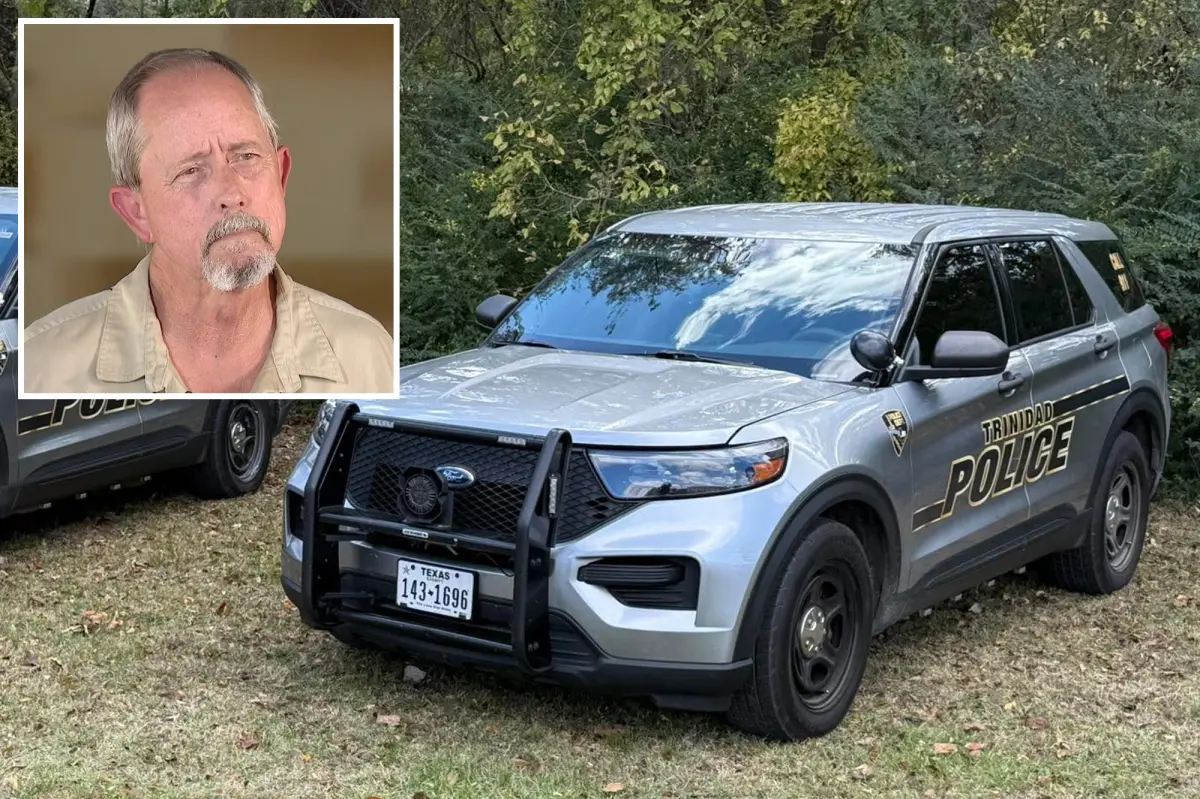
In the sweltering late spring of a small Texas town, what began as a worried mother’s plea for clean water quickly spiraled into a nightmare that would dismantle an entire police department. Jennifer Combs, a resident of Trinidad, a tiny municipality about 75 miles southeast of Dallas, did what millions of Americans do every day: she logged onto Facebook to voice a concern about her community. Her post was simple and terrifying—there was bacteria in the town’s water pipes, she wrote, and it had already sent residents to the hospital. It was the kind of urgent, heartfelt warning that any neighbor might share after hearing disturbing news. But instead of gratitude or even a thoughtful response from local officials, Combs was arrested. She was slapped with a felony charge for false alarm or report, handcuffed, and thrown in jail for a night. The Trinidad Police Department insisted her post had caused fear and panic. Yet the city itself had posted its own boil-water notice weeks earlier, urging everyone to avoid harmful bacteria. The contradiction was glaring, the arrest seemed less about public safety and more about retaliation. And now, months later, the state of Texas has finally done something unprecedented: it ordered the Trinidad Police Department to disband, ruling that the agency provided no “benefit to the community.”
The Texas Commission on Law Enforcement made that ruling official on September 9, in a letter to Trinidad Mayor Dennis Haws revoking the city’s license to operate its own police force. The commission’s decision came after a thorough investigation on August 5, which found the department not only failed to demonstrate any public value, but also lacked eighteen critical policies—including protocols for use of force, vehicle pursuit, professional conduct, and even active-shooter situations. This was not a matter of a few procedural missteps. These are the foundational building blocks of any credible law enforcement agency. A police department that doesn’t have a policy on use of force is a department existing on the edge of chaos, making split-second decisions with no guiding principles, no accountability structure, and no clear path to justice. For a town as small as Trinidad, with a population of just over 800 people, the existence of a police department had always been a point of pride, a symbol of local authority and independence. But that symbol had become corrupted, and the state made it clear that the city could no longer be trusted to police itself. The department, which employed five full-time officers and several part-time staff, would officially close its doors for good on Friday, leaving local law enforcement duties to the Henderson County Sheriff’s Office.
To understand how a small-town police department reached such a breathtaking fall from grace, one has to go back to the events that triggered the state’s intervention. In April, Trinidad city officials posted a public notice urging residents to boil their water to “avoid harmful bacteria.” It was a routine but serious health advisory, and for many residents, it was deeply alarming. The town’s water system had long been a source of frustration, with murky, brownish water flowing from taps and persistent rumors of contamination. Jennifer Combs, like many of her neighbors, was frustrated and frightened. When she learned that some residents had been hospitalized after drinking the water, she took to Facebook to spread the word. She wasn’t a journalist. She wasn’t a political activist. She was just a mom who wanted her community to be safe. But the Trinidad Police Department saw things differently. Chief Charles Gregory, a polarizing figure with a reputation for aggressive policing, viewed Combs’ post not as a public service but as a criminal act. She was arrested in May and charged with a felony. Gregory called the case “cut and dry,” even as residents and civil liberties groups pointed out that the city’s own emergency notice had validated Combs’ warning. If anyone had created fear or panic, it was the city itself, with its murky water and slow-moving bureaucracy. Combs became a symbol of courage in the face of small-town overreach, but also a cautionary tale about what happens when law enforcement turns its power against its critics.
The fallout was immediate and intense. A citizen journalist named Winston Noles, who had come to support Combs, was also arrested after displaying a sign outside city hall that read “f–k bad cops.” He was charged with misdemeanor disorderly conduct, in a move that looked less like maintaining the peace and more like punishing speech the city didn’t like. The arrests drew national attention, shining a harsh spotlight on Trinidad, a town unaccustomed to the glare of the media. Under pressure, Chief Gregory dropped the felony charge against Combs, and the charge against Noles was also eventually dropped. But the damage was done. Gregory resigned on June 19, despite telling a city council meeting that he had “nothing to hide” regarding the arrests. His resignation, however, was not the end of the story. The judge who had approved the search warrant for Combs’ property wrote a scathing letter afterward, questioning the “accuracy, completeness, and reliability of information” presented by two Trinidad officers and criticizing Gregory’s leadership. It was a stunning rebuke from the very judicial branch that is supposed to serve as a check on police power. The Henderson County District Attorney’s Office announced in August that it would no longer accept cases from the Trinidad Police Department, effectively cutting off the department’s ability to prosecute its own arrests. The message was clear: this department could not be trusted.
For Jennifer Combs, the state’s decision to disband the police department was vindication. In a Facebook post following the news, she wrote that for months, “citizens who questioned this department were dismissed, attacked and in my case arrested.” She described the systemic failure of the department, not just in terms of policies and procedures, but in its fundamental relationship with the people it was supposed to protect and serve. “Now the state agency responsible for regulating Texas law enforcement has confirmed that this department could not demonstrate compliance with even the minimum standards,” she said. “We were never the problem. We were exposing it.” Her words carry a weight that goes beyond the specifics of her case. They speak to a deeper truth about the importance of speaking up, even when it seems like the entire system is arrayed against you. The state’s investigation was not triggered by a disgruntled employee or a political enemy of the police. It was triggered by a mother’s simple, desperate post on social media—a post that revealed a troubling truth about the town’s water supply, a problem that the Texas Commission on Environmental Quality later confirmed. In the end, Combs was right all along, and the state’s decision to disband the department she defied is a powerful reminder that no one, not even a police chief, is above the law.
Mayor Dennis Haws, for his part, accepted the state’s decision with a sense of resigned inevitability. “Not a shock,” he said, adding that “there’s been a lot of neglect through the years.” His tone was less defiant than reflective, acknowledging that the department’s collapse was the culmination of long-standing issues that had been ignored for far too long. But he also expressed a cautious optimism about the future. “We are moving in a positive direction. We’ve got to get past all of this,” he said. The Henderson County Sheriff’s Office will now take over all law enforcement calls for Trinidad, a change that many residents hope will bring a fresh start. But the road to recovery will not be easy. The town must now reckon with the legacy of a police department that bullied its own citizens, violated basic standards, and ultimately lost its very existence. There is an undeniable emotional weight to the disbanding of the Trinidad Police Department. It was more than just a collection of officers and cruisers; it was an institution, and its failure is a collective loss. For the residents who watched their local force drift from service to suppression, the closure is both an ending and a beginning. As the Trinidad Police Department ceases to exist and the community begins the slow work of rebuilding trust, one thing remains clear: the simple act of one mother’s question—what’s in our water?—eventually became a question with far more power: what limits should we place on the law itself? In Trinidad, the answers are still being written, but the fragile hope is that a small town, humbled by its own failures, can find its way back to the principles of justice, transparency, and public safety—for everyone.