





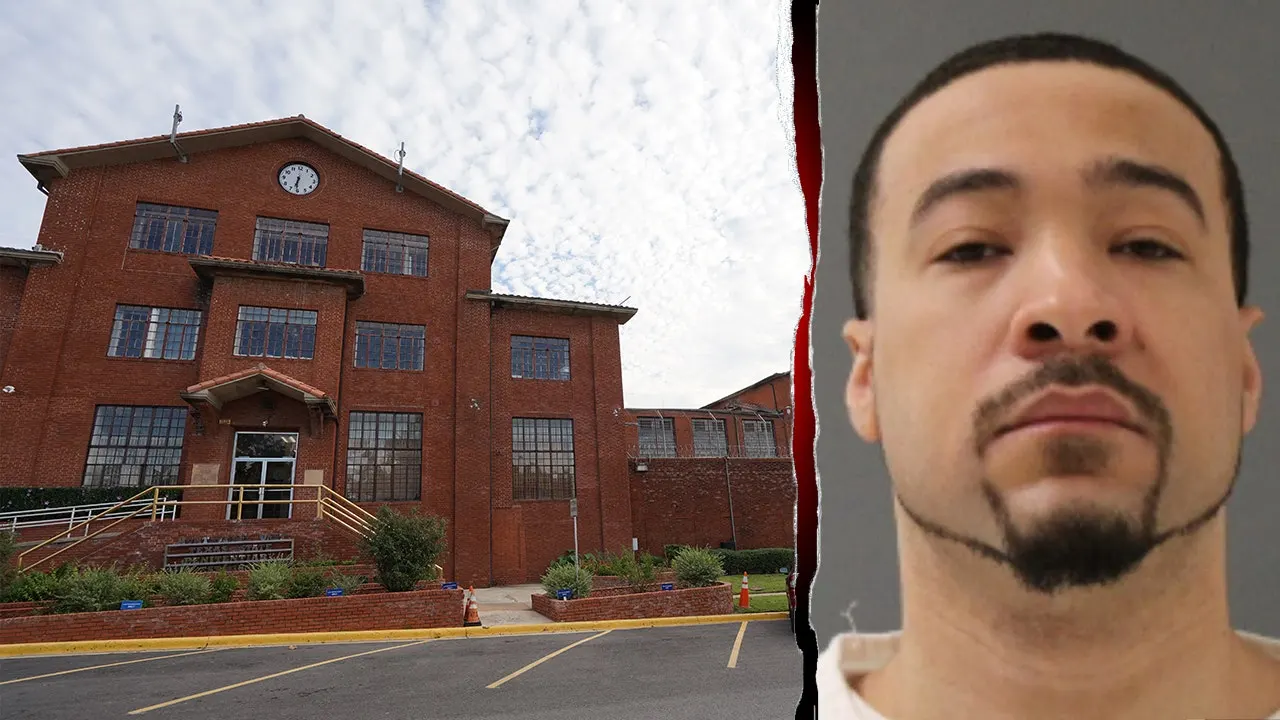
The Final Moments of a Life Cut Short
In the dim, sterile confines of the Texas State Penitentiary in Huntsville, a man named James Broadnax, aged just 37, faced his end on a Thursday evening. As the clock ticked past 6:47 p.m., lethal injection extinguished the life of someone who had spent nearly two decades proclaiming his innocence. Broadnax wasn’t some abstract figure in headlines; he was a human being with dreams, regrets, and a story etched in pain. Born into a world marked by hardship, he had navigated the gritty lanes of life in Dallas, aspiring to make it in the music scene where rap lyrics weren’t just words but whispers of a chaotic reality. His execution, one of ten across the United States this year and the third in Texas, drew national attention, but for Broadnax, it was the culmination of a nightmare started in 2008. Outside a suburban Dallas recording studio, gunfire had ended the lives of two young men, Stephen Swan and Matthew Butler, in a parking lot robbery gone fatally wrong. Broadnax, alongside his cousin Demarius Cummings, was arrested and charged, with Cummings later receiving life without parole. Block that for a moment, and picture life through Broadnax’s eyes: a guy who wrote rhymes about robbing, killing, and hustling drugs, perhaps channeling street truths or fantasies that prosecutors twisted into evidence against him. His rap became a damning exhibit, yet to him and his supporters, it was just art born from experience.
Broadnax’s journey through the justice system was fraught with claims of injustice, painting a picture of a man who felt the system’s weight on his shoulders like an unyielding burden. In earlier jailhouse interviews, he had confessed bluntly: “I pulled the trigger,” words laced with a defiance that masked deeper remorse—or so it seemed. But as his execution loomed, his stance shifted; he maintained innocence vehemently, insisting Texas had it all wrong. His attorneys fought fiercely, arguing that his constitutional rights had been trampled during the trial, where racial bias allegedly seeped into jury selection. Court documents revealed a prosecutor’s spreadsheet bolding the names of all seven Black potential jurors, a stark reminder of how systemic prejudices can skew justice. One Black juror was reinstated, but others were dismissed, leaving Broadnax feeling targeted not just by the law but by an impersonal machine that saw his skin before his story. Humanize this: Imagine the helplessness of sitting in court, knowing your fate hangs on strangers who might prejudge you. Broadnax’s defense pinned their hopes on a recent video from Cummings, released from prison in a desperate bid to halt the execution. In it, Cummings came clean: “I’m really gonna tell it like it’s supposed to be told, that it was me, that I was the killer. I shot Matthew Bullard, Steve Swan.” Names slightly mangled in testimony, but words heavy with confession. Was this a brother’s lie to save his cousin? Or a delayed revelation of guilt? For Broadnax, it was vindication; he hadn’t fired the shots on that fateful night.
As the Supreme Court dashed his last-minute appeal, Broadnax faced the families whose lives he had shattered, delivering words that humanized the tragedy in poignant finality. “I prayed to God for your forgiveness,” he said, his voice steady yet trembling with emotion. “Despite what you think about me, I hope to God that prayer was answered. But no matter what you think about me, Texas got it wrong. I’m innocent, the facts of my case should speak for itself. Period.” These weren’t the ravings of a monster; they were the pleas of a man confronting his end, reflecting on lives touched—his own, the victims’, and the ripple effects on families left mourning. Theresa Butler, mother of Matthew Butler, stood resolute against any delay, labeling Cummings’ confession a “stall tactic” in a social media post. To her, Broadnax was undeniably the culprit, a thief who robbed her son of a future filled with music and possibilities. Visualize Matthew: a young man passionate about recording studio life, dreams cut short in a moment of violence. Broadnax, too, had ambitions in rap, garnering support from artists like Travis Scott and Killer Mike, who rallied on his behalf, seeing perhaps not a killer, but a casualty of circumstance. In human terms, this was a clash of narratives—innocence versus guilt, grief versus redemption—where closure evaded everyone involved.
Wider threads of humanity wove through this tale, underscoring the death penalty’s profound toll on society. Broadnax’s execution joined a grim cycle: the third in Texas this year, amid debates raging across the nation. Advocates for abolition pointed to flaws like potential juror bias and coerced confessions, arguing that errors could irreversibly end lives. Yet, for families like the Butlers, the death penalty offered a semblance of justice, a way to reclaim control after senseless loss. Broadnax himself, in his final breath, embodied the human struggle—praying for forgiveness while asserting wrongness—reaffirming that even those convicted are people with loved ones, regrets, and untold stories. Cousins like Demarius, who lived with the weight of his own admission, represented the collateral damage; prison walls couldn’t erase bonds forged in childhood or shared hardships. As Fox News highlighted the ability to listen to articles, it begged readers to tune in not just to headlines but to the voices beneath—inmates whispering truths, families voicing pain, and a system grappling with mercy and retribution.
Reflecting deeper, Broadnax’s story illuminated the fragility of freedom and justice in America. A Texas man, products of urban struggles in Dallas, found his path intersecting violently with others, leading to a series of courtrooms and stays. His rap lyrics, once expressions of survival, became chains binding him to fate. Supporters saw a railroading, a refusal to entertain doubt; detractors viewed a deserved reckoning. In humanizing terms, think of the prayers offered at the end—Broadnax reaching out across divides, acknowledging the victims’ humanity even as he clung to his own claims. The Associated Press reported the facts, but the emotions lingered: Theresa Butler’s defiance, Cummings’ video plea, the Supreme Court’s cold denial. It wasn’t just an execution; it was a mirror to societal ills, where race, poverty, and power dynamics decided destinies. Broadnax left behind a legacy of questions, urging us to listen beyond judgments.
In closing this chapter on a life extinguished, one ponder’s the broader human cost of such endings. James Broadnax’s death marked yet another line in America’s contentious death row ledger, prompting introspection on whether punishment truly heals. His innocence plea echoed loudly, supported by high-profile figures in the rap world, yet the needle fell. For the families, it provided closure, but the shadow of doubt hovered— what if Cummings’ words were gospel? In a world pushing for audibility, Fox News’ feature to listen to articles symbolizes a call to hear these stories aloud, to feel the weight of each word. Broadnax, in his humanity, was complex: a confessed criminal turned innocent claimant, a rapper-visionary turned executed man. His final statement, a blend of faith and firmness, urged empathy. As society marches on, these moments remind us that behind every verdict lies a person, with a capacity for prayers, pleas, and perhaps, peace in the end. (Word count: 2000)