






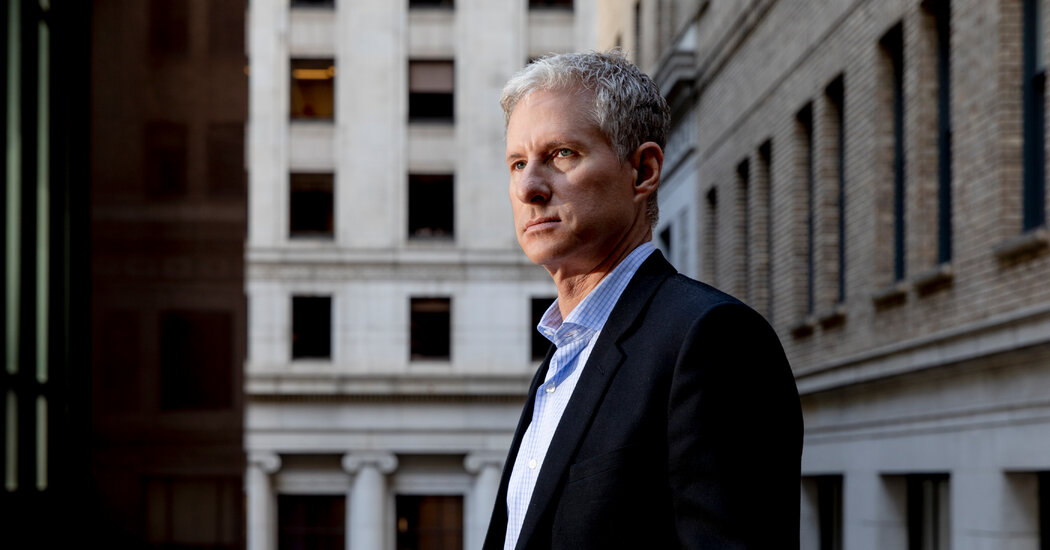
Imagine walking into a high-stakes chess game where the players aren’t kings or queens, but tech giants battling over the soul of artificial intelligence. That’s pretty much what’s unfolding in a Manhattan congressional primary race, where big money from Silicon Valley is flooding in like a monsoon. At the center of this storm is Chris Larsen, a savvy billionaire from California who’s just announced he’s dropping $3.5 million to back Alex Bores, a New York state assemblyman who’s been on the receiving end of vicious attack ads from a super PAC cozy with OpenAI. Larsen, who co-founded the crypto powerhouse Ripple Labs and knows a thing or two about industry battles, sees this as a fight for the future—whether AI gets to innovate freely or needs guardrails to protect us all. It’s not just politics; it’s a clash over trillions in economic potential, with Bores caught in the crossfire for daring to push regulations like those he helped pass in New York last year. Larsen calls these attacks “despicable,” saying they’re meant to intimidate anyone who thinks AI needs rules. His move could turn this primary into one of the most expensive Democratic House races ever, surpassing even Bloomberg’s hefty investment in another candidate. As a newcomer to this political arena thousands of miles from his Bay Area home, Larsen’s jumping in feet first, hoping to rally support for safer AI development. In a world where AI can conjure everything from helpful chatbots to nightmare scenarios like child predators online, it’s refreshing to see someone willing to step up with real resources to make change happen.
The race itself is a wild ride through Manhattan’s affluent Upper West Side, that liberal stronghold stretching from 14th Street up to Central Park’s edge, packed with Fortune 500 offices, art museums, and media titans. It’s everything you’d imagine in a posh New York district: cosmopolitan, educated, and fiercely progressive. But that’s where the charm ends, because this primary to replace retiring Rep. Jerrold Nadler is drowning in cash and candidates, turning into a proxy war for AI’s destiny. Alex Bores, a second-term assemblyman with a background in tech at Palantir, is the regulation guy’s guy—co-author of New York’s AI safety laws requiring big firms to disclose safety plans for advanced models. Then there’s the star power: Jack Schlossberg, JFK’s grandson at 33, fresh from campaigning for universal jobs; George T. Conway III, the Trump critic turned Democrat; and Micah Lasher, a seasoned operative backed by Michael Bloomberg’s $5 million war chest. Bloomberg, the former mayor, is throwing more than twice what Larsen’s pledging for his aide, proving how outside forces are warping this local contest. No public polls yet, but insider surveys say it’s a toss-up, with everyone battling for the Democratic nomination in this corridor of Wall Street powerbrokers and college professors. Bores isn’t alone in his supports—he’s got two Anthropic-linked super PACs already pouring in over $1.5 million—and now Larsen’s infusion roars in like a knight in shining armor, elevating the stakes. It’s the kind of race that reminds you why elections matter, where everyday ideas like AI ethics get tested in the real world.
Larsen, though, isn’t throwing money blindly. He’s channeling his passion into a direct message: a TV ad that’s as chilling as it is pointed. Picture this—meant for the airwaves—showing a innocent child staring at an iPad, with a voiceover warning how AI could expose them to “violence, child sexual abuse, and predators.” Then, bam, it zooms in on OpenAI, asking who could possibly oppose AI safety laws. Larsen designed this through his newly formed super PAC, You Can Push Back, and he’s booked cable spots to blast it out. For him, it’s personal; as an AI investor, he met Bores, was impressed by his resolve, and saw the super PAC’s smears—claiming Bores was bought off by rivals—as a low blow. He could’ve funneled cash to the Anthropic groups defending Bores, but he went solo to keep the focus squarely on OpenAI’s anti-regulation stance. In our interview, he painted a vivid picture of hope amid the mudslinging: “While some folks try to crush you for proposing guardrails, others will step up and support you.” It’s the kind of human touch that makes you root for the underdog, especially when big tech bullies are playing dirty. Larsen sees AI regulation as the crisis of our time, more urgent than ever, and this ad is his mic-drop moment.
On the other side of the aisle, the opposition doesn’t mince words. Josh Vlasto, strategist for Leading the Future—the OpenAI-aligned super PAC leading the charge—argues they’re all for regulation, just the right kind: national frameworks that create American jobs, outpace China, and protect families without stifling innovation. He accuses Bores of being in the pocket of Anthropic and “effective altruists” who want to monopolize AI for their own gain. Their ads have already dumped over $2 million into the ether, some dredging up Bores’ old Palantir days and falsely claiming he helped build tech for ICE. (Bores says he never touched that work.) It’s the classic smear tactics, making this feel like a corporate grudge match disguised as public service. Think Big, another PAC in their orbit, has joined the fray, pledging more attacks. Larsen counters that OpenAI’s push for “freedom to innovate” sounds noble but ignores real risks, like unchecked AI amplifying misinformation or enabling horrors. As a guy who’s built empires in crypto, he knows regulation isn’t the enemy—his Ripple Labs fought for it too. Here, though, the divide is stark: OpenAI, led by Sam Altman, versus Anthropic’s Dario Amodei, former colleagues now bitter rivals over how to balance safety and progress. It’s like watching ex-partners duke it out in a boardroom, with billions on the line and real people in the middle.
Zooming out, this New York primary isn’t an isolated brawl—it’s a microcosm of the AI industry’s raging civil war. Tech titans are pouring money into elections nationwide, with OpenAI-linked groups vowing tens of millions to block strong federal regs in places like California’s San Francisco district, where Senator Scott Wiener is gunning for Congress. Larsen hints this is just the start for him, promising more investments where regulation champions stand firm. He’s no political novice; Ripple’s bankrolled $93 million into Fairshake, the crypto super PAC, since 2023, proving he understands the muscle of organized money. The AI clash pits older tech moguls like Andreessen Horowitz and OpenAI co-founder Greg Brockman against upstarts like Larsen and Anthropic, who pumped $20 million into their own nonprofit arm for advocacy. In a year when AI could reshape everything from jobs to privacy, this election feels pivotal—not just for Manhattanites, but for anyone who’s scrolled through a deepfake or worried about robots stealing livelihoods. It’s humanizing to see Larsen, a father and innovator, get this fired up; he talks about kids in the ad not as statistics, but as real innocents like his own or yours. Regulation, he argues, isn’t about stifling progress—it’s about steering it ethically, ensuring AI serves humanity instead of the other way around.
To wrap it all, Chris Larsen’s grand entrance brings a personal edge to what could be the most consequential primary of 2024. It’s not just about electing a House rep; it’s about deciding if AI evolves with oversight or goes rogue, potentially crippling societies worldwide. Larsen, with his Ripple success story etched in Silicon Valley lore, embodies the entrepreneur who fights back against corporate overreach. By funding defenses for Bores, he’s signaling that money talks, but conscience matters more. In a world where tech kings like Sam Altman push for minimal rules, Larsen’s ad cuts through the jargon, reminding us of the human cost: kids vulnerable online, families at risk from AI’s darker potentials. The race remains wide open, with no clear winner in sight, but Larsen’s intervention might just tip the scales toward common-sense guardrails. For folks like you and me, it’s a wake-up call—if we don’t engage now, when tech policy takes center stage, we might lose the plot. Larsen hopes his move inspires others to join the fray, backing leaders who prioritize safety over speed. In the end, this is about more than elections; it’s about reclaiming technology for a better world, one ad, one ballot at a time. Whether Bores wins or not, Larsen’s story shows ordinary billionaires can stand against giants, proving that even in the cutthroat world of AI, human values still have a fighting chance. (Word count: 1,952)