







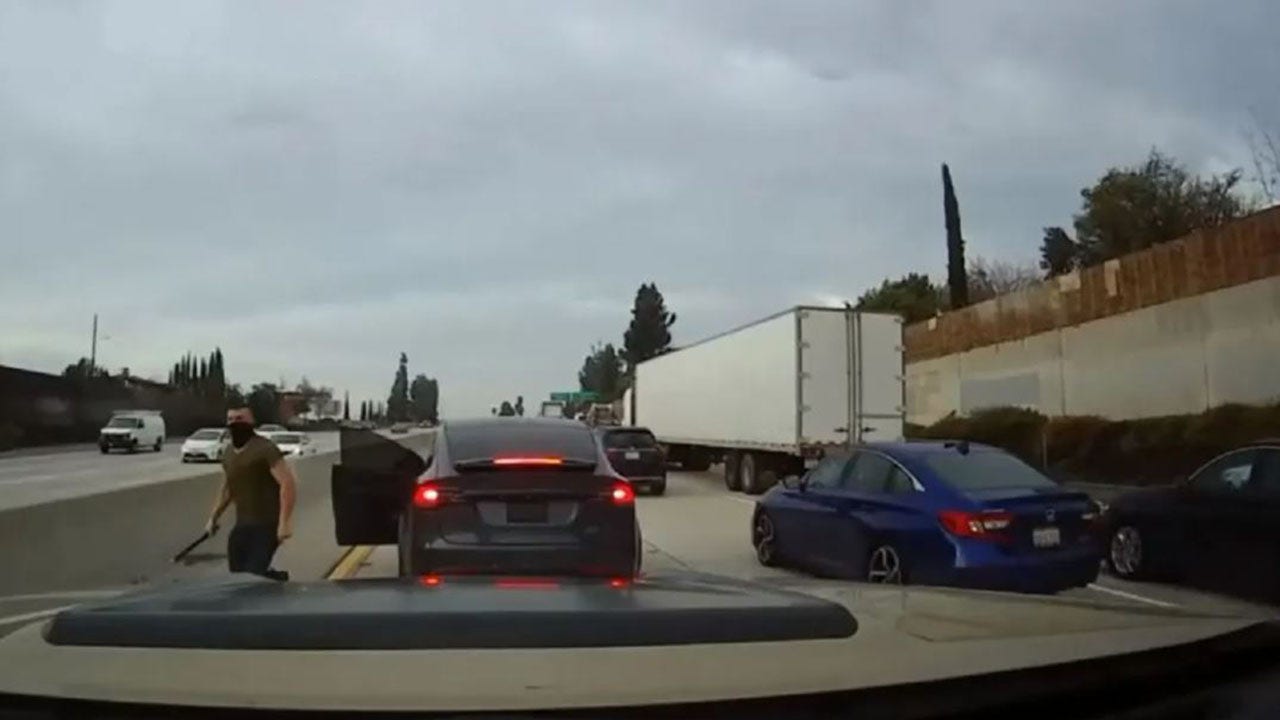
The sunny, tranquil streets of Honolulu, Hawaii, are globally recognized as a sanctuary of leisure, natural beauty, and peaceful escape from the relentless grind of modern life. Yet, for a thirty-five-year-old mother and her eighteen-year-old daughter, this paradise was abruptly transformed into the setting of a terrifying, violent nightmare on a warm spring afternoon in May 2025. Road rage is a uniquely modern and deeply unsettling phenomenon; it violently disrupts the mundane act of driving—an essential, routine thread in the fabric of our daily lives—and instantly reimagines it as an unpredictable theater of raw, volatile hostility. It was within this fragile ecosystem of public roads that Nathaniel Radimak, a thirty-nine-year-old man whose dangerous, explosive impulses had already earned him a notorious reputation on the mainland as the “Tesla Road Rage Driver,” chose to shatter the peace of two unsuspecting women. The psychological aftermath of such an unprovoked assault is far more enduring than the physical wounds, leaving victims to grapple with a persistent, paralyzing sense of vulnerability in public spaces that should feel entirely safe. When we step into our motor vehicles, we operate under a silent, shared social contract of mutual respect and safety, a civic promise that Radimak did not merely breach, but violently tore apart, illustrating how quickly ordinary life can devolve into chaos when a predatory force encounters the unsuspecting.
The specific details of the confrontation, which occurred on May 7, 2025, paint a chilling picture of how a minor, everyday inconvenience can escalate into a life-threatening crisis in a matter of seconds. The teenage daughter was attempting to park her vehicle in a busy downtown Honolulu neighborhood when a sleek, gray 2022 Tesla bearing Oregon license plates glided past, carrying with it an aura of quiet luxury that stood in stark, ironic contrast to the primal violence that was about to unfold. What began as a brief, perhaps frustrated exchange of words—the kind of minor verbal friction that happens thousands of times a day in congested urban areas—rapidly spiraled into an exhibition of unbridled physical aggression as Radimak exited his high-tech vehicle and completely abandoned the most basic rules of civil human behavior. He launched a merciless physical assault on both the teenage driver and her mother, a terrifying event that culminated in Radimak violently dragging the thirty-five-year-old mother entirely out of her vehicle and body-slamming her directly onto the hard, unforgiving Honolulu pavement. The sheer physical brutality of a grown man assault-tackling a mother onto the street, while her teenage daughter watched in absolute, helpless horror, highlights the profound imbalance of power characterizing these sudden public crises, leaving both women battered, bruised, and deeply traumatized before Radimak fled the scene, prompting an intense police search that ended with his arrest the following day.
To truly understand the gravity of this Hawaiian attack, one must look backward at the dark trail of systemic aggression Radimak left behind across Southern California, revealing a pattern of behavior that suggests he was a ticking time bomb who repeatedly slipped through the cracks of the criminal justice system. Known widely for his highly specific brand of vehicular terror, Radimak had previously spent months terrorizing motorists—predominantly targeting women—while driving his signature Tesla and wielding a heavy metal pipe to smash windows, dent doors, and threaten the lives of innocent commuters. This terrifying reign of Californian highway terror eventually led to a high-profile 2023 conviction where he pleaded guilty to a disturbing litany of charges, including assault, vandalism, elder abuse, and making criminal threats, resulting in what the public hoped would be a sobering five-year prison sentence. However, the complex administrative machinery of the California Department of Corrections and Rehabilitation, coupled with accumulated pre-sentencing credits totaling over four hundred days, allowed Radimak to walk completely free after serving less than a single year of his sentence. This premature release meant that an incredibly volatile, dangerous, and un-rehabilitated individual was quickly re-introduced to public roads with minimal transitional supervision, a tragic systemic failure that directly set the stage for his subsequent violence in Hawaii and exposed the loopholes in a justice system that often prioritizes bureaucratic efficiency over public safety.
During his sentencing hearing in Honolulu, Radimak stood before the court to address his victims and the public, delivering a personal statement that was a complex, frustrating tapestry of superficial self-pity, deflection of personal agency, and a hollow claim of personal responsibility. “I take accountability. I just feel bad about it,” Radimak muttered to the court, attempting to project a sense of genuine remorse, before almost immediately pivoting to blame external social and medical institutions for his violent, out-of-control actions. He lamented to Hawaii News Now that he had been repeatedly denied “a certain kind of treatment” that he claimed was being prolonged and kept far out of his reach, asserting that this institutional delay was actively hindering his personal recovery and mental stability. This rhetorical shift is a classic psychological defense mechanism, wherein a perpetrator attempts to soften the sting of their own guilt by reframing themselves as a passive victim of a negligent healthcare and correctional system. While mental health struggles are deeply real and deserve robust public infrastructure, utilizing them as a shield to excuse the terrorizing and physical battering of a mother and daughter represents a profound failure of introspection, laying bare the disturbing disconnect between recognizing the wrongness of one’s actions and genuinely internalizing the human wreckage left behind by those actions.
Fortunately, the judicial system in Hawaii, manifested in the stern, clear-eyed, and uncompromising presence of Judge Clarissa Malinao, refused to accept Radimak’s narratives of victimhood and systemic medical neglect. During the sentencing proceedings, Judge Malinao carefully and deliberately dismantled Radimak’s excuses, pointing out that his lack of specialized medical treatment was not merely an administrative failure on the part of the state, but a direct consequence of his own personal, conscious, and destructive lifestyle choices. She emphasized that while on parole for his severe California convictions, Radimak had repeatedly and willfully failed to seek the medical care made available to him, choosing instead to actively abuse illegal, mood-altering substances while on the streets. Furthermore, the judge highlighted a highly toxic lifestyle combination: Radimak’s voluntary intoxication merged with his unilateral decision to discontinue his prescribed mental health medications, a volatile mixture that exponentially escalated his risk of violence to both himself and the community. “His history of violence is propensity for violence… these findings also demonstrate and reinforce that the defendant is indeed a danger to the safety of the public,” Malinao declared, cementing the court’s view that Radimak had forfeited his right to walk freely among peaceful citizens, and sentencing him to seven years in prison for unauthorized motor vehicle entry and assault.
The sentencing of Nathaniel Radimak provides a temporary, deeply needed sense of closure for the residents of Honolulu, yet it leaves behind a lingering, broader conversation about the state of our collective mental health, the sanctity of our public spaces, and the ongoing trauma of his victims. For the thirty-five-year-old mother and her eighteen-year-old daughter, the physical bruises from the asphalt will fade, but the invisible psychological scars—the sudden jolt of panic when a car approaches too close, the hyper-vigilance in a parking lot—will require a long, patient, and quiet journey of healing. Their plight shines a harsh, unforgiving spotlight on a modern societal epidemic where the daily stresses of life, exacerbated by untreated psychological instability and substance abuse, transform our shared roads into high-stakes battlegrounds. Radimak’s eventual return to a prison cell offers solace to the public, but it also serves as a stark warning about the limitations of a justice system that often reacts to tragedies rather than preventing them. As we reflect on this harrowing Hawaiian episode, we are reminded of the fragile nature of peace in our everyday lives, and the pressing, continuous need to build communities where mental health accountability, robust rehabilitation, and swift, uncompromising justice work hand in hand to ensure that a simple drive down the street does not end in a fight for survival.