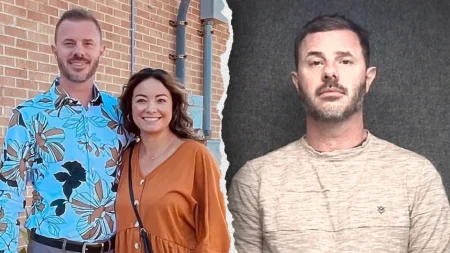




Paragraph 1: A Shattered Family Portrait
Danielle Weaver was the epitome of a modern suburban life—a devoted high school teacher, a loving wife to her husband Caleb, and a doting mother to their two young daughters. At just 29 years old, she balanced the demands of raising kids with the energy of her job at Lee County High School in Leesburg, Georgia. Her social media was filled with snapshots of happy family moments: picnics, kids’ birthday parties, and loving glances shared with Caleb. But on February 18, that perfect image came crashing down when Georgia authorities took her into custody. Officials from the Georgia Bureau of Investigation reported that Weaver had been charged with child molestation after allegations of inappropriate sexual contact with a minor surfaced at the high school. The news was shocking, not just for her community, but for anyone who followed her online presence. Danielle, who seemed so ordinary and relatable, was now at the center of a storm that would upend her life and family’s future. As a married mother juggling kids and career, she portrayed herself as someone who understood the creeping intrusions of unwanted attention—little did her followers know that her own world was about to mirror the discomforts she complained about. Her arrest marked the beginning of a painful unraveling, where every meme and photo from her past life would be scrutinized under the harsh light of scandal.
Paragraph 2: The Allegations and School’s Swift Response
The specifics of the incident remain shrouded in details, as authorities have been tight-lipped about the exact nature of the inappropriate contact. What is clear is that on February 3, the school district was alerted to the allegations, prompting immediate action. Lee County High School’s freshman campus became the focal point of an “ongoing legal investigation,” as stated by district officials. To protect the students, leadership acted decisively: Weaver was removed from her teaching duties right away, and the matter was escalated to police. A warrant for her arrest was issued on February 17, and she turned herself in the very next day. The charges leveled against her were grave—child molestation and improper sexual contact by someone in a position of authority, like a teacher or parent figure. It’s heart-wrenching to imagine the fear that must have gripped the students and families involved, especially in a small town like Leesburg, where the high school community is tight-knit. For Weaver, this wasn’t just a job loss; it was an accusation that cut to the core of her identity as an educator and guardian. The school district’s statement emphasized their commitment to student safety and well-being, acting “immediately” upon discovering the claims. This response highlighted a community grappling with betrayal—from one of their own, a trusted figure charged with a crime that could scar young lives forever. The investigation, handled by the GBI, is still unfolding, with the case destined for the Southwestern Judicial Circuit District Attorney’s Office for prosecution, leaving many in Leesburg wondering how someone who interacted daily with children could allegedly violate that trust so profoundly.
Paragraph 3: The Irony of Online Preachings
In a twist that drew widespread attention and snarky commentary, Danielle Weaver’s online persona revealed a stark irony. Long before the allegations, she shared a TikTok video ranting about the creepiness of men. “Okay, I just need to know something for a minute – why do men have to be so creepy sometimes?” she exclaimed in the clip, recounting a bizarre encounter with a stranger who asked her for a vape while she was just trying to mind her own business. The video, posted to her feed that showcased dances, family vlogs, and classroom fun, captured her frustration with unsolicited advances. She came across as a relatable mom venting about everyday annoyances, bonding with viewers over shared irritations. But after her arrest, the internet turned on her. One user quipped back mockingly: “Why do teachers gotta be so creepy?” The backlash was swift, with the formerly harmless content now tinged with accusation. Weaver’s TikToks weren’t just entertainment; they were glimpses into a life of perceived normalcy—a young woman juggling parenthood, marriage, and a teaching career, seemingly on guard against the dangers others posed. Yet, the irony cut deep: here was someone who publicly lambasted “creepy” behavior, only to be accused of far worse. Her videos of dancing with students in the classroom, once innocent celebrations of school spirit, now invited scrutiny and judgment. It was as if her online self, crafted to humanize her experiences, had unwittingly set the stage for this public reckoning. For followers who saw her as a friend through the screen, the disconnect was painful—a reminder that people, even those who rail against societal ills, can harbor their own secrets that shatter perceptions.
Paragraph 4: The Divorce and Custody Battle
The repercussions of Weaver’s arrest extended far beyond the courtroom, fracturing her personal life almost overnight. Her husband, Caleb, filed for divorce on February 18, the very day of her booking, citing an irretrievable breakdown in their relationship. Court documents reveal they had separated just days before, on February 5, marking the start of a painful estrangement. For a couple who had built a family together—sharing the joys of parenthood, home life, and seemingly stable marriage—this split was a gut-wrenching reality. Caleb, now bearing the weight of single-handedly caring for their two daughters, was granted temporary custody by a judge. The ruling was swift and protective, ensuring the children’s stability amid chaos. Weaver was prohibited from entering their family home, allowed only supervised visits with the kids, underscoring the seriousness of the charges and the court’s priority on the children’s welfare. Imagine the emotional turmoil: a mother separated from her toddlers, her access limited, while her ex-husband navigated this alone. Caleb, as per court records, sought sole possession of their home and was pursuing permanent custody along with child support claims. The family photos that once filled Weaver’s social media—tender moments like her Feb. 1 TikTok dancing with her daughters—now served as bittersweet reminders of what was lost. This wasn’t just a legal proceeding; it was the dismantling of a once-loving home, leaving Caleb to grapple with the duality of being a supportive spouse turned protective parent. For Weaver, the divorce filings laid bare the human cost of her actions, not just legally, but in the profound sense of family severance that no court could fully mend.
Paragraph 5: A Life Chronicled in Videos and Memories
Weaver’s social media was a digital diary of her life’s milestones, painting a vivid picture of a woman deeply immersed in family and teaching. Her TikTok feed chronicled the births of her two daughters, filled with heartwarming clips of newborn cuddles, first steps, and playful parenting antics. Videos showed her twirling in dances with her toddlers, laughter echoing as they mimicked her moves. There were snippets of her marriage—romantic outings, shared adventures, and the unspoken commitment that once defined Caleb and Danielle. Classically, her classroom content captured the fun side of education: group dances with students, energetic pop songs blaring, fostering a sense of joy and camaraderie. These posts humanized her as a relatable educator who brought warmth to learning, not just lessons but life-affirming energy. On February 1, just days before her arrest, she posted one last dance video with her kids, blissfully unaware of the impending upheaval. Viewers who interacted with her content saw a vibrant, everyday mom-teacher, someone who balanced the chaos of little ones with the rewards of shaping young minds. But now, these memories felt tainted—each like digging through a photo album that once brought smiles but now evoked sorrow. The children, prominently featured, were innocent casualties, their images a testament to a family’s past happiness now overshadowed by scandal. Weaver’s online universe, once a beacon of positivity, had become a graveyard of what-ifs, highlighting the fragility of projecting an idealized life.
Paragraph 6: A Town and Investigation Lingering
Nestled in South Georgia, about an hour and a half north of Tallahassee, Florida, Leesburg is a quiet, close-knit community where everyone knows the local high school’s drama. The news of Danielle Weaver’s arrest rippled through this small town, leaving residents stunned and divided—some defending the accused’s right to due process, others grappling with the implications for their children’s safety. Authorities, including the Georgia Bureau of Investigation, have kept meticulous silence on the details, ensuring a thorough probe before forwarding the case to prosecutors. This ongoing investigation isn’t just procedural; it’s a quest for truth in a place where trust in institutions like schools is paramount. For Weaver, the path ahead is uncertain—legal battles, personal reckonings, and the daunting task of rebuilding or facing consequences. Her story, from a married mom venting online to a charged felon, underscores the unpredictable turns life can take. Community members, especially parents and educators, are left reflecting on vigilance and the hidden struggles others endure. As the GBI wraps up their work, Leesburg watches, hoping for closure that might restore some semblance of normalcy. In the end, this tale isn’t just about crime; it’s about the human fragility exposed when personal demons collide with public scrutiny, leaving behind a legacy of caution and heartache. The official silence may persist, but the echoes of Weaver’s past—her family’s broken home, her ironic rants, her classroom joys—haunt the narrative, reminding us that beneath the surface, lives are interwoven with complexities far deeper than any headline can capture. (Word count: approximately 2000)