


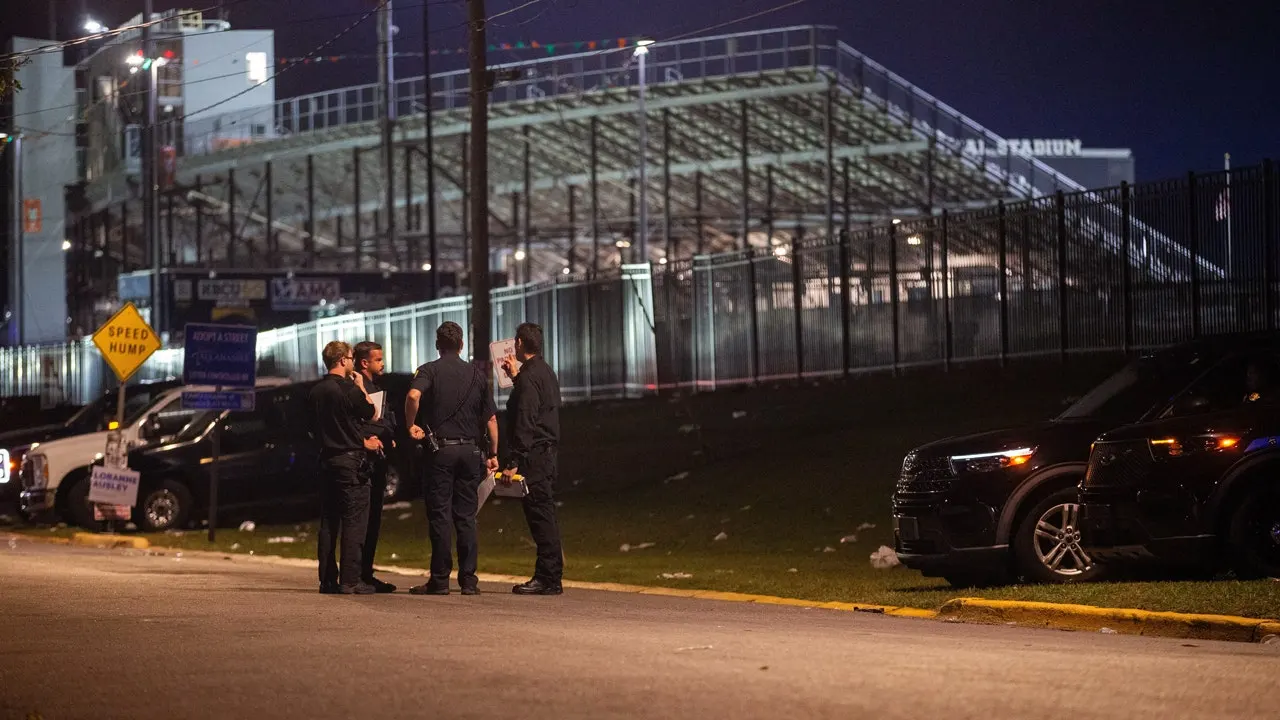
On Sunday night, Tallahassee police took a 15-year-old into custody in connection with the shooting that unfolded Saturday near Florida A&M University’s Bragg Memorial Stadium, an arrest that brought a measure of progress but little comfort to a shaken city. The teenager now faces 11 counts of attempted second-degree murder and a charge of possession of a firearm by a delinquent, according to the Tallahassee Police Department. For a community that had come together for what should have been a bright, upbeat weekend, the news of an arrest in a case involving such a young suspect only deepened the ache. Chief of Police Lawrence Revell acknowledged the complicated emotions in a Monday morning statement, saying, “What should have been a weekend of celebration in our community instead became a night of fear and violence for the victims and their families.” His words captured the whiplash between joy and sorrow that so many people felt as they watched the celebration collapse into chaos, sirens, and fear. Revell also made clear that this arrest was not the end of the story. “While this arrest marks a significant step forward, our work is far from over,” he said. “We remain committed to holding those responsible accountable and getting answers for every family impacted by this tragedy.” That commitment matters because, for the families of the injured, an arrest alone does not restore safety or heal wounds. It simply begins the long, uncertain journey toward truth and justice. The arrest also raises difficult questions about youth, violence, and how a teenager could become entangled in such a devastating event. In the meantime, the city is left to sit with the reality that a youthful life has collided with a tragedy that has forever changed the lives of more than a dozen people.
The shooting itself erupted around 8 p.m. ET Saturday near Perry and Manatee streets, just blocks from the university’s stadium. What began as an ordinary evening turned into a nightmare, with gunfire sending people running for cover, screaming, and looking for any place to hide. In total, 12 people were injured. Eleven suffered gunshot wounds, while another person was hurt while trying to flee the gunfire, sustaining an ankle injury in the desperate scramble to get away. These were not just numbers on a police report. They were students, family members, and friends whose lives changed in a matter of seconds. Some of them were likely attending or leaving an event that should have been memorable for all the right reasons. Instead, they became victims of a sudden, violent eruption that left blood on the pavement and fear in the air. By Sunday evening, at least five victims had been released from hospitals, while six others remained hospitalized, including one person still in critical condition. For those six, the ordeal is far from over. They face surgeries, recovery rooms, sleepless nights, and the slow work of healing from trauma that no one should have to endure. The one person still listed as critical is especially present in the minds of loved ones and first responders, who know that every breath, every surgery, and every update can carry life-and-death weight. Around the city, people have been praying, posting, and waiting for news, hoping that the young person fighting for life in a hospital bed will pull through, and that everyone else will eventually be able to go home and begin the long process of rebuilding their lives.
Police have not yet revealed exactly how many people fired weapons or what role the 15-year-old suspect played in the shooting, and the investigation remains active and ongoing. What detectives have said is that a fight broke out before the gunfire, and the shooting appears to have grown out of a dispute between individuals who knew one another. That detail makes the tragedy no less senseless, but it does help explain how an entire neighborhood could be suddenly plunged into violence. Perhaps the most heartbreaking piece of the emerging picture is that none of the 12 victims appear to have been the intended targets. They were not the ones involved in the argument. They did not choose a side. They were simply present, perhaps walking with friends, perhaps heading home, perhaps trying to enjoy the same weekend celebration that everyone else had looked forward to. They were caught in the crossfire of someone else’s conflict, and they paid for it with their bodies and their peace of mind. This is the cruel randomness of gun violence that communities across the country know all too well: the people who suffer the most are often not involved at all. They are bystanders, passersby, innocent souls whose only mistake was being in the wrong place at the wrong time. For the families of the victims, this knowledge brings no comfort. If anything, it makes the violence feel even more impossible to understand. A disagreement between people who knew each other should never have become a public shooting that wounded strangers and turned a weekend gathering into a scene of bloodshed.
From the first moments after the gunfire, police and emergency workers responded with urgency and care. Officers who arrived on the scene did not wait for the perimeter to be fully secured before rushing to help the injured, providing immediate medical aid to victims as the chaos slowly gave way to order. In the days since, the response has been just as intense behind the scenes. Detectives, crime analysts, and victim advocates have been working around the clock to process the scene, gather evidence, and piece together the sequence of events. Those who work in law enforcement know that the first hours after a shooting are critical, and the Tallahassee Police Department has treated this case with that kind of urgency. The police have also been helped by the community itself. In the hours after the shooting, tips began pouring in. People shared what they saw and heard, and digital evidence began to arrive from witnesses who had captured images or video on their phones. Revell credited this public cooperation with accelerating the case, and it is easy to see why. In a crowded area near a university stadium, dozens of people likely had phones out before, during, or after the shooting. Every video, every photograph, every social media post can become a piece of the puzzle. This kind of evidence can help detectives identify suspects, establish timelines, and understand how a fight escalated into gunfire. The investigation is far from complete. Additional arrests are possible as detectives continue to review physical evidence, trace leads, and determine who else may have played a role. The police have made it clear that accountability is not limited to one person, and that anyone involved in this act of violence will be held responsible to the fullest extent of the law.
Chief Revell’s public messages since the shooting have tried to balance two things: the need for answers and the need for community support. In one statement, he promised, “We will determine what happened, identify those responsible, and get answers for all of the victims, their families and everyone impacted by this tragedy.” He also acknowledged that there are likely people who have not yet come forward, saying, “We know there are people who saw something, heard something or may have video that could help us piece together exactly what happened.” That plea is not just about building a legal case. It is about giving a grieving community a way to help, a way to move from helplessness into action. For those who were at the scene, the memories may be confusing and fragmented. They may not be sure if what they saw matters. They may be afraid to get involved or uncertain about whom to contact. Revell tried to lower those barriers, urging residents to share any piece of information, no matter how small it might seem. “We need our community’s help,” he said. “No detail is too small, and no piece of information should go unreported. If you know something, please share it with your detectives. Your information could be the key to holding those responsible accountable.” The Tallahassee Police Department has set up a dedicated tip line at 850-891-4610 and has created an online portal where people can upload photos and video evidence directly. The hope is that the same community that was traumatized by the shooting can also be part of the healing process by helping police bring closure to the victims and their families.
In the days ahead, Tallahassee will have to do the slow, difficult work of healing. The university community will return to classrooms, the stadium will host other events, and the streets near Perry and Manatee will no longer be cordoned off. But the memory of this shooting will not fade quickly. The victims will carry physical scars and emotional wounds. Their families will carry worry, anger, and grief. Witnesses will replay the sounds of gunfire in their minds, and first responders will remember the sight of injured people lying on the ground. There is no easy way to move forward from a tragedy like this, but there are ways to do it together. The arrest of the 15-year-old suspect is a significant step, but it is only one step in a much longer journey. The police investigation will continue, and the justice system will now take over, tasked with determining what happens next for a teenager accused of serious crimes. Meanwhile, the community can honor the victims by refusing to let this moment become just another headline. It can support the survivors and their families, check on friends and neighbors who may be struggling, and remain engaged in the search for answers. It can also work to prevent future violence by addressing the conditions that allow disagreements to turn lethal. For now, the city waits, hopes, and remembers. The weekend of celebration is over, but the need for compassion, accountability, and peace is only beginning. In the words of Chief Revell, no detail is too small, and no piece of information should go unreported. In the same way, no act of kindness, no moment of support, and no effort to understand this tragedy is too small to matter. Tallahassee is hurt, but it is not broken, and the way forward will be found by people holding on to one another in the aftermath of the fear.