


An Escalating War on Words: Beijing’s Retaliatory Expulsion of a New York Times Journalist Sparks Outrage
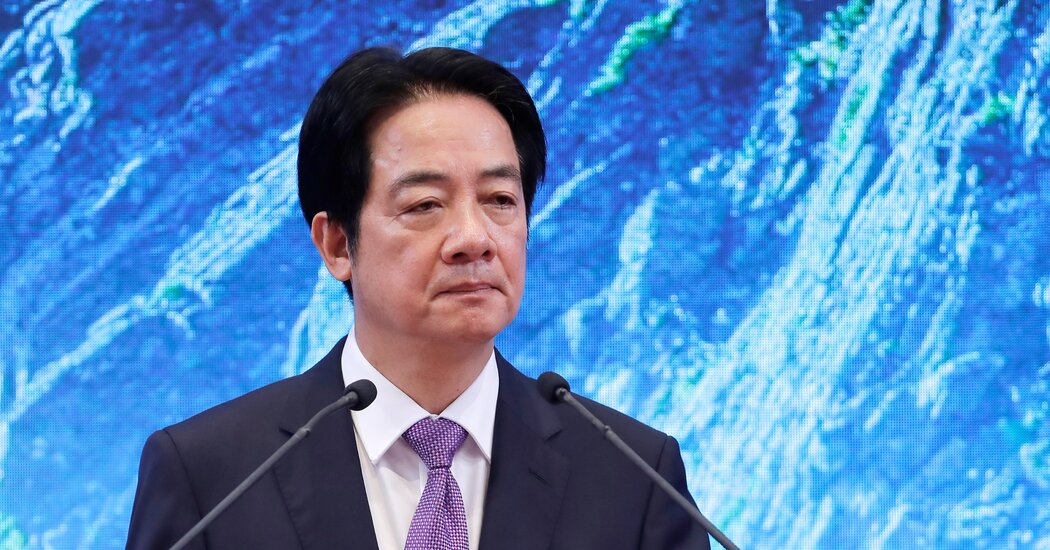
In a sharp escalation of cross-strait tensions and the ongoing global debate over media freedom, a spokeswoman for Taiwan’s president, Lai Ching-te, has publicly condemned the Chinese government for expelling a resident Beijing correspondent for The New York Times. The journalist, Vivian Wang, was effectively banished from China in February in a move that Taipei characterizes as a direct, retaliatory response to President Lai’s virtual appearance at the newspaper’s prestigious DealBook summit in New York last December. Although Wang possessed no administrative or editorial involvement in the annual, high-profile conference—which regularly assembles world-class executives, policymakers, and cultural icons—she became the target of Beijing’s deep-seated frustration over her rigorous, sensitive reporting inside the mainland. In an online statement released on Sunday, Taiwanese presidential spokeswoman Kuo Ya-hui criticized China’s aggressive maneuvers, warning that leveraging administrative power to intimidate global media groups representing democratic voices constitutes an existential threat to press freedom in China and the fundamental safety of international reporters. By deploying what she described as groundless pretexts and brutal diplomatic tactics to disrupt independent journalism, Kuo argued that Beijing has not only severely undermined its own fragile international image but has also solidified its reputation as a primary source of regional instability and a geopolitical troublemaker.
+——————————————————————-+
| CHRONOLOGY OF DIPLOMATIC ESCALATION |
+——————————————————————-+
| Dec: Taiwan President Lai Ching-te appears virtually at NYT |
| DealBook Summit. Beijing files formal protests. |
+——————————————————————-+
| Feb: Beijing expels NYT correspondent Vivian Wang as a direct |
| retaliatory reprisal. |
+——————————————————————-+
| Apr: Three transit nations revoke flight permits for President |
| Lai’s state visit under immense pressure from Beijing. |
+——————————————————————-+
| May: Lai successfully completes delayed diplomatic journey to |
| Eswatini despite airspace blockades. |
+——————————————————————-+
Behind the Censorship Curtain: Inside the Fragile Reality of Foreign Reporting in China
The abrupt expulsion of Vivian Wang, who had reporting boots on the ground as a dedicated China correspondent for The New York Times since 2020, underscores the systematic crackdown by the Chinese Communist Party (CCP) on any foreign correspondents whose documentation challenges the official state narrative. Operating under the shadow of an increasingly digitalized autocracy, Wang’s journalism distinguished itself by illuminating the gritty realities faced by ordinary Chinese citizens navigating the margins of domestic security state expansion, intensive internet censorship, and the public health fallout of Beijing’s highly controversial, zero-COVID containment strategies. Her work peeled back the sanitized layers of Chinese state-run media, giving a human voice to the growing domestic discontent and revealing how President Xi Jinping’s centralized policies reshaped everyday local lives. For Chinese authorities, who demand uniform praise for their governing paradigm, such detailed portrayals of civil friction and structural vulnerabilities are treated as intolerable provocations. Wang’s targeted exit is not an isolated event but a continuation of an ongoing purge designed to create “reporting deserts” in mainland China, effectively forcing international news bureaus to cover the world’s second-largest economy from the outside looking in.
A Campaign of Global Silencing: Understanding China’s Systematic Isolation of Taiwan
The diplomatic fallout over the New York Times incident highlights the broader strategic objective of the Chinese government: the total international strangulation of Taiwan’s democratic representation. Beijing views Taiwan—a self-governed island boasting its own constitution, democratic elections, and military—as an inalienable, breakaway province of its own territory, and actively regards any formal or informal engagement with Taiwanese leadership as a direct violation of its sovereign boundaries under the “One China” principle. In the eyes of the CCP, allowing President Lai Ching-te an international platform like the DealBook summit threatens to legitimize Taiwan’s separate political identity on the world stage. To prevent this, China’s foreign ministry and security apparatus employ a sweeping playbook of diplomatic coercion, economic intimidation, and media manipulation to isolate the Taiwanese state. Spokeswoman Kuo Ya-hui vehemently defended President Lai’s engagements with international media, emphasizing that these interviews are vital diplomatic channels designed to articulate Taiwan’s sovereign positions, showcase its democratic milestones, and affirm a collective commitment to maintaining peace and maritime security across the Taiwan Strait.
                  ┌────────────────────┐
                  │  Beijing's Tactics │
                  └─────────┬──────────┘
         ┌──────────────────┼──────────────────┐
         ▼                  ▼                  ▼
 ┌───────────────┐  ┌───────────────┐  ┌───────────────┐
 │  Diplomatic   │  │   Airspace    │  │  Media Visas  │
 │  Strangulation│  │   Blockades   │  │  Revocation   │
 └───────────────┘  └───────────────┘  └───────────────┘
Geopolitics in the Air: How China Uses Aviation Pressure to Ground Taiwanese Diplomacy
Beijing’s aggressive campaign to marginalize President Lai Ching-te extends far beyond the realm of print media and cyber-censorship; it has frequently manifested in direct, physical disruptions to Taiwanese state travel. Taiwanese officials revealed a glaring example from this past spring when President Lai’s diplomatic journey to the Kingdom of Eswatini—a small nation in Southern Africa that remains one of Taiwan’s last absolute official diplomatic allies—was abruptly compromised. In April, Lai was forced to cancel his initial flight plans after three critical transit countries suddenly rescinded previously granted permits for his aircraft to cross their sovereign airspace, a coordinated refusal that Taipei attributes directly to intense backstage leverage exerted by Beijing. Although Lai successfully completed his diplomatic trip in May after rerouting flight paths, this airspace blockade demonstrates the lengths to which China will go to limit the physical mobility of Taiwan’s leadership. By exploiting its economic ties with developing nations, Beijing increasingly uses international airspace and transit corridors as weapons of political warfare, demonstrating that its strategy of isolation is both a digital and physical endeavor.
Tit-for-Tat Diplomacy: The Dangerous Conflation of Independent Journalism and State Propaganda
This latest escalation in media expulsions must be viewed through the lens of a historical, tit-for-tat geopolitical game between the United States and the People’s Republic of China, which has fundamentally transformed the landscape of global reporting over the last decade. During the Trump administration, Washington revoked the visa of a U.S.-based correspondent for Xinhua, China’s state-run news agency, pointing out that Chinese state media operatives function essentially as propaganda assets of the ruling communist party rather than independent journalists. Beijing has seized upon these actions to argue a false moral equivalence on the international stage, justifying its subsequent exiling of Western journalists as defensive, reciprocal measures. A spokesperson for The New York Times made it clear that the independent news organization played absolutely no role in the visa status of the Chinese state reporter, rejecting the narrative that the work of independent, public-interest journalists should be used as bargaining chips in bilateral disputes. By treating independent reporters as diplomatic pawns, China continues to erode the critical distinction between state-funded political messaging and the independent, objective journalism needed to hold powerful global actors accountable.
+—————————————————————–+
| PROPAGANDA VS. INDEPENDENT JOURNALISM |
+—————————————————————–+
| STATE-RUN MEDIA (e.g., Xinhua) || INDEPENDENT PRESS (e.g., NYT) |
| —————————— || —————————– |
| State/Party-funded and directed || Privately funded or public |
| Serves as official megaphone || Editorial independence |
| Aligned with government policy || Holds government accountable |
| Subject to party censorship || Freedom of expression focus |
+—————————————————————–+
The Battle for the Truth: Why the Protection of Global Press Freedom Lies at the Heart of Democratic Survival
Ultimately, the clash over Vivian Wang’s expulsion and the ongoing territorial intimidation of Taiwan underscores a deep, systemic conflict between two fundamentally incompatible views of global communication: one that champions open, transparent dialogue as the bedrock of a stable international order, and another that views information strictly as an instrument of state control. When authoritarian regimes like Beijing criminalize factual reporting on internal challenges and penalize international platforms for hosting democratic leaders, they threaten the shared information ecosystem that keeps the global public informed. As Taiwanese presidential spokeswoman Kuo Ya-hui noted, the fight to preserve the safety of foreign correspondents is directly tied to the preservation of democratic governance itself, as free societies cannot endure without the unobstructed flow of independent information. For Western nations, international media organizations, and democratic allies worldwide, the expulsion of reporters from mainland China is not simply a localized administrative disagreement over visas. It represents a vital front in a broader geopolitical struggle, reinforcing the reality that defending global press freedom is a crucial pillar in protecting the sovereignty and security of democratic societies everywhere.