


Paragraph 1: The Tarmac Arrival
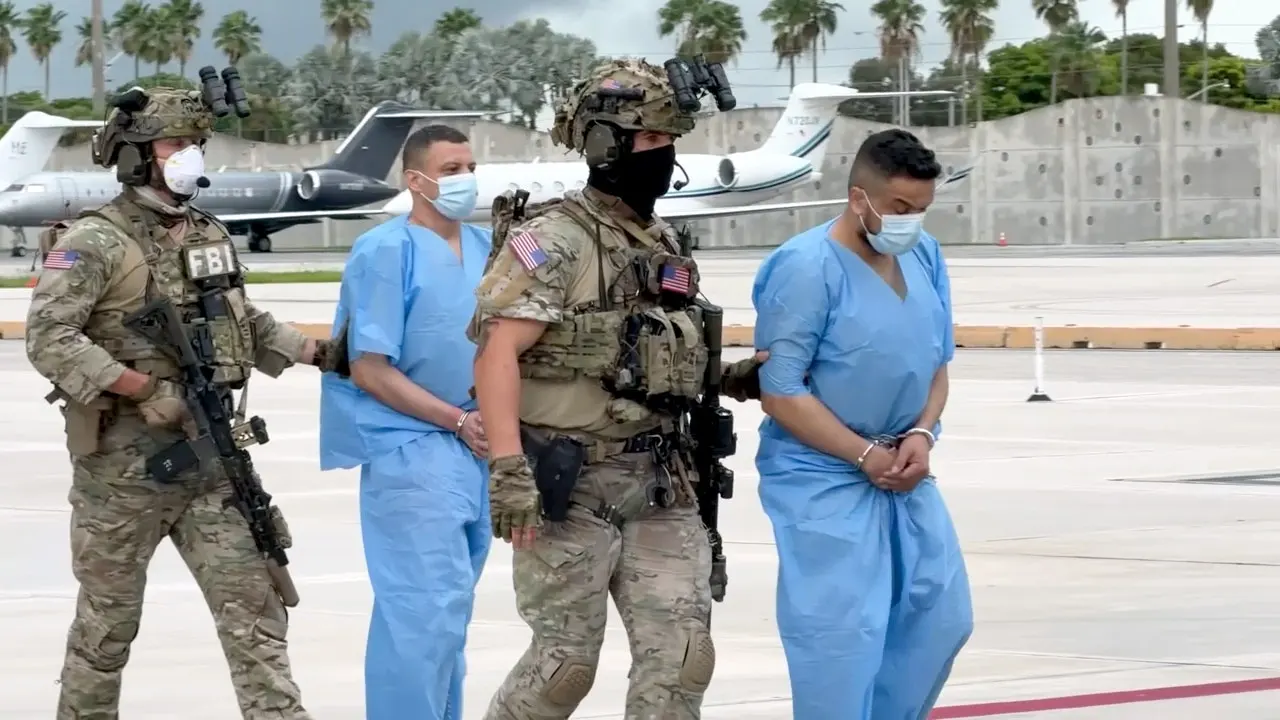
On a sun-drenched Miami tarmac, the arrival of a U.S. military aircraft marked the end of a long and painful chapter for those seeking justice in the assassination of Haitian President Jovenel Moïse. Eighteen defendants, their hands cuffed and ankles shackled, were led down the steps by FBI and Department of Homeland Security agents in military-style fatigues. It was a scene that blended the language of international diplomacy with the gritty reality of criminal custody. The men, a mix of Haitians and Colombians, had been transferred from Haitian custody to face federal charges in the United States, and Fox News cameras captured the moment in exclusive footage. The transfer was not merely an administrative procedure; it was, as FBI Director Kash Patel put it, “the largest foreign transfer of custody in FBI history.” For the family of the murdered president, for the people of Haiti, and for investigators who spent years untangling a web of money, power, and violence, this was a turning point. The suspects would soon sit in a federal courtroom in Miami, where prosecutors would lay out a case built on fraud, conspiracy, and murder. But before the legal arguments began, the sight of these men, guarded and subdued, offered a visceral reminder that the consequences of a brazen political crime were finally catching up to those accused of carrying it out. The tarmac itself was quiet, save for the hum of aircraft and the commands of federal agents, yet the symbolism was enormous. For the first time, the scale of the international plot was visible in the physical presence of its alleged participants, brought to the United States to answer for their actions. Because cameras are strictly prohibited inside federal courtrooms, this exclusive footage would become the only visual record of the suspects entering American custody—a frozen moment of accountability after years of evasion and delay.
Paragraph 2: The Crime That Shook a Nation
The story of how these eighteen people ended up on that Miami tarmac begins on a July night in 2021, in the hills above Port-au-Prince, where President Jovenel Moïse was in his private residence. At fifty-three years old, Moïse had already become a deeply polarizing figure in Haiti, but nothing prepared the nation for the violence that would unfold in his bedroom. A group of armed men, some of whom allegedly posed as U.S. Drug Enforcement Administration agents, stormed the residence and shot the president dead, leaving his body on the floor and a country in shock. The assassination did not just take a life; it tore a gaping hole in the political fabric of an already fragile Caribbean nation. In the months and years that followed, Haiti spiraled deeper into chaos. Powerful armed groups grew bolder, political institutions crumbled, and ordinary citizens were left to navigate a landscape of fear and uncertainty. The murder of a sitting president is always a seismic event, but in Haiti, it felt like the breaking of a final seal. The world watched as the country struggled to maintain order, while the investigation into Moïse’s death slowly moved forward, hampered by corruption, limited resources, and the sheer complexity of a conspiracy that spanned multiple countries. For many Haitians, the assassination was not just a political crime but a personal wound—a reminder that even the highest office in the land could not protect a man from those who wanted him gone. And as the years passed without a trial in Haiti, that wound festered. The transfer of the eighteen suspects to the United States was therefore not only a legal milestone; it was an emotional release, a sign that someone, somewhere, was still paying attention to the blood that had been spilled on that dark night.
Paragraph 3: The South Florida Connection
What made the case uniquely American was not the assassination itself, but the way it was allegedly planned and financed. Federal prosecutors established jurisdiction because the conspiracy was largely organized and funded in South Florida, a place thousands of miles from Moïse’s bedroom yet intimately connected to the plot. According to the unsealed indictment, the defendants used fraudulent COVID-19 Paycheck Protection Program loans—money meant to keep small businesses alive during a global pandemic—to bankroll the deadly mission. It is a detail that still stuns investigators: American taxpayer dollars, intended for struggling entrepreneurs, allegedly diverted to buy weapons, tactical gear, and the services of Colombian mercenaries. The scheme was as audacious as it was cruel. While the world was grappling with lockdowns and economic uncertainty, a group of conspirators in Florida was quietly assembling the tools of assassination, hiding their work behind shell companies and loan applications. The charges against the defendants include conspiracy to kill or kidnap a person abroad, as well as wire fraud, and the indictment paints a picture of greed that knew no bounds. Miami Special Agent in Charge Brett Skiles explained that this was “really about greed.” The conspirators, he said, owned business interests in the United States and were seeking lucrative contracts from the Haitian government. They believed that if they could initiate a regime change—by assassination, if necessary—those contracts would come their way, and they would profit handsomely. Humanizing the story means understanding that the plot was not born out of ideology or political conviction, but out of a cold calculation that a man’s life was worth less than a business deal. The president was not simply killed; he was treated as an obstacle to profit, a problem to be solved with bullets and mercenaries.
Paragraph 4: The Long Arm of the FBI
The arrival of the eighteen suspects in Miami was the result of what FBI Director Kash Patel described as an “all-out 18-month blitz” by the Bureau to hunt high-value targets across the world and bring them back to face justice. In a statement to Fox News Digital, Patel praised the operation and noted that engagement with foreign partners had increased by 400 percent over the previous eighteen months. For the FBI, this was not just another case; it was a demonstration of the agency’s reach and determination. The investigation into Moïse’s assassination was massive, involving thirty suspects charged with crimes, multiple countries, and years of meticulous work. Four ringleaders of the plot had already been convicted in a Miami federal court in May, following a nine-week trial that laid bare the mechanics of the conspiracy. Prosecutors argued that these men had assembled two dozen former Colombian soldiers, supplied them with money, guns, ammunition, and tactical vests, and sent them to Haiti with a mission that began as an overthrow and escalated into murder. The tarmac footage, with its images of shackled defendants and armed federal agents, was a visual testament to that effort. But it also humanized the investigators themselves—the unnamed men and women who spent sleepless nights following money trails, interviewing witnesses, and coordinating with foreign law enforcement. The transfer of custody was historic, but it was also deeply personal for the agents who had lived with this case for years. For them, seeing the suspects step off the plane was not just a job well done; it was a promise kept to the victims, to the Haitian people, and to the rule of law. The FBI’s pursuit of justice in this case sent a powerful message: even the most brazen crimes, committed in the most distant corners of the world, could not escape the long arm of American law enforcement when American interests and laws were involved.
Paragraph 5: Justice Delayed, But Not Denied?
While the American legal system moved forward, the situation in Haiti told a different story. Haitian Justice Minister Patrick Pelissier confirmed the transfer of the suspects and acknowledged that Haitian judicial proceedings had been delayed. “While the American procedure has recorded significant progress, notably arrests, prosecutions, and convictions, the Haitian procedure remains confronted with major difficulties and has not, to date, resulted in a trial being held, after five years of proceedings,” he said. The admission was a painful one for a country that has struggled to build stable institutions in the face of violence and corruption. For many Haitians, the transfer of the suspects to the United States was a double-edged sword. On one hand, there was relief that someone would finally be held accountable. On the other, there was a deep sense of shame and frustration that the Haitian justice system could not handle the case itself. Prominent human rights activist Pierre Espérance called the transfer a “disgrace for the Haitian justice system,” arguing that the country needed to strengthen its own institutions so that such complex cases could be tried at home, rather than sent abroad. His words resonated with those who saw the United States as a kind of legal guardian, stepping in because Haiti was unable or unwilling to act. The human dimension of this is profound: victims’ families are left to watch from afar as foreign courts deliver the justice they have been denied for years. There is gratitude, but there is also grief—grief that the process has been taken out of their hands, that the story of their president’s murder will be told in a language and a courtroom far from the streets where he once walked. For the eighteen suspects, the journey to Miami may mean a fair trial, but for Haiti, it is a reminder of how far the country still has to go in its own quest for justice and stability.
Paragraph 6: A New Chapter in an Old Struggle
As the eighteen defendants made their first appearance in federal court in Miami, the world was reminded that justice is often a slow, complicated, and deeply human process. The assassination of Jovenel Moïse was not just a crime against one man; it was a crime against a nation, an attack on the very idea of democratic leadership in a country that has seen more than its share of turmoil. The federal case against the suspects is now one of the most significant international prosecutions in recent memory, and its outcome will be watched closely not only in Haiti and the United States but around the world. The use of PPP loans to fund the plot adds a layer of betrayal that is hard to stomach: funds meant to help struggling Americans during a pandemic were instead used to facilitate murder. The alleged involvement of former Colombian soldiers, the posing as DEA agents, and the elaborate financial schemes all point to a level of sophistication and ruthlessness that is chilling. Yet the story is also one of persistence and hope. FBI Director Kash Patel’s statement, with its emphasis on “man-hunting high-value targets” and historic international cooperation, suggests that the U.S. government is committed to seeing this through. For the people of Haiti, the transfer of the suspects to American soil may not bring back their president, and it may not heal the deep wounds that have been exposed over the past five years, but it does offer something that has been in short supply: accountability. It says that the powerful cannot simply kill and walk away, that even in a world of chaos and corruption, there are still institutions willing to pursue the truth. As the legal proceedings unfold, the human story behind the headlines will continue to matter—the family mourning a husband and father, the investigators who refused to give up, the Haitian citizens who still dream of a country where justice is not a luxury. The tarmac in Miami was just the beginning of a new chapter, one that holds the promise of closure, even as it reminds us of the fragility of life and the enduring pursuit of justice in an imperfect world.