


The quiet, rural landscape outside Portland, Oregon, became the backdrop for a tragedy of staggering proportions this weekend, a scenario so dark it seems ripped from a crime novel rather than the peaceful, everyday existence of a small community. The discovery came early Saturday morning when authorities were alerted to a vehicle fire on a piece of property in Forest Grove, a community about 25 miles west of Portland. When they arrived, the scene that unfolded was far more horrifying than a simple blaze. Inside the home, they found the remains of five people, alongside the bodies of several domestic animals, a tableau of death that would immediately trigger a major investigation. The sheer scale of the scene, with multiple victims and a property that needed to be meticulously processed, was enough to signal that this was not a typical isolated incident but a catastrophic event that would require an enormous, coordinated response from law enforcement.
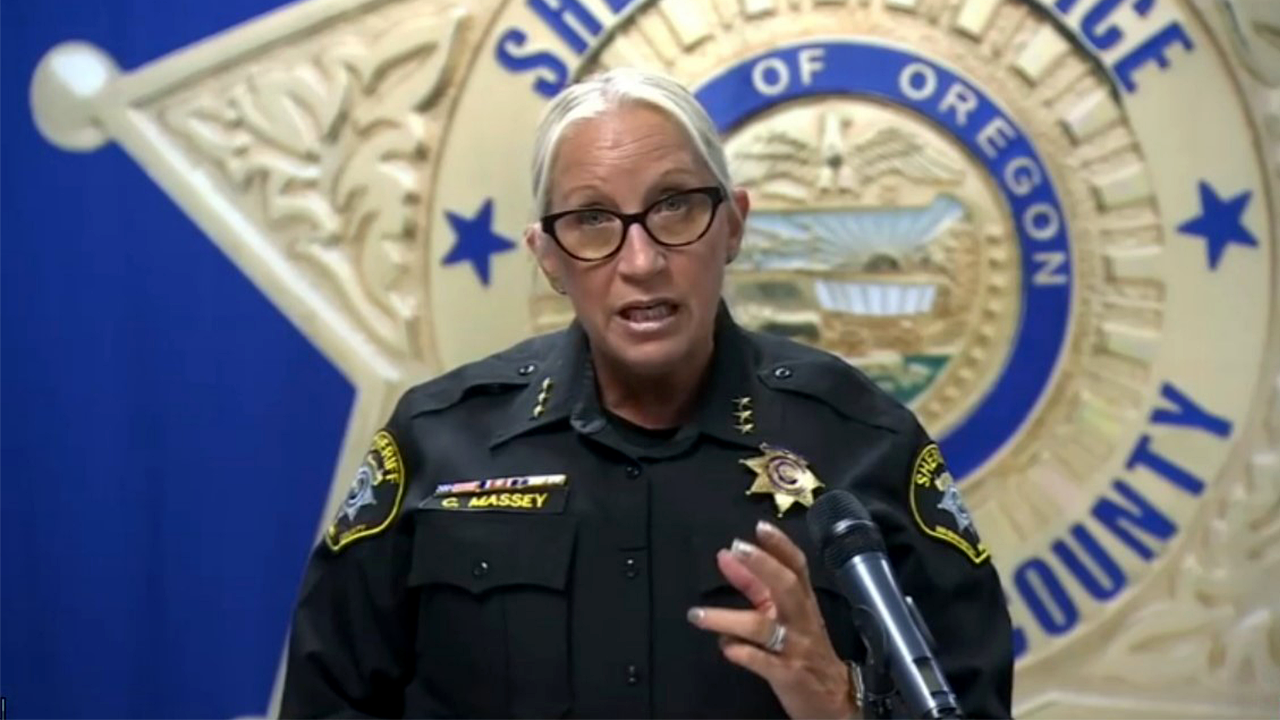
As the news of the quintuple homicide spread, a collective hush fell over the community. Questions swirled with no answers: who were the victims, and what kind of monster could have committed such an act? The initial shock was punctuated by the sheer size and mystery of the scene. The presence of so many bodies, human and animal, suggested an act of profound anger and violence. Detective Shannon Wilde from the Washington County Sheriff’s Office described the challenge not just in terms of the emotional weight of the situation but also the sheer logistical undertaking. “Any time you have one person deceased, let alone five,” she said, “that’s a logistical challenge.” Her comments highlighted the stark reality of having to process a complex crime scene, gather evidence, and document every detail, all while managing the emotional strain and the need to identify the deceased. The scale of the task was so demanding that even law enforcement professionals with decades of experience were taken aback, with Sheriff Caprice Massey stating that in her 22 years, she had never witnessed a scene of this complexity. The community felt the shock wave, a dark cloud that would hang over the region until answers could be found.
The manhunt that followed was swift and decisive. Investigators working on the case quickly identified a suspect, a 36-year-old man named Benjamin Charles Parker. Their investigation built a profile and porously the subsequent actions led them to Washington state, to the city of Enumclaw, nearly 100 miles across the border. It was there, in the Seattle suburb, that the pursuit came to a decisive end. On Sunday, police officers from the Enumclaw Police Department located Parker’s vehicle in a location that was almost as grim as the crime scene itself- a parking lot behind a Safeway grocery store. Inside the vehicle, they found Parker dead. He had died by a single self-inflicted gunshot wound. The same day that investigators had identified him as the chief suspect, the man who could answer all their questions had taken that knowledge to his grave.
In the immediate aftermath, the focus for authorities shifted from tracking a potential flight risk to the painstaking task of understanding a twisted web of connections that led to the deaths of five people. The public was assured that there was no known threat and that the killing was not a random act of violence, but the motivations and the connection between the suspect and the deceased remained shrouded in mystery. The usual pathways of investigation—interviewing family, friends, and witnesses—were open, but the central piece of the puzzle was gone, and the silence was heavy. Detectives probably started to delve into whatever connection could tie a 36-year-old from a rural area to five other souls, all within the same property. Theories swirled, but every hypothesis was met with the hard reality that the one person who could confirm or deny any of it was no longer there. The silence from the sheriff’s office was both a sign of respect for the deceased victims and a shield for the ongoing investigation, as they continued to piece together the tragic timeline.
While the police worked to put the puzzle back together, the community where it happened was left to grapple with the emotional aftermath. The victims’ identities had not yet been released, leaving publicly unnamed, and television crews focused on the closed-off property and the grim facade of what was once a home. The citizens of Forest Grove and the wider Portland metro area had to look at the images and regard the possibility that someone they passed in the grocery store aisle, at the gas station, or at the town square was capable of such unspeakable violence. The revelations of the suspect’s final moments only added another layer of unreality to the whole tragedy. The shared grief was about more than the numbers; it had a human texture, made of terrifying questions about how many people could be so vastly overpowered and ended. The presence of a dozen different law enforcement agencies indicated a high alert, but the suspect’s final decision to take his own life meant that a full legal reckoning was denied, leaving that many just beginning to process their anger.
The location of the suspect’s death itself, in a parking lot of a mundane grocery store, and the method chosen, only underscored the raw, unresolved nature of the situation. As authorities grappled with not being able to get a confession or a trial, they also had to consider the possibility of a deeper justification, a motive, or a secret that died with him. The case stopped being just about the horrific nature of the deaths but about the unanswered “why” that had to be left to hang in the air. The initial discovery of animals also zeroes the victims, adding to the brutality and leaving behind a story about a life and death where even those who couldn’t defend themselves were included in the scale of rage. This was a crime scene that was enormous, and the focus had to move from catching a killer to analyzing the scene and cataloging every piece of evidence, each of which might slowly tip toe toward a conclusion that would never be fully satisfactory.
As the dust began to settle and the investigation continues to move forward, the durability of the loss remains. The voices of Sheriff Massey and Detective Wilde form a foundation of the tone, underscoring the complexity of the situation and the determination of those working to piece it together. They have moved from the immediate shock to the long work of identification and fact-finding. Yet, the community is left there, staring at the hollow where a family used to live and the bizarre occasion of the killer’s end. There is no convenient closure, no final verdict, just the slow, persistent meeting of evidence. It all leaves those involved to ask whether it was a random home, a known connection, a crime of passion, or a planned act of hatred.
In the absence of further answers, the suspect’s suicide becomes a final act that shapes the whole response. It means that the public will likely never know the full inner dealing that drove Benjamin Parker to kill five souls and animals, and then to turn the gun on himself. The loss for the victims’ families is permanent, but the truth is deferred. They are left with the heartbreak of losing their loved ones and the additional layer of not being able to understand the basic reasons behind it all. Many countless investigative leads still to be checked, the focus on the scene and the people’s lives connected to it, but the central mystery has to remain open-ended. The eerie space left behind is the quiet over a place that was once, perhaps became, a home, and is now marked by an event that shatters all known facts.
The victims now are recognized only as statistics, a bitter reality that underscores the countdown. The main suspicion of that random twister over a weekend might be over, but the true scope of what happened, and the unraveling of the truth, is far from that point. There’s an entire story being examined, from the forensic details of the autopsies, the fire was reported, to the background of the suspect that led him to a cold town in Washington. It’s case to test them to the requirement of precision in all things. The end is about the memory of the people and the animals who were life in a quiet corner of Oregon, and the fact that their killer is gone, leaving, initially, a long trail of logistics and the ghosts of a connection that was never defined. For now, the investigation’s uncover a story that is may be forever incomplete. That is the echo that will linger. In the void left by the suicide of a multiple murder suspect, there is only the vigil that justice, in its fullest sense, might never actually be served. The case remains open, but the silence at its heart.