


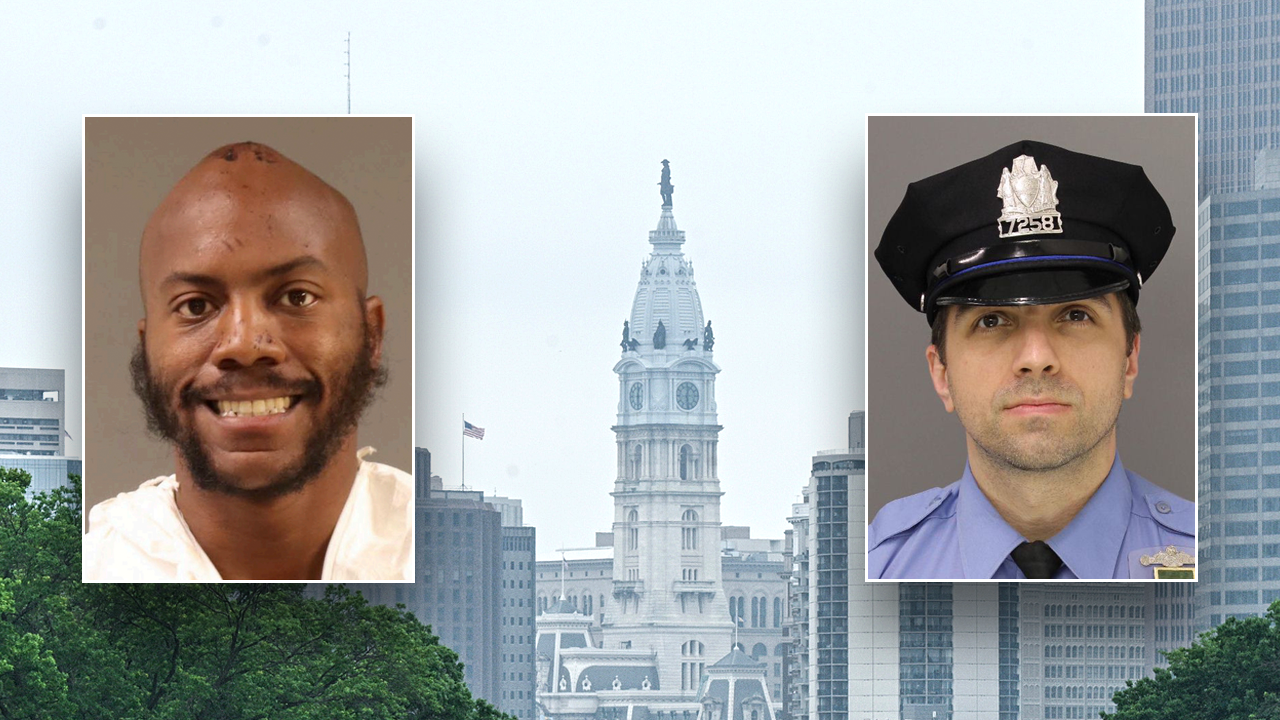
The city of Philadelphia woke up Sunday to a grief that cut deep into the heart of its police force and the community it serves. Officer Shane Seiber, a 10-year veteran of the Philadelphia Police Department, had been ambushed in the line of duty just hours earlier, and the weight of that loss was felt by everyone who knew him. Seiber was more than a badge number; he was a 40-year-old father of two, a husband, an Air Force veteran, and a man who had spent a decade dedicating his life to protecting others. His wife, their 7-year-old son, and their 3-year-old daughter now face a future without him. Police Commissioner Kevin Bethel delivered the devastating news with raw emotion, describing how Seiber fought valiantly but ultimately lost his life. In the hardest of moments, there was a small mercy: his wife and family were able to be at his side before he passed. But the image of a young father being held by loved ones as he slipped away is one that will linger in the minds of all who heard the commissioner’s voice crack with sorrow. Seiber’s death was not just a statistic; it was the loss of a man who had already given so much to his country and his city, and who now leaves behind a family torn apart by an act of senseless violence.
The man accused of ending Seiber’s life is Eric Lewis, a 35-year-old employee of the Philadelphia Water Department, who was arraigned Sunday morning on a staggering 76 charges. The courtroom proceeding was the beginning of what will likely be a long and painful legal process. Lewis was ordered held without bail, a decision that reflected the severity of the accusations against him. The charges include murder, homicide of a law enforcement officer, attempted murder, ten counts of attempted homicide of a law enforcement officer, aggravated assault, terroristic threats, and a host of related offenses. His next court date is scheduled for October 26, giving prosecutors time to build a case that will seek justice for Seiber and for the wounded officer who survived. The sheer number of charges tells a story of chaos and violence that unfolded on an ordinary porch in Philadelphia, where a routine call about a man with a gun spiraled into a nightmare. For the family of Shane Seiber, this legal process may bring some measure of accountability, but nothing will bring back the father whose presence they already miss. For the wounded officer’s family, the charges are a reminder of how close they came to losing him too. The courtroom was likely a heavy place, filled with uniforms, grieving faces, and the quiet anger of those who serve alongside the fallen. Yet the system must move forward, and the weight of 76 charges is a promise that the alleged act of terror will not be taken lightly.
While Seiber’s death is the deepest cut, the attack also left another officer clinging to life. This officer, a 33-year-old father of five, was shot twelve times in the ambush. Twelve bullets. It is almost impossible to comprehend the terror and pain of those moments. He was initially listed in critical condition, and for hours his family, his brothers and sisters in blue, and the entire city held their breath. Then, slowly, the news turned hopeful: he was upgraded to stable condition. His survival is nothing short of a miracle, a testament to the skill of emergency responders, the resilience of the human body, and perhaps the will of a father who was not ready to leave his five children behind. But survival does not mean unscathed. He will carry the physical and emotional scars of this attack for the rest of his life. Every flash of memory from that porch, every rehabilitation session, every time he looks at his children and remembers how close he came to losing it all—these will be his new reality. His family, too, will be forever changed, caught between gratitude for his life and the haunting knowledge that his partner, a man he served beside, did not make it. The bond between officers is profound, and to survive while your partner dies is a burden no one should have to carry. His strength, and that of his family, will be tested in the days, months, and years ahead. The city owes him not only gratitude but a commitment to supporting his recovery, both visible and invisible.
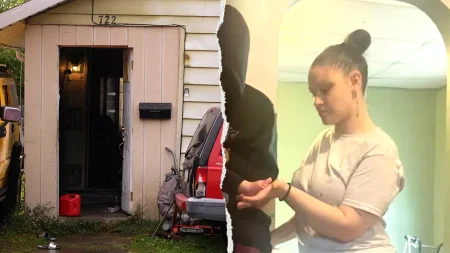
The violence erupted in the early hours of Saturday, just after midnight. The two officers had responded to a report of a man with a gun, a call that is all too common in American cities but one that can turn deadly in an instant. They located an armed man on a porch and approached, likely expecting to de-escalate the situation or make an arrest. Instead, they were met with a storm of gunfire. The sound of those shots must have been deafening, and the officers, caught in an ambush, had little time to react. Additional officers and a SWAT team arrived shortly afterward, finding both men on the porch, wounded and bleeding. More gunfire followed, turning the area into a barricade situation as authorities attempted to secure the scene and reach the fallen. It was a chaotic, terrifying scene that stretched on for hours, with the entire neighborhood locked down. Eventually, the suspect was taken into custody. According to reports, Lewis was found hiding in a tree, a detail that paints a picture of a man trying to evade the consequences of his actions. He was in possession of two handguns and a shotgun, and one of those handguns belonged to the wounded officer. That detail is chilling: at some point in the chaos, he had managed to disarm the officer or take the weapon after the officer fell. District Attorney Larry Krasner declined to answer questions about whether Lewis fired the officer’s own weapon or how he obtained the other firearms, leaving many questions unanswered for a grieving community.
Lewis is not a stranger to the criminal justice system. Pennsylvania court records show a history that dates back to 2012, beginning with convictions for theft and receiving stolen property. In 2013, he was convicted of gun-related offenses and simple assault, for which he received probation. In 2018, he pleaded guilty to disorderly conduct involving fighting and was again sentenced to probation. Most recently, in 2024, he received three traffic citations: driving without headlights, failing to provide proof of insurance, and a windshield-related violation. While this history shows a pattern of run-ins with the law, it also raises uncomfortable questions. District Attorney Krasner noted that nothing in Lewis’s criminal background would have prevented him from legally obtaining a firearm. This is a startling statement for a public already grappling with an epidemic of gun violence. How could a man with convictions for gun-related offenses and assault still pass a background check? How did he end up with two handguns and a shotgun on a night that left a father dead and another officer shot twelve times? These are not just legal questions; they are questions of policy, of systemic failures, and of a system that too often fails to protect those who serve society’s most dangerous calls. For now, the focus remains on holding Lewis accountable, but the broader issue of how such a violent encounter unfolded, and how the suspect obtained his weapons, will likely become a central theme in the weeks ahead.
In the end, this tragedy is about more than one man’s alleged crimes or the legal battle that will follow. It is about the family Shane Seiber leaves behind, the colleagues who will bury a hero, and a city that must find a way to heal after another senseless act. Seiber is survived by his wife, his 7-year-old son, and his 3-year-old daughter. Those children will grow up with stories of their father, with photos and memories, but without the man himself. They will learn that their father was an Air Force veteran and a police officer who gave his life trying to keep others safe. They will attend ceremonies where his name is read aloud, and they will feel a pride mixed with profound loss. The wounded officer’s five children will also live with the memory of the night their father almost died, and with the knowledge that his survival was a matter of chance and courage. As the city mourns, there will be calls for justice, for stricter laws, for better protection of officers, and for a deeper examination of how guns end up in the hands of those with violent histories. But amid the anger and the policy debates, there is also a human need to pause, to grieve, and to honour a man who stood between his community and danger. Commissioner Bethel’s words on Saturday were not just an official statement; they were a eulogy and a cry of pain. “He fought valiantly, but he lost his life today,” he said. Let those words remind us of the sacrifice that officers make every single day, and let us not forget that behind every uniform is a person with a family, a history, and a dream. Shane Seiber was one of those people, and his life, his service, and his death now belong to history. May his memory be a blessing, and may his family and his wounded partner find the strength to carry on.