




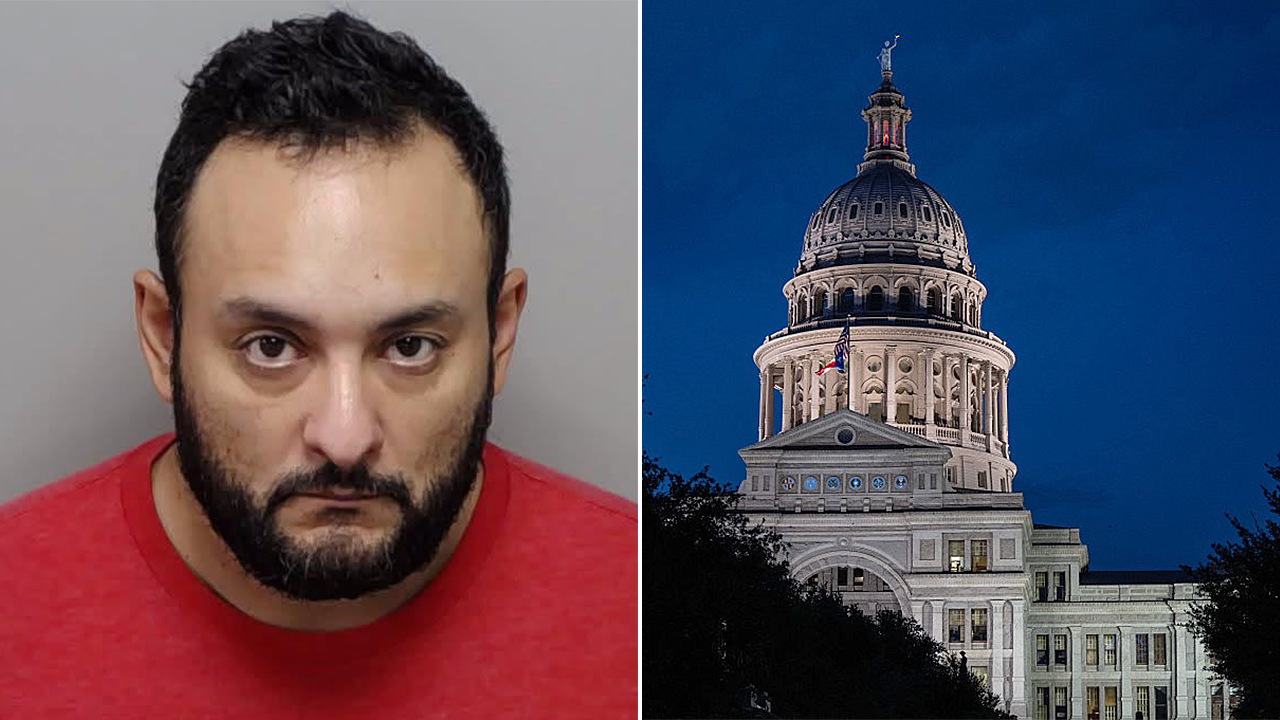
Paragraph 1: The Dawn Arrest and a Community’s Sigh of Relief
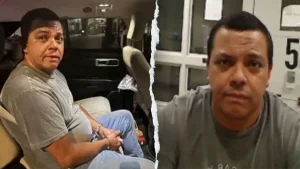
In the quiet pre-dawn hours of Wednesday morning, a sense of urgency gripped the streets of Converse, Texas, a modest suburb just northeast of San Antonio. While most residents slept, oblivious to the storm gathering around them, a coordinated operation was unfolding in the darkness. At approximately 3 a.m., heavily armed members of the Texas Department of Public Safety’s SWAT team converged on a residential home, their movements precise and deliberate. Their target was 40-year-old Benny Caldera Jr., a man who, according to authorities, was not just nursing a grudge but allegedly plotting something far more sinister: a violent attack on the Texas State Capitol, planned for the very next day. Caldera was taken into custody without incident, his world turned upside down in a matter of minutes. The charge: making a terroristic threat against a public servant, a serious felony. As he was handcuffed and led away, the sun began to rise over Texas, casting light on a plot that, had it succeeded, could have resulted in tragedy. For the residents of Converse and the wider San Antonio area, the news came as a shock, but also as a profound relief. The threat, though vague in its details, had been neutralized before it could become a horrifying reality. The swiftness of the arrest—mere hours after the initial tip—was a testament to the vigilance and coordination of law enforcement agencies, who had acted with the kind of speed that makes all the difference in preventing violence. In those early morning hours, the machinery of justice moved silently and effectively, ensuring that a would‑attack on one of the most iconic buildings in the Lone Star State would remain nothing more than a chilling what-if.
Paragraph 2: The Credible Tip and the Overnight Investigation
The story of how Caldera came to be in handcuffs began the previous day, on Tuesday, when the Texas Department of Public Safety received what it described as “credible information” about a potential violent attack being planned for Thursday. The tip did not just raise eyebrows; it triggered an immediate and comprehensive response. Special agents from DPS, working shoulder-to-shoulder with the Federal Bureau of Investigation and local law enforcement agencies, launched an intense, round-the-clock investigation. In a matter of hours, the pieces began to fall into place, and the focus of the investigation zeroed in on Caldera as the “main suspect.” The collaboration between federal, state, and local authorities was seamless, a textbook example of interagency cooperation. As the hours ticked by on Tuesday night, the tension in the command center was palpable. Every detail mattered, every lead was chased, and every possibility was considered. The decision to move in at 3 a.m. was not arbitrary; it was a calculated move to catch Caldera off guard, to minimize any chance of resistance or, worse, a violent standoff. The SWAT team’s successful entry and the suspect’s quiet surrender brought a collective exhale from everyone involved. But the investigation was far from over. Even as Caldera was being transported to the Bexar County Jail, forensic teams were combing through his residence, searching for devices, digital evidence, and any clues that might explain what drove a 40-year-old man to allegedly plan an attack on a seat of government. The speed of the investigation—from credible tip to arrest in less than 24 hours—was remarkable, and it sent a clear message: threats against public institutions would be met with swift and decisive action.
Paragraph 3: The Suspect, the Charge, and the Legal Road Ahead
Benny Caldera Jr., now the focus of a major terrorism investigation, was charged with the felony offense of making a terroristic threat against a public servant. This charge, while not as well-known as federal terrorism statutes, carries significant weight and reflects the gravity of the alleged plot. Officials, however, remained tight-lipped about the specifics of the threat. What exactly was planned? What was the target? How was the attack supposed to be carried out? None of these questions were answered in the initial press release, leaving a cloud of uncertainty and speculation in the public sphere. Caldera, for his part, was released from the Bexar County Jail after posting a $75,000 bond, a development that raised more than a few eyebrows. For a man accused of plotting an attack on a symbol of state government, the relatively low bond seemed to some to be a gamble—a dangerous one, considering the nature of the allegations. But in the American justice system, the presumption of innocence is paramount, and Caldera, like any defendant, is entitled to due process. His family and friends have remained silent, and his public defender has not made any substantive statements. As the case moves forward, the legal proceedings will surely uncover more details, but for now, the public is left with a portrait of a man who, if the allegations are true, was willing to cross a line that most people would never even approach. The charge of making a terroristic threat against a public servant is a serious one, carrying a potential prison sentence of up to ten years or more. But for Caldera, the most immediate consequence is the destruction of his reputation, his privacy, and his peace of mind. Whatever happens in the coming months, his life will never be the same.
Paragraph 4: Official Statements and the Response from the Top
In the wake of the arrest, the response from Texas and federal officials was swift, and their words were chosen carefully to convey both gratitude and resolve. FBI Director Kash Patel took to social media to praise the work of the Texas DPS, writing, “Outstanding work by @TxDPS. Proud of our @FBISanAntonio team for standing shoulder-to-shoulder with our state and local partners. Within HOURS of the tip, @TxDPS had the main suspect in custody — with @FBISanAntonio and local law enforcement assisting. Threaten Americans or our institutions and law enforcement will move FAST.” His words were a direct warning to anyone contemplating violence: the government’s security apparatus is watching, and it is willing to act. Governor Greg Abbott, never one to mince words, echoed similar sentiments. “Texas DPS and the FBI stopped a planned attack on the Texas Capitol. Texas will NOT tolerate threats of violence against our Capitol. Thank you, @TxDPS, for a job well done,” he wrote. These statements were not just bureaucratic formalities; they were carefully crafted messages designed to reassure the public that the institutions meant to protect them were doing their jobs. They also served as a reminder that, in an era of increasing domestic threats, the watchful eyes of law enforcement are always on the horizon. DPS leadership also made sure to notify Texas state legislators about the threat and the subsequent arrest, ensuring that those who serve in the Capitol were aware of the danger and the response. The agency emphasized that the Capitol remained open for regular operating hours, a statement meant to project normalcy and resilience. But beneath the surface, the increased presence of DPS officers at the Capitol was a clear sign that the threat, though thwarted, had left its mark.
Paragraph 5: The Broader Context and the Importance of Vigilance
The alleged plot against the Texas Capitol, while shocking in its specifics, is not an isolated incident. In recent years, law enforcement agencies across the country have reported a troubling rise in domestic terrorism threats, many of them directed at government buildings, politicians, and symbols of authority. The Texas Capitol, with its iconic pink granite facade and its status as the seat of one of the most politically influential states in the nation, is an obvious target for individuals harboring extremist ideologies or personal grievances. The fact that the threat was uncovered so quickly can be attributed to a combination of factors: the diligence of the public in reporting suspicious activity, the intelligence-gathering capabilities of agencies like the FBI, and the interagency cooperation that has become a hallmark of counterterrorism efforts since 9/11. But it also serves as a stark reminder of the fragility of security in a free society. The Capitol is a public building, a place where citizens can visit their representatives, watch the legislative process in action, and exercise their democratic rights. Balancing that openness with the need for security is an ongoing challenge. The investigation into Caldera’s alleged plot is still ongoing, and officials have not publicly identified any additional suspects. But the fact that he was released on bond has left many people wondering whether there are others out there who share his alleged intentions. DPS has stated that it will maintain an increased presence at the Capitol to protect employees, state officials, and visitors, but such measures are only a partial answer. The real defense lies in the vigilance of ordinary Americans, who must be willing to report suspicious behavior and to hold accountable those who would use violence to achieve their goals.
Paragraph 6: A Story of Prevention and a Continuing Investigation
As the dust begins to settle on the dramatic events of that Wednesday morning, the story of Benny Caldera Jr. serves as a powerful example of what happens when the system works as it should. A credible tip, a rapid investigation, and a coordinated law enforcement response prevented what could have been a devastating attack on a symbol of American democracy. The Texas Capitol, a place where laws are made and history is written, remains standing, its halls filled with the sounds of debate and governance rather than the chaos of violence. But the incident also leaves a lingering sense of unease, a reminder that threats can emerge from anywhere, at any time, and that the line between order and chaos is often thin. For the residents of Converse, the arrest has brought a measure of peace, but it has also shaken their sense of security. For the state of Texas, it has been a wake-up call, a warning that even the most well-guarded institutions are not immune to the threat of domestic terrorism. Fox News Digital reached out to the Texas Department of Public Safety for additional information, but the agency has remained tight-lipped, presumably to avoid compromising the ongoing investigation. As the legal process unfolds, the public will learn more about Caldera’s motives, his background, and the extent of his alleged plot. But for now, the most important takeaway is this: in the face of a direct threat to our institutions and our way of life, the men and women of law enforcement rose to the occasion, and they did so with speed, professionalism, and determination. The threat has been neutralized, the suspect is in custody, and the Capitol stands tall—a testament to the resilience of a state and a nation that will not be cowed by the threat of violence.