





Summarize and humanize this content to 2000 words in 6 paragraphs in EnglishThe Supreme Court on Thursday narrowed a federal law that banned drug users and addicts from owning or possessing guns.The justices ruled that the law was overbroad, sweeping together recreational drug users with people addicted to drugs who posed a danger to public safety.Justice Neil M. Gorsuch wrote the decision. All of the justices agreed with the outcome, although several wrote separately to explain their decision-making. The case, U.S. v. Hemani, was one of two major gun rights cases to come before the Supreme Court this term, providing opportunities for the court to clarify how to apply a test set out by the justices in a landmark Second Amendment ruling in 2022. In that case, New York State Rifle & Pistol Association Inc. v. Bruen, the justices required courts to analyze the constitutionality of gun restrictions based on the country’s “history and tradition” of firearms regulation.The case decided on Thursday drew additional interest because it involved the same statute that had been used to convict President Joseph R. Biden Jr.’s son Hunter in 2024. (Mr. Biden pardoned his son just days before leaving office, shielding him from the threat of prison.)The case before the justices focused on the constitutionality of part of the Gun Control Act of 1968, legislation passed in response to the assassinations of Robert F. Kennedy and the Rev. Dr. Martin Luther King Jr. The law, which had been amended in the 1980s, bans gun possession by anyone who “is an unlawful user of or addicted to any controlled substance.”
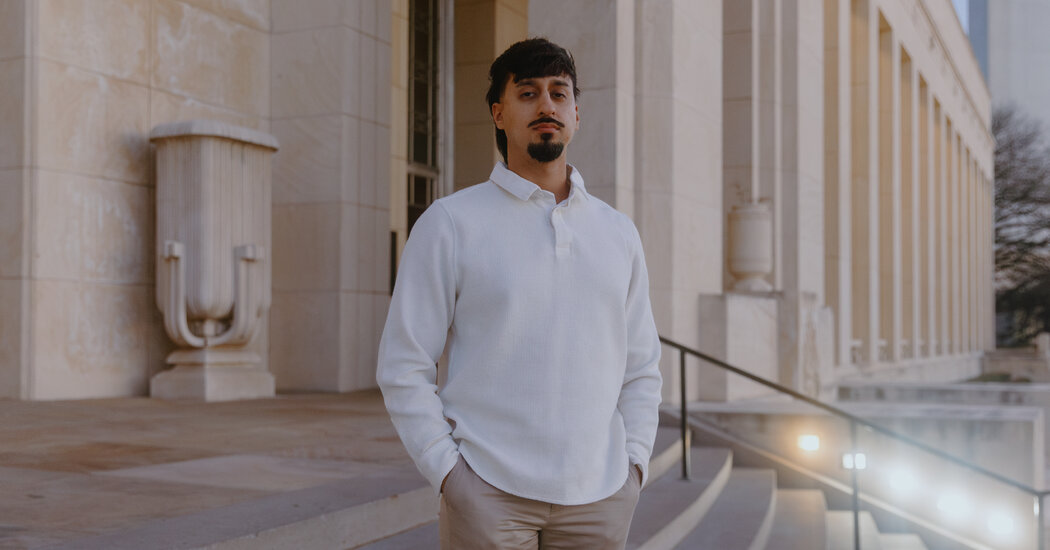
Got a news tip about the courts? If you have information to share about the Supreme Court or other federal courts, please contact us.The law was challenged by Ali Hemani, a Texas man whose suburban home was raided by federal agents in August 2022 after his family had come under suspicion because of its ties to Iran.When agents searched the home, Mr. Hemani told them that he had a handgun locked in a safe inside the house. He also told them that he used marijuana “about every other day,” pointing them to about 60 grams of marijuana in the house. In addition, agents also found cocaine in his parents’ closet.Six months later, Mr. Hemani was charged with one count of possession of a firearm by an “unlawful user” of a controlled substance based on his marijuana use.After he was indicted, Mr. Hemani challenged the constitutionality of the law.His lawyers had also disputed prosecutors’ version of events. In briefs to the court, they told the justices that Mr. Hemani was a high school honor student and football player who graduated from the University of Texas at Arlington before going into project management.They pointed out that neither Mr. Hemani nor any member of his family had been charged in connection with any crime related to links with Iran, saying that prosecutors had unfairly made “‘terrorism’-related insinuations about Mr. Hemani and his family based on their religious and ethnic identities.”The case scrambled the usual political allegiances — with the Trump administration weighing in to defend the law, along with Everytown for Gun Safety, a group backed by former Mayor Michael R. Bloomberg of New York, a Democrat.On the other side, supporting Mr. Hemani, were the National Rifle Association, the American Civil Liberties Union, a law school clinic that specializes in helping Muslims affected by counterterrorism policies, and the Drug Policy Alliance, which supports decriminalizing drug possession.The oral argument in the case in March was lively as the justices posed colorful hypotheticals, wrangling over where to draw the line between drug use and dangerousness. The justices had puzzled over unlawful use of Ambien and Xanax, and even mulled how the law should treat the use of substances that could cause impairment without addiction, like ayahuasca, a psychoactive brew from the Amazon that causes hallucinations.