


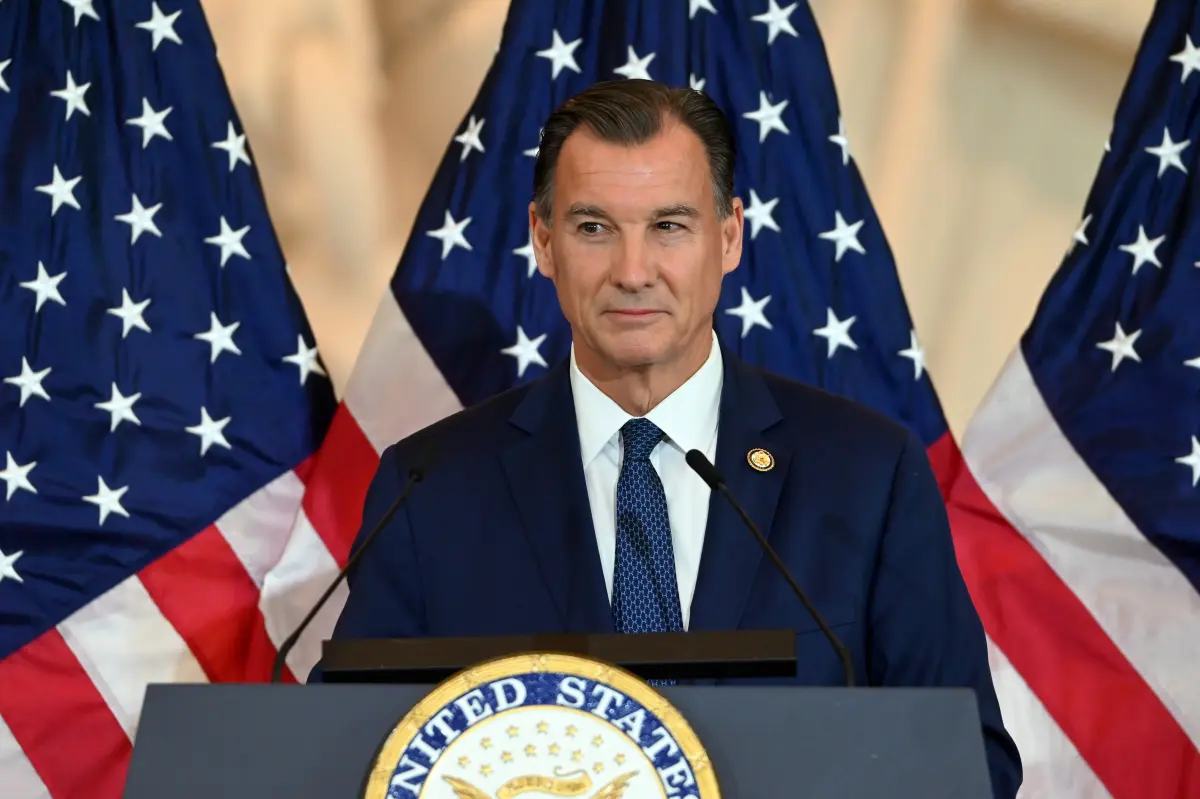
In the bustling world of American politics, where every district line can shift the balance of power, Representative Tom Suozzi finds himself in a tough spot, standing as the lone voice of dissent against his own party. Imagine being at a family reunion where everyone agrees on a plan, except you— that’s Suozzi right now. He boldly told CNN’s Abby Phillip that he’s dead set against all forms of gerrymandering, the sneaky practice of twisting district borders to favor one side. This comes as New York Democrats, backed by Governor Kathy Hochul, push for a fast-track constitutional amendment. They want to redraw congressional maps before the 2028 elections, hoping to snag more seats and tip the scales in their favor. Suozzi, a moderate from a swing district, isn’t buying it. He’s always championed fair play, and this push feels like just another round of political gamesmanship that’s left many voters feeling frustrated and overlooked. It’s like watching your favorite team bend the rules—thrilling for some, but ultimately unfair for the game itself.
Diving deeper into the Democratic camp, you see figures like Brooklyn’s Hakeem Jeffries, the House minority leader poised to become speaker if his party flips Congress, publicly urging New York lawmakers to accelerate redistricting before 2030. Jeffries has framed this as “maximum warfare,” a no-holds-barred battle to prevent Republicans from rigging the system. Picture a seasoned general refusing to surrender ground without a fight— that’s the spirit here. Fellow New York and D.C. Democrats are buzzing with anger over Suozzi’s stance, according to a party insider who spoke candidly to The Post. One Empire State official, shielding their identity, fumed that Suozzi is practically abandoning the team in a critical moment. They view this effort as a heroic line of defense for democracy’s integrity, not some partisan ploy. It’s a tense family feud where loyalty is tested, and Suozzi risks being seen as the black sheep, but his principles seem unshakable, even as the heat rises.
This isn’t happening in a vacuum; it’s part of a nationwide redistricting arms race sparked by President Trump’s team and GOP leaders who are aggressively remapping districts in red states to lock in advantages for the 2026 midterms and beyond. Democrats, feeling cornered, are firing back with their own maneuvers in blue-leaning areas, creating what feels like an endless cycle of retaliation. Think of it as a chess game where both sides are knocking over pieces, hoping to emerge triumphant. Suozzi warns that this tit-for-tat exchange—”they do this, we do that”—is harming America, eroding trust in the system. He’s echoed bipartisan calls for neutral approaches, like independent commissions drawing lines without bias, open primaries where independents can vote, and letting everyday people decide. Yet, whispers suggest Suozzi once lobbied for tweaks in his own district to include more Democratic voters, a fact that paints his opposition as more selective than absolute.
Amid the controversy, Suozzi reached out to clarify his CNN remarks when contacted by The Post, revealing a nuanced stance that humanizes him as someone grappling with tough choices. His senior advisor, Kim Devlin, emphasized Suozzi’s long-standing disdain for partisan gerrymandering, which he sees as a divider that undermines representative democracy. But the advisor acknowledged the reality: Republicans are manipulating maps nationwide, so Democrats must “fight fire with fire” in the short term to restore balance. Suozzi dreams of a solution that dismantles all such tactics, envisioning a fairer future where elections aren’t pre-rigged by whoever holds the pen. It’s a refreshing dose of idealism in a cynical era, showing a politician who isn’t just playing politics but genuinely wrestling with what’s best for the country.
Gerrymandering, in its essence, is like sculpting weird-shaped districts to pack opponents into crowded areas or scatter them thin, diminishing their influence— a tactic as old as American democracy itself and as divisive as a bitter divorce. Suozzi isn’t blaming one side; he slams both Democrats and Republicans for indulging in it, urging conservatives, liberals, and moderates to unite against the practice. “It’s awful on both sides,” he insists, painting a picture of unity that’s rare in today’s polarized climate.
To complicate matters further, a recent Supreme Court ruling on Louisiana’s redistricting has thrown gasoline on the fire. The court struck down a Black-majority district for being improperly drawn based on race alone, sending ripples through the political landscape. Democrats are up in arms, arguing it weakens the Voting Rights Act of 1965, which was designed to stamp out voting discrimination and afford minorities a real shot at representation. This decision feels personal, like a setback for civil rights advancements, fueling fears that minority voices will be drowned out in rigged systems. Suozzi’s critique resonates here, reminding everyone that fair maps aren’t just about winning seats— they’re about ensuring every vote counts in a democracy that claims to be for the people, by the people. As these battles rage, the hope lingers for a reset, perhaps through independent oversight that restores faith in the process. It’s a call to action for a fractured nation yearning for balance and honesty.