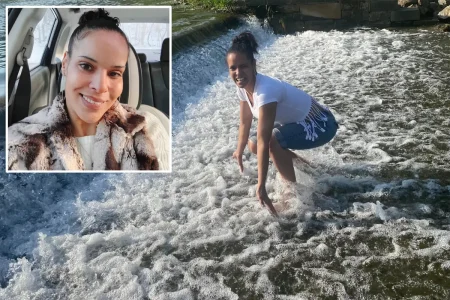



Here is a summarized and humanized narrative of the case, presented in six flowing paragraphs, capturing the anguish of the family, the glaring contradictions in the evidence, and the renewed hope brought by the podcast.
—
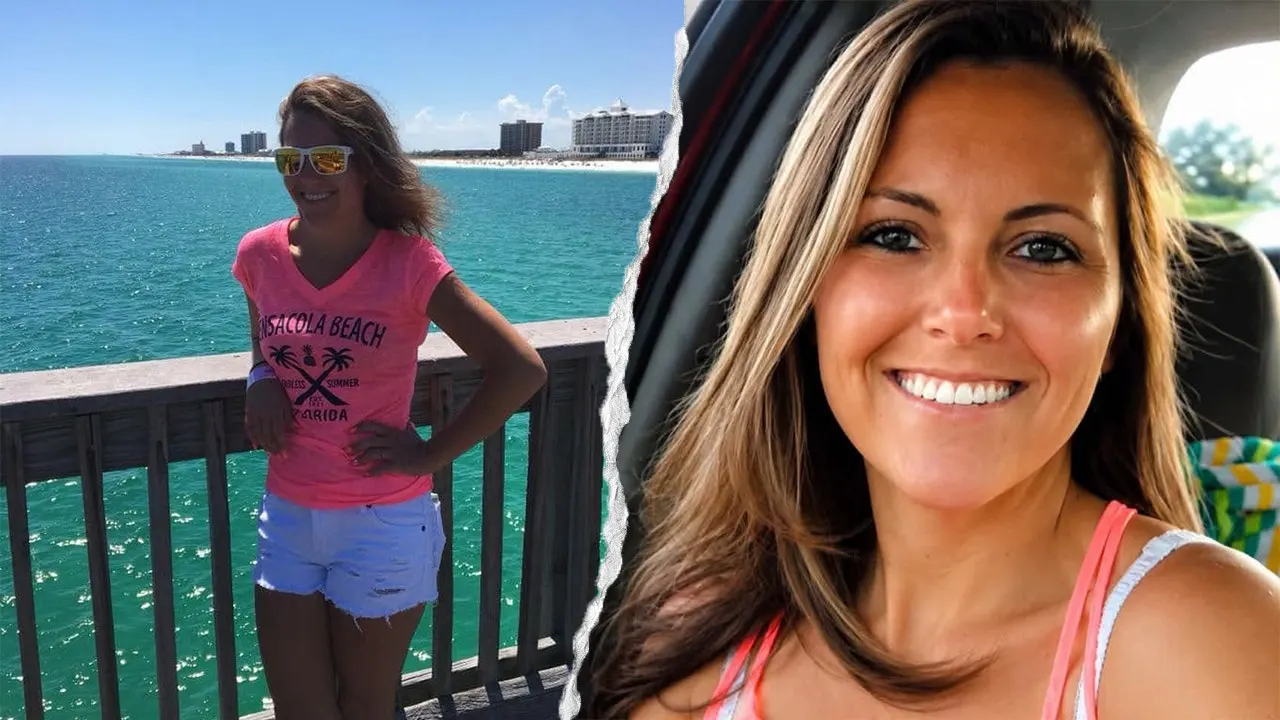
There is a profound tragedy in the last words we say, especially when they are spoken with such ordinary, dismissive confidence. For 27-year-old Natalie Jones, a devoted mother of two young boys, Trent and Isaac, her final message was a simple courtesy text sent at 12:52 AM on July 5th, 2020: “I made it. Thanks.” Sent to the mother of a former boyfriend, it was meant to close the loop on a long drive home from a friend’s lake house in Jackson’s Gap, Alabama, and into the familiar, winding backroads of Heard County, Georgia. Her plan had been modest but full of purpose—she was heading to her sister’s house to prepare for babysitting the next morning. But that text was a lie, or at least a tragic misinterpretation of reality. Natalie never arrived at her sister’s doorstep. The bright pink 2002 Chevrolet Cavalier she drove, a car that should have been easy to spot against the muted greens and browns of the rural South, simply vanished into the sweltering July night, taking with it a young woman who had dreams of college and building a home for her boys, and leaving behind a family whose lives would be irrevocably fractured by an investigation that seemed to fail them at every turn.
The initial search for Natalie was a frantic nightmare of unanswered phone calls and dead ends, a desperate scouring of a landscape that seemed determined to keep its secrets. As hours turned into days, the family pleaded for help, but the small-town response was slow and, at times, seemingly antagonistic. The first real clue came from the digital breadcrumbs left by her cellphone, which painted a chilling and confusing picture. Rather than following a direct route, her phone interacted with cell towers across Heard County in a scattered, erratic pattern, pinging from locations that were geographically disconnected, even reaching the opposite side of the county from where her home was located. This geographical chaos suggested the phone, or possibly Natalie herself, was being moved by an unknown party, driving purposefully to throw off any potential tracking. The cellular activity stopped abruptly just after 5:00 AM on July 5th—a sudden and definitive silence that felt far too deliberate to be a simple dead battery. For nearly three months, the oppressive Georgia summer wore on, and the trail went cold. It wasn’t until October 2020 that the devastating truth emerged when a property owner’s nephew stumbled upon the pink Cavalier, nearly completely obscured by thick, overgrown vegetation in a remote, wooded area off Roosterville Road in rural Heard County, a discovery that shattered any lingering hope of finding her alive.
The scene that greeted investigators that October afternoon was a macabre puzzle that raised more questions than it answered. Inside the car, slumped toward the driver-side door and still wearing the same clothes she had left the lake house in, was the body of Natalie Jones. The humid climate had taken its toll, leaving her body in a state of advanced decomposition and partial mummification. The medical examiner’s initial findings stated that the cause and manner of death could not be determined—an ambiguous classification that often becomes a dead end. However, the physical evidence inside that vehicle told a story far darker than a natural tragedy. The driver’s seat was not only reclined but pushed dramatically farther back than would ever be appropriate for a woman who stood just 5 feet 5 inches tall, suggesting that a larger individual had adjusted the seat, either to move her or to sit there themselves. Strands of her hair were discovered wedged in the driver-side door jamb, a detail that strongly implies she was forcibly pulled from or shoved back into the car. The trunk was popped open, and her cellphone, rhinestone sandals, belt, and white sunglasses were all missing—personal effects a mother would not willingly abandon. It was a scene of disarray and violence that contradicted the quiet, accidental death investigators seemed eager to accept.
Perhaps the most damning contradiction came from the forensic lab results, which completely dismantled the official narrative. Investigators found a small plastic baggie inside the car that possibly contained traces of methamphetamine, but the GBI Crime Lab recovered no fingerprints from it. Crucially, Natalie’s toxicology screening came back completely negative for drugs of any kind—a sobering fact that blew the “accidental overdose” theory out of the water. If the bag was hers, she never consumed anything from it; if it was planted, it was a cynical attempt to sully her character and misdirect the investigation. Despite this airtight evidence of her sobriety, local authorities reportedly clung to the drug narrative, a lazy conclusion that ignored the physical anomalies at the scene. For Natalie’s mother, Elaine Gordon, the agony of losing her daughter was compounded by the blatant dismissiveness of law enforcement. Gordon revealed that friction began almost immediately after Natalie went missing, alleging that a detective accused her of interfering with the search simply because she was actively trying to find her child. “What did they expect me to do, sit at home and be quiet?” Gordon asked, her voice a mix of exhaustion and righteous fury, as she fought against a system that seemed to treat her daughter’s case as an inconvenience rather than a homicide.
This sentiment was echoed by Jennifer Peterson, a relentless family advocate who spent over a year meticulously reviewing the case files, zoning in on the glaring contradictions that the authorities had overlooked or ignored. In 2021, Peterson petitioned the Heard County Superior Court to impanel a special grand jury to examine Natalie’s death further, specifically focusing on the possible involvement of a former boyfriend who had been identified as a person of interest early on but had never been charged. For the family, this petition was the last best hope for a transparent, legal review of the evidence. However, in 2022, the district attorney’s office informed Peterson that the case was being closed, effectively slamming the door on any judicial inquiry. By 2023, all communication from the Sheriff’s Office and the DA’s office had ceased entirely, leaving the family in a vacuum of neglect. Out of options and desperate for justice, Peterson reached out to Sean Kipe, the host for the acclaimed true crime network Audiochuck. Kipe and his team launched a deep-dive investigative podcast titled “The Truth About Natalie,” which began to unravel the tangled threads of the case. “What bothers me most is that authorities pushed an accidental overdose theory even though Natalie’s toxicology report came back completely clean,” Kipe told Fox News Digital. “Combining that negative drug test with missing evidence like her phone, shoes and teeth makes it nearly impossible to accept the official explanation.”
The podcast has brought renewed urgency and scrutiny to the case, creating a platform for the truth that the family has been denied. Kipe noted that several current and former law enforcement officers from the area have reached out to the production team privately to express their own doubts about the official narrative, a silent whisper network of dissent that further undermines the public story crafted by local authorities. When contacted by Fox News Digital, the Heard County Sheriff’s Office claimed they are still actively seeking leads, stating that if “anything comes in, we will be glad to run it down,” while the Heard County DA’s office referred inquiries to the West Georgia Judicial Circuit DA’s office, which was unavailable for comment. Behind the legal red tape and the podcast clicks, however, lies the human tragedy of Natalie Jones. She was a vibrant mother who had bought land and was earnestly making plans to build a home for her two sons, Trent and Isaac—a symbol of a future she was actively constructing. She was scheduled to begin college, a testament to her determination to break cycles and build a better life for her family. “I want everybody to know how loved Natalie was and how much she loved her boys. She wanted a better life for the three of them,” her mother, Elaine Gordon, said, her grief palpable. “She was excited about her future.” The first three episodes of “The Truth About Natalie” are available now, with new episodes released each Monday. As the series grows, the hope is that someone will remember a detail, someone will see her face, and someone will finally speak up. Natalie’s family is still waiting for justice, waiting for a definitive answer to the haunting question that defines their existence: How did a sober, determined young woman who said she “made it,” and who had so much to live for, end up dead in her own car, her personal effects scattered to the wind, and her case relegated to the cold-case files of a county that seems all too willing to let her memory fade? The truth, they believe, is still out there, hidden in the Georgia pines, waiting to be uncovered.