





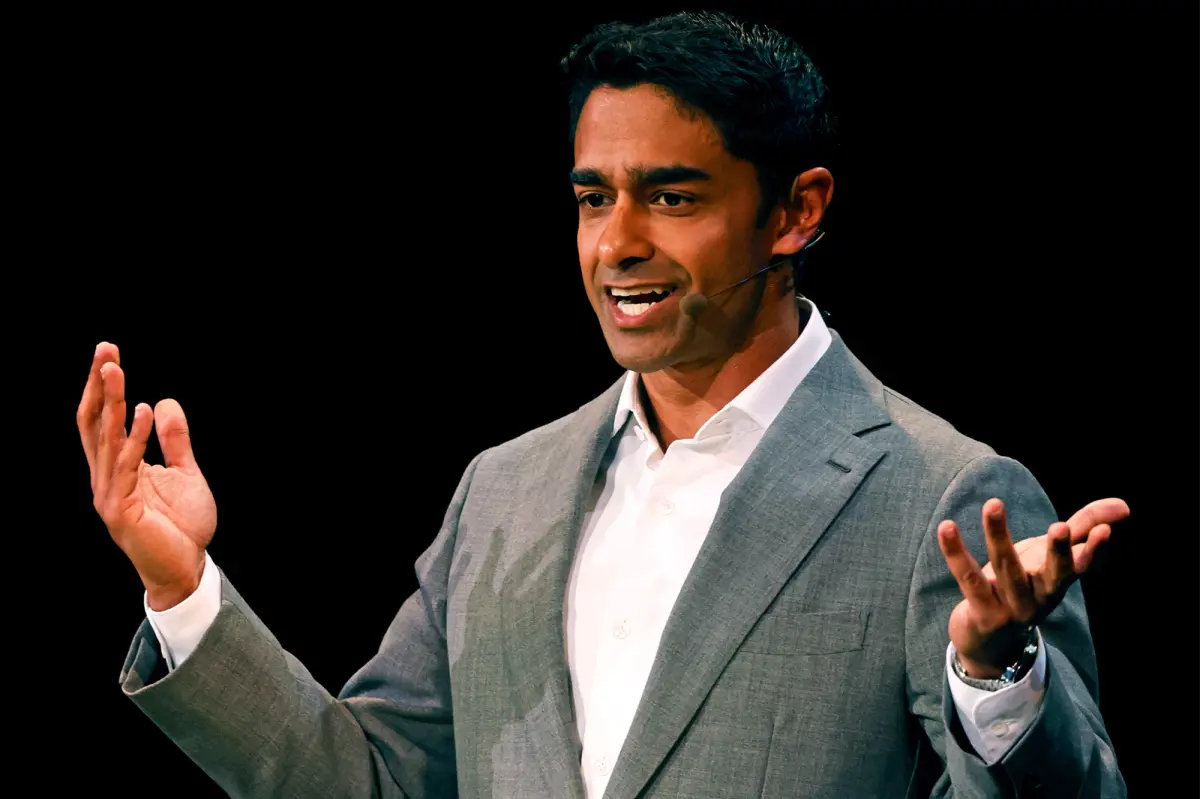
In the high-stakes theater of American politics, few arenas are as fiercely contested or as deeply symbolic as San Francisco, a city that has long served as both a cultural vanguard for the progressive left and a powerhouse of global technology. It was into this complex landscape that Saikat Chakrabarti, a self-made tech millionaire and former Silicon Valley executive, stepped with the grandest of ambitions: to fill the legendary, towering shoes of Nancy Pelosi in the United States Congress. Having made his fortune at the digital payment giant Stripe, Chakrabarti was no stranger to high-risk, high-reward ventures, and he approached his congressional campaign with the kind of disruptive, capital-intensive philosophy that defines the tech sector. He poured nearly $10 million of his own personal fortune into the race, believing that a blend of unapologetic progressive ideals and massive financial resources could propel him to victory. Yet, the story of his campaign would ultimately unfold not as a triumphant march to Washington, but as a sobering, humanizing tale of how even the deepest pockets can fail to resonate with an electorate that values deep local roots over high-priced political disruption. His bid did not just fall short; it collapsed in a dramatic and humbling fashion, leaving him on the outside looking in as the city’s political establishment marched forward without him.
The sheer scale of Chakrabarti’s electoral defeat is laid bare in the stark, uncompromising arithmetic of political finance. According to a detailed post-election analysis, his campaign managed to secure just a single precinct across the entire city, a result that stands as a staggering rejection of his high-priced platform. In total, he garnered 42,049 votes—a modest showing that, when weighed against his compounding $8.85 million personal investment, translates to an astonishing $211.30 spent per individual vote. This jaw-dropping figure did not just represent a personal financial loss; it earned Chakrabarti a permanent and unenviable spot in San Francisco’s political history by breaking the city’s record for the most money ever spent per vote. By contrast, his primary opponents demonstrated that local campaigns are still won on the ground rather than through wire transfers. State Senator Scott Wiener, who emerged as the commanding frontrunner in the race, secured his dominant position with a total of $5.86 million raised from his campaign committee and supportive outside groups. Meanwhile, City Supervisor Connie Chan, who secured her place in the upcoming general election alongside Wiener, did so with a relatively modest war chest of just $1.75 million. This meant that Chakrabarti spent an incredible eight times more per vote than Chan, illustrating a stark disparity between financial volume and political efficacy.
This massive spending disparity highlights a fundamental truth about grassroots politics that technology-driven campaigns often overlook: money can buy visibility, but it cannot easily manufacture trust, history, or community integration. While Chakrabarti attempted to blanket the city with his progressive message, his opponents possessed deep, longstanding ties to San Francisco’s complex mosaic of neighborhoods, advocacy groups, and local clubs. Connie Chan, in particular, benefited from a critical political lifeline that money simply could not buy—a coveted, formal endorsement from Nancy Pelosi herself. This endorsement lent Chan an instant aura of institutional credibility and continuity that resonated strongly with the city’s active, high-turnout voters. For many lifelong San Franciscans, Chakrabarti’s sudden emergence, backed primarily by his personal tech wealth rather than decades of local civic service, painted him as an outsider who was attempting to bypass the traditional, hard-fought pathways of local leadership. Even the most progressive voters, who might have otherwise agreed with his policy positions, found themselves questioning whether a former Silicon Valley executive possessed the genuine, lived understanding of the day-to-day struggles facing the city’s working-class and diverse communities.
Confronted with the harsh reality of his loss, Chakrabarti’s public concession statement revealed the complex psychological defense mechanisms that politicians often employ when their ambitions are thwarted. Rather than looking inward at his campaign’s strategic missteps or his lack of local integration, he sought to frame his defeat as the result of overwhelming, systemic external forces. In his concession, he claimed that his campaign was simply unable to overcome what he described as “the 7 million dollars of AI, crypto, and AIPAC money that were put into this race.” While it is true that modern political campaigns are increasingly influenced by independent expenditure committees representing niche industries and geopolitical interests, political analysts were quick to point out the irony and inaccuracy of this defense. The reality was much simpler and far more human: Chakrabarti’s primary obstacle was not an invisible cabal of corporate interest groups, but his own inability to connect with real voters at the neighborhood level. His immense wealth, rather than shielding him from criticism, actually amplified accusations that he was attempting to purchase a seat in Congress, making it easy for his rivals to paint him as disconnected from the very working-class struggles he claimed to champion.
To fully understand Chakrabarti’s political identity and the polarizing nature of his candidacy, one must look back to his previous tenure in Washington, where he first gained national prominence. As the chief of staff to progressive icon Representative Alexandria Ocasio-Cortez, Chakrabarti was a key architect of the modern democratic socialist movement, known for his confrontational style and his willingness to challenge established party leaders. His time on Capitol Hill came to a tumultuous end after a series of public, bitter spats with the traditional Democratic leadership—including Nancy Pelosi herself—whom he accused of failing to act with enough urgency on issues like climate change and economic inequality. This rebellious history defined his San Francisco campaign, where he positioned himself as the absolute leftmost candidate in the field, even going so far as to campaign alongside highly controversial leftist internet personalities like streamer Hasan Piker. While this radical positioning endeared him to a passionate, highly vocal online base, it ultimately alienated the broader, more moderate base of San Francisco voters who favor progressivism tempered by pragmatic, cooperative governance. When more than 95% of the primary votes were finally tabulated, Chakrabarti was left with a meager 18% share, while Scott Wiener commanded the field with nearly 41%, and Connie Chan locked in her general election spot with an impressive 30%.
Despite the magnitude and humiliation of his defeat, Chakrabarti’s post-campaign actions suggest a complex human being who remains deeply committed to his progressive ideals, even if his methods must now change. Rather than retreating into quiet obscurity to nurse his financial and political wounds, he has chosen to redirect his remaining resources and considerable organizational infrastructure toward helping his former rival. In an unexpected post-primary pivot, Chakrabarti formally endorsed Connie Chan for the general election and made a generous, unprecedented offer to transition his entire campaign operation—including approximately 220 paid staff members and organizers—to work directly on her behalf. This transition of personnel and resources represents an attempt to convert his financial loss into a collaborative victory, ensuring that his progressive agenda still has a voice in the upcoming battle against the frontrunner, Scott Wiener. In the end, Saikat Chakrabarti’s costly, record-breaking journey through the San Francisco primary serves as a cautionary tale of modern democracy, reminding us that while money can assemble a vast army of staff and launch an endless stream of digital advertisements, it is the quiet, unpurchasable currency of local trust, political relationships, and authentic community roots that ultimately decides who gets to lead.