




Reclaiming the Sacred: Pope Leo XIV’s High-Stakes Mission to Spain
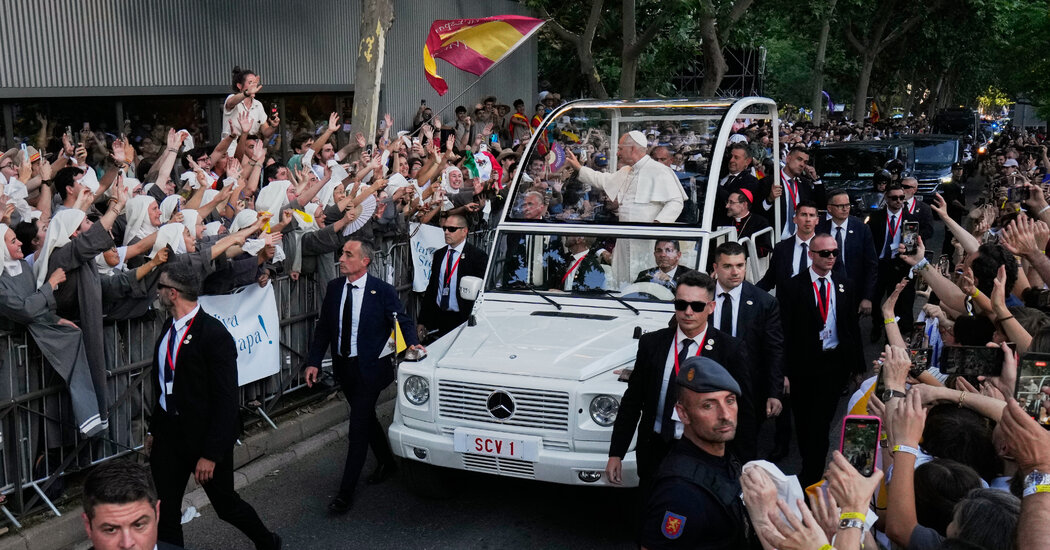
When Spain’s elite bishops gathered behind closed doors with Pope Leo XIV in the Vatican last November, they brought with them a profound pastoral anxiety: the youth of Spain, long considered the bedrock of the country’s spiritual future, were drifting away from traditional parish life. These young Spaniards had not necessarily lost their thirst for the transcendent, but their hunger for spiritual connection was increasingly drawing them toward autonomous, private Catholic factions and charismatic movements rather than the established, centuries-old institutions of the national church. Deeply moved by this quiet crisis of faith within the Iberian Peninsula, the American pontiff urged the Iberian hierarchy to open their doors wider, immediately pledging to support their efforts with a direct, personal intervention—a promise he fulfilled this past week during an intense, seven-day papal tour that culminated on Friday in the windswept Canary Islands. Drawing vast, energetic crowds at every stop, Leo’s physical presence has ignited a wave of strategic optimism among church leaders, who now hope this charismatic Pope can successfully bridge the gap between traditional Catholicism and a generation that might otherwise succumb to secularism or drift permanently into fragmented, independent religious movements that operate outside the traditional diocesan structure.
The Continental Pendulum: How Pope Leo’s European Focus Diverges from His Predecessor
                 ╔═══════════════════════════════════╗
                 ║      Vatican Papal Strategies     ║
                 ╚═══════════════════════════════════╝
                                   │
            ┌──────────────────────┴──────────────────────┐
            ▼                                             ▼
 ┌─────────────────────┐                       ┌─────────────────────┐
 │    Pope Francis     │                       │    Pope Leo XIV     │
 └─────────────────────┘                       └─────────────────────┘
    • Focus: Global Margins                       • Focus: Dual-Track
    • Africa & Global South                       • Continental Europe
    • Social Justice, Migration                   • Reclaiming the Center
    • Bypassed Historic Bases                     • Blending Social & Youth
This dynamic, high-stakes journey marks a subtle but highly significant shift in geopolitical strategy from the Vatican, distinguishing the current pontificate from that of his predecessor, Pope Francis. While Francis’s early years in Peter’s chair similarly galvanized global crowds, his subsequent pastoral focus deliberately bypassed the historical European strongholds of the faith in favor of the global margins, focusing on the acute social struggles of distant lands and the defense of minority Christian communities. Pope Leo XIV, on the other hand, is pursuing a dual-track strategy: he maintains Francis’s commitment to social justice—having traveled to East Africa in April and spent Friday warning human traffickers in the Canary Islands to repent before God for exploiting vulnerable refugees—while simultaneously re-establishing the Holy See’s presence in historical Western Europe. According to Yago de la Cierva, a crisis management expert and the official coordinator of the papal delegation, this dual focus was a deliberate attempt to utilize the pontiff as a spiritual magnet for a questioning European youth, launching what local church officials are already calling a necessary, revitalizing “new beginning” for the continent’s weary church.
Historical Echoes: The Tragic Legacy of Secularization and Benedict’s Lost Crusade
The Spanish church, however, knows all too well that papal enthusiasm does not always translate into lasting institutional stability, having witnessed a similar strategy fail spectacularly just over a decade ago. In 2011, when more than 70 percent of Spaniards still identified as Roman Catholic, the intellectually formidable Pope Benedict XVI traveled to Madrid with the explicit goal of rallying the faithful against a wave of progressive secularization characterized by the legalization of same-sex marriage and the liberalization of abortion laws. Despite Benedict’s theological efforts to turn the tide, the ensuing decade saw a rapid decline in church engagement, with the Spanish Sociological Research Center reporting that the self-identifying Catholic demographic in Spain has now plummeted to less than 55 percent. This dramatic cultural shift has left local clergy struggling to adapt, a reality echoed by Archbishop Luis Argüello, president of the Spanish Episcopal Conference, who frankly admitted the difficulty of navigating this new social landscape, while award-winning filmmaker Alauda Ruiz de Azúa, director of the acclaimed film The Sundays, noted that her research into modern religious life revealed a society continuously drifting toward structural secularization, illustrated by a noticeable drop in childhood sacraments and weekly mass attendance.
A Spectacular Goal: The Madrid Vigil and Glimmers of a Modern Catholic Resurgence
SPAIN'S RELIGIOUS LANDSCAPE TRENDS100% ───────────────────────────────────────────────────────────
│ 2011: 70% Self-identifying Catholic
80% ┼───────────────────────────────┐
│ │
60% ┼───────────────────────────────┼───────────┐ Present Day: <55%
│ │ │
40% ┼───────────────────────────────┼───────────┼───────────────
│ │ │
20% ┼───────────────────────────────┼───────────┼───────────────
└─── Pope Benedict XVI Visit ───┴───────────┴── Pope Leo Vigil ──
(500k Youth in Madrid)
Despite the discouraging long-term statistics, Pope Leo’s primary appearances this week have offered beleaguered Spanish clergy a much-needed morale boost, most notably during an extraordinary, semi-liturgical Saturday night vigil in Madrid that drew an estimated 500,000 young believers to pray under the open sky. Visibly moved by the sheer scale of the gathering, Pope Leo enthusiastically declared that the local Archdiocese of Madrid had achieved a “spectacular goal” in mobilizing such a massive crowd, adding weight to local reports of a modest but measurable religious revival. Leading Catholic voices, including the influential Cardinal José Cobo of Madrid, have pointed to encouraging signs such as a slight increase in seminary enrollments in the capital, while Archbishop Joan Planellas of Tarragona highlighted a rising curiosity about adult baptism among those seeking structural stability in an increasingly unstable world. Church analysts warn, however, that the very same search for transcendent community and existential meaning is precisely what is driving the most active segments of young Spanish Catholics away from traditional parish pews and into the arms of private spiritual movements.
The Charismatic Split: Pop PopLiturgical Devotion and the Shadow of Populist Politics
These private Catholic movements, which often rely on highly emotional musical retreats, charismatic preaching, and closed-knit digital networking, are viewed with a mixture of hope and deep apprehension by the Vatican and local sociologists alike. While they successfully spark intense, short-term religious devotion in an increasingly secular climate, critics warn that many of these highly motivated youth organizations operate with a distinct political subtext, often aligning themselves with conservative populist movements, including Spain’s hard-right Vox party. This growing political alignment threatens to pull the institutional church back into the divisive culture wars of the mid-20th century, reviving painful memories of the national-Catholicism framework that characterized the dictatorial regime of Francisco Franco. This threat has not escaped Pope Leo, who privately expressed his deep concern to Spanish bishops that these trendy, insular movements might act as a temporary emotional outlet without fostering a mature, intellectual faith or providing the everyday support system needed to sustain local communities over time.
Bridging the Divide: The Long and Uncertain Path to Parish Reclamation
      THE SPLIT IN YOUTH ENGAGEMENT

      ┌───────────────────────────┐
      │    Young Spanish Seeking  │
      │         Spirituality      │
      └─────────────┬─────────────┘
                    │
    ┌───────────────┴───────────────┐
    ▼                               ▼
┌───────────┐ ┌───────────┐
│ Parishes │ │ Private │
│ (Low/Dry) │ │ (Popular) │
└───────────┘ └───────────┘
│ │
▼ ▼
• Traditional Liturgy • High-energy, music
• Aging congregations • Closed-knit peer groups
• Disconnected from youth • Ideological/Vox-aligned risk
Ultimately, the true measure of Pope Leo’s strategic journey to Spain will not be judged by the temporary excitement of a half-million-strong vigil in Madrid, but by the church’s ability to turn fleeting enthusiasm into lasting parish commitment. The disconnect between modern spiritual seeking and institutional engagement is evident in the experiences of thousands of young Spaniards, such as 21-year-old Madrid student Juan Lorenzo, who attended the papal mass but noted that while many of his peers are increasingly drawn to high-energy, private spiritual retreats, they remain largely detached from the actual machinery of the Catholic Church. As the dust settles on the pontiff’s historic visit and the banners are cleared from the plazas of Madrid and the beaches of the Canaries, Pope Leo XIV leaves behind a nation at a critical religious crossroads. Whether the American pope’s distinct blend of social justice advocacy and traditional Marian piety can successfully bridge these divides is a question that will shape the Catholic profile of Western Europe for decades to come.