





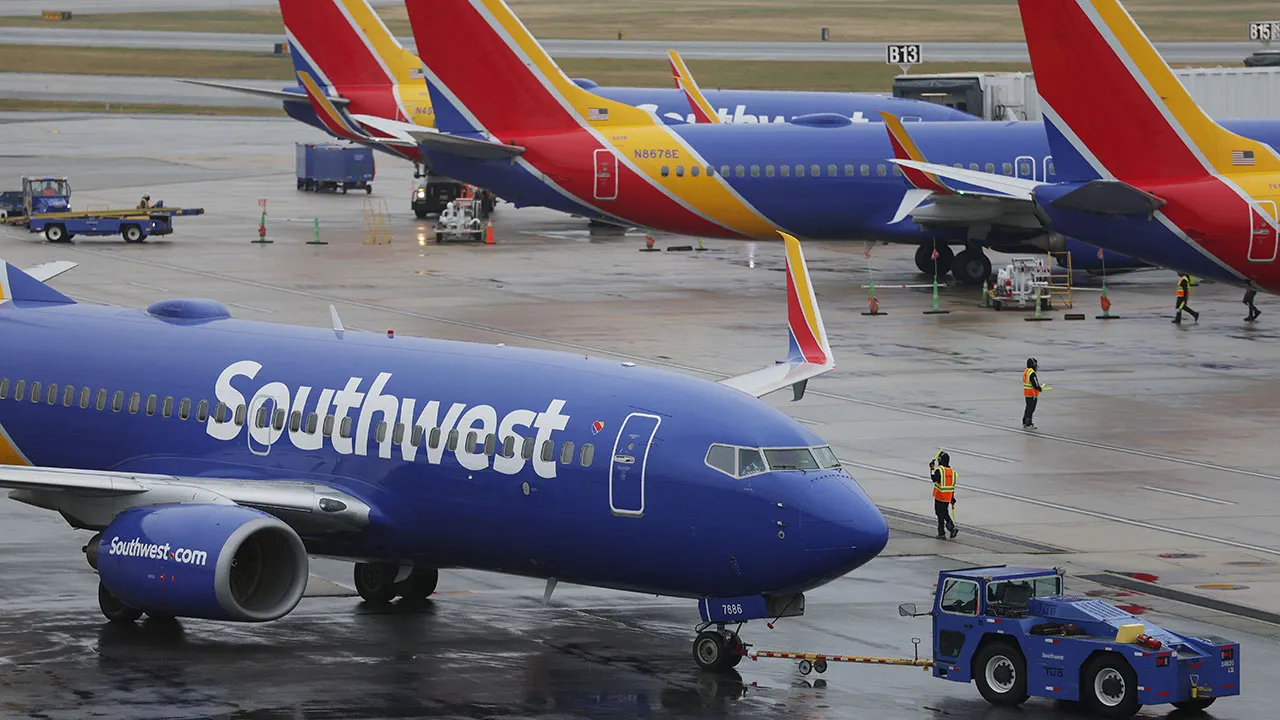
Airports are unique modern monuments to human connection, bustling hubs where thousands of individual stories intersect, converge, and diverge every single minute of the day. On a seemingly ordinary Sunday afternoon at Memphis International Airport in Tennessee, passengers boarding Southwest Airlines Flight 4013 were preoccupied with the typical, quiet thoughts of modern travelers: double-checking their boarding passes, adjusting their heavy carry-on bags, thinking about their final destination, and looking forward to settling into their window or aisle seats for a smooth, uneventful journey. It was a routine scene played out in terminals across the globe on any given weekend. Yet, just outside the thick, double-paned windows of the passenger cabin, a vastly complex and highly physical ballet of ground machinery was playing out on the active tarmac, where baggage tugs, fueling trucks, and catering carts wove a tight, rapid web around the parked aircraft to prepare it for its scheduled departure. In a sudden, jarring moment that instantly shattered the familiar hum of the boarding process, a ground equipment vehicle collided directly with the stationary Southwest plane. For the passengers walking down the narrow jet bridge or finding their seats inside the aircraft cabin, the unexpected physical shudder of the contact transformed a mundane travel routine into an instant of collective anxiety and confusion. The steady march of flyers down the aisle froze in place as flight attendants and the flight deck crew immediately paused operations to assess what had just transpired. Though the physical impact was relatively minor in the grand scheme of aviation incidents, its psychological ripples were immediate and deeply humanizing, momentarily stripping away the systematic commercial routine of flight and reminding everyone on board of the delicate relationship between the massive aluminum birds of the sky and the terrestrial machinery required to keep them operational.
Following the unsettling impact, the immediate priority of the cabin crew and the cockpit was the absolute preservation of human life and the rapid verification of physical safety. In an industry where even the slightest anomalous vibration, dent, or minor scratch must be treated with the utmost seriousness, Southwest Airlines staff instantly halted the boarding process, while the Memphis Shelby County Airport Authority quickly mobilized its emergency and maintenance teams to the gate area. Fortunately, a collective sigh of relief washed over both the anxious passengers and the hard-working ground crew when initial assessments confirmed that there were absolutely no injuries reported among the travelers, the flight crew, or the operator of the ground equipment vehicle. In an official statement subsequently provided to Fox News Digital, the airport authority classified the event as an isolated incident, emphasizing that the localized nature of the collision did not pose a broader, systemic threat to terminal security or ongoing flight operations. However, the physical integrity of the aircraft itself was a different matter entirely; because even minuscule, microscopic structural damage can have catastrophic consequences when an airplane is pressurized at thirty-five thousand feet, the airline could take no safety shortcuts. Consequently, Southwest Airlines made the swift, costly, and necessary operational decision to pull Flight 4013 completely out of service, leaving the damaged vessel grounded at the Memphis gate for a rigorous structural inspection while engineers began the painstaking task of diagnosing the physical toll of the collision.
For the stranded passengers, the immediate relief of avoiding a major physical crisis was soon accompanied by the familiar, weary frustration that inevitably accompanies a prolonged travel delay. Plans to meet loved ones, attend business conferences, or begin long-awaited family vacations were thrown into complete limbo as the airline scrambled to arrange an alternate aircraft to facilitate the rest of the journey. The logistical headache of this sudden disruption was further compounded by a brief wave of informational confusion regarding where, exactly, the flight was ultimately headed. While a spokesperson for Southwest Airlines initially indicated to media outlets that the replacement aircraft would fly the route to Dallas, Texas, the airline’s digital tracking system and public-facing website painted a different picture, listing Flight 4013 as eventually resuming its journey to Harry Reid International Airport in the lively, neon-lit landscape of the Las Vegas area. This minor discrepancy highlighted the staggering complexity of modern airline routing, where a single altered flight path can cause a domino effect across an entire national network of crews, gates, and connecting flights. Ultimately, the tired travelers were forced to endure an agonizing wait of nearly four hours behind schedule inside the Memphis terminal, watching their original arrival time slip from an early afternoon slot of 1:50 p.m. to a much later 5:30 p.m., trading a swift weekend journey for hours of pacing near boarding gates, buying airport snacks, and calling anxious relatives to explain the bizarre, unexpected circumstances of their delay.
To understand how such an incident occurs, one must look closely at the incredibly dense, high-stakes environment of airport ground operations, which always operates under intense pressure to maintain tight departure windows. The tarmac of any major airport, including Memphis, is a busy theater where multi-ton airplanes must coexist with a plethora of specialized ground support equipment, ranging from baggage tugs and belt loaders to lavatory service vehicles and heavy pushback tractors. Ground crews work in high-noise, high-stress conditions, often battling challenging weather elements, restricted visibility, and the relentless ticking of the clock, making the occurrence of “ramp rash”—the industry term for minor ground collisions—a persistent hazard that requires constant vigilance. Only recently, a similar, more severe incident at a Chicago airport saw an airplane wing strike a tug vehicle, leaving its driver hospitalized, which underscores the very real physical dangers present on the runway. The Memphis incident, though fortunately minor enough to avoid causing bodily harm, serves as a stark reminder that the safety of air travel does not begin and end in the clouds, but is deeply dependent on the terrestrial choreography of workers who operate daily in the margins of these giant flying machines, requiring absolute precision in every turn of a steering wheel or positioning of a loading ramp.
In the wake of the collision, Southwest Airlines was quick to reassert its fundamental core values, issuing a statement that underscored their absolute dedication to passenger and employee security, declaring that “Nothing is more important to Southwest than the Safety of its Customers and Employees.” To ensure that this incident does not merely become a forgotten statistic, the airline announced that the event would be thoroughly investigated through its proprietary, comprehensive Safety Management System (SMS). An SMS is not just a collection of safety guidelines on a dusty shelf; rather, it is a living, highly sophisticated organizational framework designed to analyze systemic risks, identify human factors, and implement corrective actions across the entire company. By dissecting the precise sequence of events that led to the ground vehicle making contact with Flight 4013, investigators will seek to understand if the crash was a result of mechanical failure, poor visibility, driver fatigue, or procedural blind spots, thereby transforming a frustrating Sunday afternoon delay into an invaluable learning opportunity to prevent future, potentially more severe, incidents on the tarmac. This proactive stance reflects a broader industry-wide commitment to safety culture, where transparency and systematic self-examination are viewed as the absolute bedrock of passenger trust and operational viability within the complex global aviation network.
As the afternoon sun began to dip lower over the Tennessee landscape, the passengers of the delayed Flight 4013 finally boarded their replacement plane, leaving behind the damaged aircraft and the memory of the morning’s unexpected bump. Although the four-hour delay had undoubtedly disrupted schedules, altered weekend plans, and tested the patience of everyone on board, the eventual takeoff of the alternate flight symbolized the quiet, enduring resiliency of the modern aviation infrastructure. Every single day, millions of travelers step onto commercial aircraft, placing their lives and schedules in the hands of a vast network of pilots, flight attendants, mechanics, and ground crews whom they will never personally meet. When a physical mishap occurs, the immediate halt of operations, the prioritization of safety over profit, and the meticulous transition of passengers to a secondary aircraft prove that the industry’s complex safety systems are functioning exactly as intended. As the replacement jet finally soared into the sky, leaving Memphis behind and heading toward its destination, it carried with it a cabin of relieved travelers who, despite the inconvenience of their delayed arrival, could rest easy knowing that their journey, though disrupted, was guarded by an uncompromising commitment to getting them home safely, reinforcing the human trust that bridges the gap between sky and ground.