


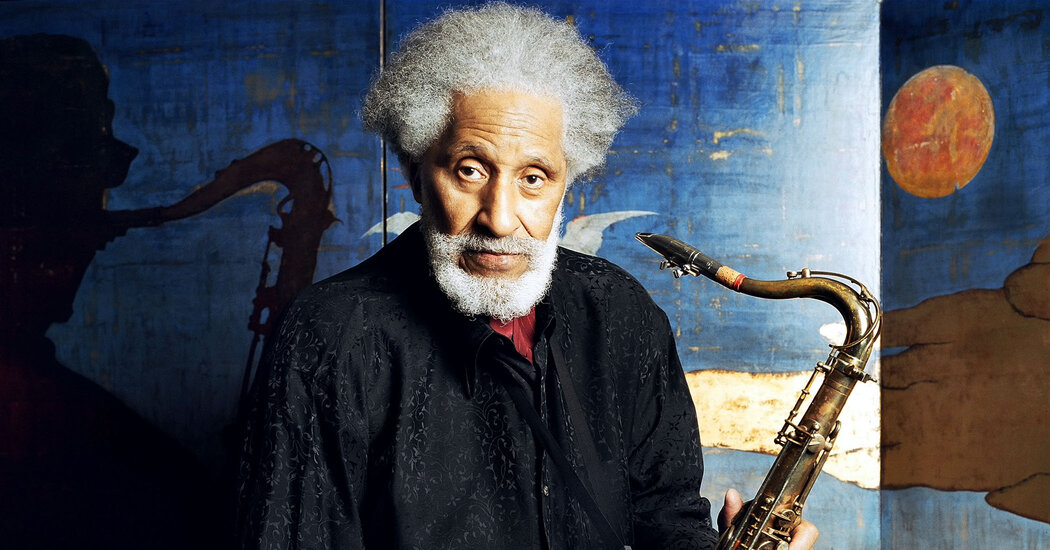
When the news broke that Sonny Rollins had passed away at his home in Woodstock, New York, at the age of ninety-five, the jazz world did not merely lose an icon; it lost its ultimate searcher. Rollins was a towering figure who redefined the tenor saxophone in the decades following World War II, bringing a muscular, fiercely imaginative voice to an instrument that had previously been dominated by a lighter, more polite aesthetic. While his contemporaries favored a gentle, clean vibrato, Rollins went in the opposite direction, forging a deep, robust tone that echoed the raw passion of early masters like Coleman Hawkins, while infusing it with the intricate harmonic language of bebop. Yet, to categorize him within any specific subgenre would be to ignore his restless, shape-shifting soul. Throughout a career that spanned more than half a century, he constantly flirted with the avant-garde, experimented with the driving grooves of fusion and Caribbean calypso, and challenged the very boundaries of improvisation. For Rollins, the saxophone was not just a tool for professional expression; it was a vessel for an ongoing, deeply personal spiritual quest. He played with a fiery, unpredictable energy—sometimes mocking, sometimes profoundly romantic—driven by a lifelong refusal to repeat himself. This relentless pursuit of spontaneous creation made him one of the most revered and human figures in jazz history, a musician who believed that the true magic of performance lay in silencing the analytical mind entirely, stepping onto the stage, and letting the music flow from a subconscious space free of cliché.
Born in Harlem in 1930 to immigrant parents from the Virgin Islands, Rollins grew up in a vibrant cultural landscape where music was a living, breathing entity. He began his relationship with the saxophone as a teenager, swapping his early aspirations of canvas painting for the visceral pull of the New York jazz scene. Even as a young man, he was in high demand, working alongside titans like Miles Davis, Thelonious Monk, and Bud Powell. However, his meteoric rise was temporarily halted by a struggle with heroin addiction, a dark path that claimed so many of his peers. Showing the resilience that would define his entire life, Rollins successfully overcame his addiction by 1955 and surged back into the limelight as a member of the legendary Max Roach and Clifford Brown Quintet. The mid-1950s became a period of astonishing creative fertility for Rollins. In 1956 alone, he released Tenor Madness—featuring his legendary, friendly duel with John Coltrane—and his masterwork, Saxophone Colossus, which immortalized his West Indian heritage through the infectious calypso rhythms of “St. Thomas” and earned critical analysis for the thematic genius of “Blue 7.” These recordings cemented his reputation as an artist of unparalleled depth, a performer who could take a simple, mundane melody and unpack it, thread by thread, until it transformed into a complex, breathtaking tapestry of human emotion.
Despite this rapid rise to fame, Rollins remained plagued by a profound, agonizing self-doubt that often baffled his admirers. He was never fully satisfied with his own acoustic genius, frequently walking away from performances convinced he had failed to reach the standard he set for himself. This perfectionism led to one of the most legendary chapters in jazz folklore. In 1957, feeling constrained by the traditional role of the piano, which he felt restricted his harmonic path, Rollins made the radical decision to perform in a minimalist trio format consisting only of saxophone, bass, and drums. This spare, courageous setting yielded The Freedom Suite, a bold, nineteen-minute musical statement of racial protest recorded at the dawn of the civil rights movement. Yet, even as critics hailed him as a newly crowned king of jazz, the internal pressure grew too quiet to ignore. In 1959, Rollins suddenly walked away from the stage, embarking on a self-imposed, two-year hiatus. To escape the complaints of neighbors in his Lower East Side apartment, he took his saxophone to the pedestrian walkway of the Williamsburg Bridge. There, high above the churning waters of the East River, surrounded by the roar of traffic and the cold night wind, Rollins practiced for up to fifteen hours a day. This period of solitary reflection became a sacred ritual of self-discovery, transforming the bridge into a legendary sanctuary of artistic devotion and resulting in his triumphant 1962 comeback album, poetically titled The Bridge.
Upon his return, Rollins was a changed man, possessing a renewed sense of confidence and a hunger to explore uncharted territories. The 1960s saw him collaborating with a rotating cast of young experimentalists, including avant-garde pioneer Don Cherry, while simultaneously paying homage to his past by recording with his childhood idol, Coleman Hawkins. Yet, the pressure of fame and the commercial demands of the music industry continued to clash with his internal spiritual clock. Before the decade closed, Rollins withdrew once again, embarking on a second hiatus from 1966 to 1972, spending his time in monasteries and spiritual retreats across Japan and India to find peace beyond the applause. When he emerged, he stunned the traditionalists by embracing electric instruments, heavy rock backbeats, and contemporary rhythms. He even collaborated with the Rolling Stones, lending his soaring, unmistakable saxophone solos to three tracks on their iconic 1981 album Tattoo You. Traditional jazz critics often reacted with a mix of awe and disappointment, accusing him of simplifying his style or pandering to crowds with his popular calypsos. But Rollins remained fiercely defensive of his choices, arguing that jazz was not a museum piece to be preserved in amber, but a living, evolving language that needed to stay relevant to the changing times.
Behind the scenes of this whirlwind career stood his wife, Lucille Pearson Rollins, who served as his manager, co-producer, and emotional anchor for decades until her death in 2004. Her partnership allowed Rollins to focus on his musical experiments, which grew increasingly daring in his later years. In 1985, he performed a legendary, two-hour entirely solo concert at the Museum of Modern Art in New York, proving that his improvisational stamina could captivate an audience without any accompaniment whatsoever. As the years rolled on, the global community showered him with honors, including a Grammy Lifetime Achievement Award, a National Medal of Arts, and a Kennedy Center Honor. Reflecting his humble, searching nature, Rollins viewed these accolades not as a reason to rest, but as an encouragement to keep searching for what he called “the ultimate sound”—a mythical, resonant perfection that he believed would bring him complete, absolute fulfillment. He adapted to the changing tides of the music industry by launching his own record label, Doxy, and establishing an archive at Harlem’s Schomburg Center, ensuring that his lifetime of practice sessions, experiments, and rehearsals would be preserved for future generations as a testament to the work ethic behind the genius.
In his final years, Rollins was forced to confront the gradual decline of his physical body, a challenge he met with the same quiet dignity and spiritual grace that had guided his entire life. Diagnosed with pulmonary fibrosis, he gave his last public performance in 2012 and eventually had to stop playing his saxophone at home. For a man whose identity was so completely intertwined with the vibration of a reed, this forced silence was a traumatic, heartbreaking transition. Yet, Rollins refused to succumb to bitterness. With the passing of his contemporary Benny Golson in 2004, Rollins had become the final survivor of the famous 1958 “A Great Day in Harlem” photograph, a poignant reminder of the beautiful, fleeting era he had helped build. Instead of mourning the silence of his horn, he chose to focus on a deep, abiding gratitude, recognizing that he had been blessed with a life fully lived in the service of music. Sonny Rollins passed away not as a tragic figure silenced by time, but as a completed soul who had spent ninety-five years teaching us that true mastery is not about achieving perfection, but about having the courage to never stop searching.