



The promise of youth is a fragile and beautiful light, one that was tragically extinguished on a cold March evening along the shores of Lake Michigan, leaving a family, a university, and an entire city mourning the loss of a life just beginning to bloom. Sheridan Gorman, an eighteen-year-old student at Loyola University Chicago, was a young woman of immense promise, described by her friends, family, and instructors as a vibrant, kind-hearted soul who looked at the world with hopeful, open eyes. Like so many college freshmen navigating their first year away from home, Sheridan was embracing her newfound independence, learning to navigate the historic streets of Chicago’s Rogers Park neighborhood, and building the foundational memories of her adulthood. However, the trajectory of her bright future was violently derailed on March 19 during what should have been a peaceful, ordinary evening at Tobey Prinz Beach—a scenic lakeside spot where students often gather to watch the waves, clear their minds from rigorous study, and enjoy the crisp spring air. Instead of a night filled with laughter, shared secrets, and youthful camaraderie, the peaceful beach became the stage for an unspeakable act of violence that has left the local community grappling with deep-seated sorrow and a profound, lingering sense of vulnerability. The sudden, violent theft of Sheridan’s life has reverberated far beyond the campus of Loyola University, igniting painful conversations across the city about public safety, neighborhood security, and the fragility of peace in our urban spaces. Today, as her loved ones try to navigate the exhausting geography of grief, they are left with only memories of her laughter, her ambitions, and the tragic realization of all the milestones she will never reach. Sheridan’s death is not merely a grim statistic or a passing headline in a fast-paced news cycle; it is a profound human tragedy that demands we look closely at the cascading systemic failures that led to her untimely end, ensuring that her name is remembered not just for how she died, but for the beautiful, loving life she lived.
To truly comprehend the horror of that fateful night is to place oneself in the footprints Sheridan and her group of close friends left in the damp sand near the Rogers Park pier. It was an evening filled with the easy chatter of teenagers, the gentle crash of the lake waters, and the iconic silhouette of the local lighthouse standing sentinel over the dark, sprawling waters of Lake Michigan. But the atmosphere shifted from serene to suffocatingly tense when Sheridan, stepping forward to peer around the structure of the lighthouse, locked eyes with a menacing figure lurking in the shadows. Sensing immediate danger, a cold dread washed over her, prompting her to retreat quietly toward her companions, her voice hushed, her lips mouthing the terrifying words that would haunt them forever: “There’s a man behind the lighthouse.” The warning was brief, but the threat was immediate as the stranger, later identified as twenty-six-year-old Jose Medina, emerged from the darkness and began a relentless, terrifying pursuit of the fleeing teenagers. Panic erupted as the friends ran for their lives, their hearts hammering against their ribs, the shifting sand beneath their feet making escape feel like a slow-motion nightmare as they desperately sought safety from the specter chasing them. It was during this frantic, desperate escape that a sharp, deafening gunshot shattered the peaceful night, and a bullet struck Sheridan in her upper back, bringing her down while her friends, consumed by raw survival instincts and blind panic, continued running until they found a temporary place to hide in the darkness. When the immediate danger seemed to pass and her terrified friends crept back to the scene, clinging to the desperate, whispered hope that she had somehow escaped, they instead made the devastating discovery of Sheridan lying completely unresponsive on the ground, a sight that shattered their innocence and left an indelible scar on their young souls.
The wheels of justice began to turn in the immediate wake of the shooting, revealing a chilling trail of evidence that quickly pointed investigators toward Jose Medina as the primary suspect behind this senseless act of violence. Law enforcement officials from the Chicago Police Department meticulously combed through local surveillance footage, seeking a face or a pattern that would lead them to Sheridan’s killer, and their diligent efforts bore fruit when they analyzed the security cameras of a nearby apartment building. The footage captured Medina entering the lobby shortly after the shooting occurred, notably waiting for an elevator without wearing a mask, exposing his face to the camera lens and making his features easily identifiable to those who frequent the building. A crucial break in the case came when a building engineer recognized Medina on the video, identifying him not only by his facial features but also by his highly distinctive, asymmetrical limp and gait, a physical characteristic that left little doubt about his identity and presence at the scene. On March 23, just four days after Sheridan was brutally stolen from her family, Medina was apprehended and taken into custody, face-to-face with the heavy hand of the law. Since then, the legal proceedings have been slow and marked by painful delays, including a postponement of his scheduled court appearances due to a tuberculosis diagnosis while in detention, which prolonged the excruciating wait for Sheridan’s grieving family, who desperately seek closure. Throughout the preliminary hearings, Medina has maintained his innocence, entering a plea of not guilty to the charges of first-degree murder, setting the stage for a highly charged, emotionally draining legal battle when he returns to court on June 1, where the community hopes to finally see the beginning of accountability for this senseless act of cruelty.
As the details of the investigation unfolded, Sheridan’s death quickly became a focal point in a much broader, highly polarized national debate regarding immigration policy and border security within the United States. Media investigations and official records revealed that Jose Medina, a Venezuelan national, had entered the country illegally in 2023, cross-referencing a background that immediately raised red flags for border patrol agencies. Upon his initial apprehension at the southern border, authorities had officially flagged him as a flight risk and explicitly determined that he possessed no valid asylum claim, yet he was ultimately released into the interior of the United States under the administrative policies of the Biden administration. Furthermore, government records indicated that Medina possessed no valid address, no official form of identification within the United States, and could not provide any verifiable point of contact, leaving him to vanish into the societal fabric with virtually no oversight. This revelation has inflamed public anger and fueled intense scrutiny over the systemic loopholes and policy decisions that allow high-risk individuals without legal standing or verifiable backgrounds to remain in American communities. For many, Sheridan’s death is not just a localized tragedy but a terrifying symptom of a broken immigration system that failed in its fundamental duty to protect its citizens. The intersection of these national policies with a localized act of extreme violence has transformed the grief of a single family into a rallying cry for administrative accountability, forcing lawmakers and citizens alike to confront the very real, human consequences of porous borders and unmonitored entries. We are left to ponder how a system designed to preserve safety could allow someone deemed a flight risk with no valid asylum claim to walk the streets of Chicago, ultimately crossing paths with an innocent young woman on a beach.
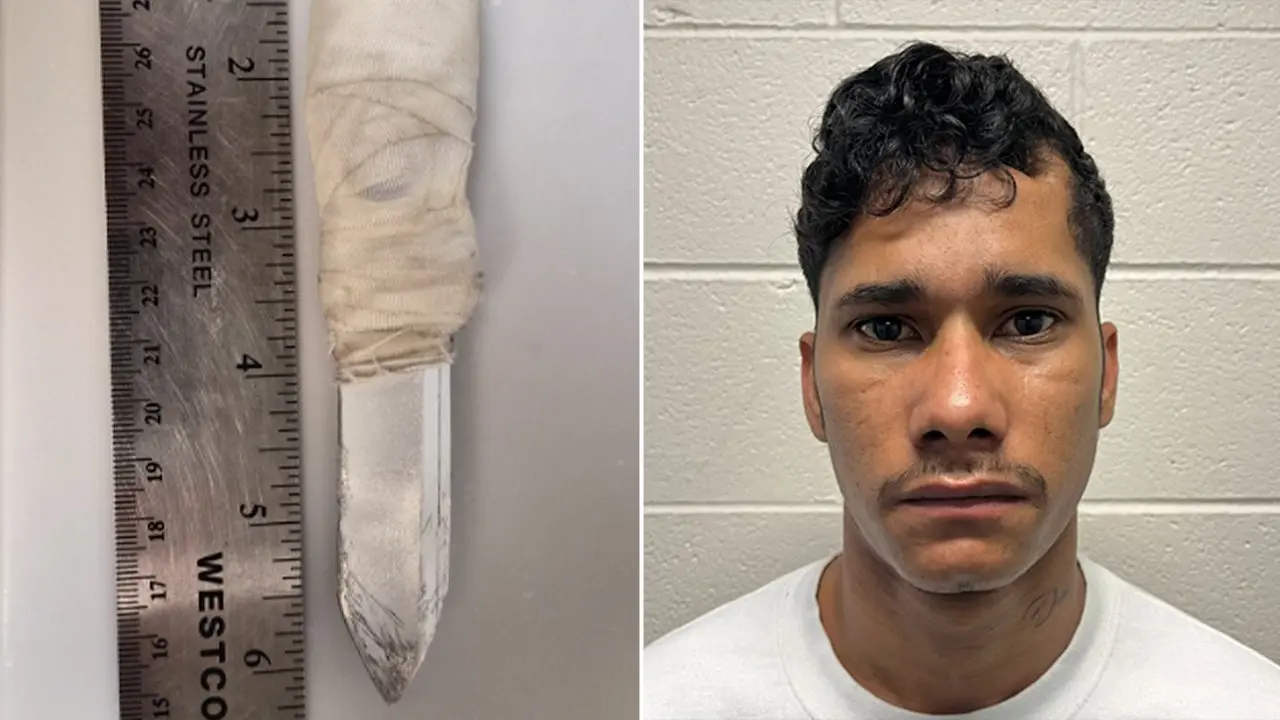
The horror surrounding this case deepened significantly on a recent Thursday morning when authorities discovered that the violence associated with Medina was not contained outside the prison walls, but continued to fester within the secure confines of his detention. Around 8:00 a.m. on a quiet spring morning, alert correctional officers at the Cook County Jail conducted a routine search of the twenty-six-year-old suspect and recovered a highly dangerous weapon hidden in his clothing. Tucked inside the front pocket of Medina’s pants was a six-inch homemade shank, meticulously crafted from a piece of sharpened metal and outfitted with a secure, improvised handle fashioned out of white medical tape. This discovery sent shockwaves through the correctional facility and the public, highlighting the persistent danger Medina poses and his apparent, chilling disregard for authority and human life, even while facing first-degree murder charges. The Cook County State’s Attorney’s Office acted swiftly in response to this alarming security breach, officially approving a new felony charge of possessing contraband in a penal institution against Medina on the following Friday. This disturbing development serves as a stark reminder of the volatile nature of the suspect and underscores the constant vigilance required by law enforcement officers who must manage high-risk detainees. For Sheridan’s grieving family, news of the shank is a disturbing confirmation of the inherent, unpredictable danger of the man accused of taking their daughter’s life, reinforcing their fears and compounding the profound trauma they must endure as they prepare for the trial. It paints a grim picture of a suspect who remains active, defiant, and armed in the shadows of lockup, refusing to submit to the peaceful order of the society he is accused of so deeply injuring.
As the calendar marches toward the pivotal June 1 court date, the memory of Sheridan Gorman remains a bright, guiding light for a community that refuses to let her be forgotten amidst the noisy political discourse and complex legal maneuvers. The Rogers Park neighborhood and the Loyola University campus continue of necessity to heal, though the quiet beauty of the lakeside beaches will long be colored by the somber, haunting reminder of that cool March evening. Sheridan’s family and friends must now carry the heavy mantle of her legacy, ensuring that her warmth, her academic aspirations, and her vibrant spirit outshine the dark circumstances of her sudden departure from this world. It is an incredibly monumental task to find healing when the legal process is ongoing, yet the collective solidarity of those who loved Sheridan serves as a powerful testament to the resilience of the human spirit in the face of profound evil. This heartbreaking tragedy reminds us all that behind every political talking point, every immigration debate, and every jailhouse incident report lies an irreplaceable human being whose life was utterly priceless and whose sudden absence leaves a permanent, aching void in the lives of those who knew her. As the Cook County court system prepares to hear the evidence against Jose Medina, the ultimate hope is for a justice that is swift, fair, and absolute, offering some small measure of peace to a devastated family and a shocked city. Until that day comes, the community will continue to stand together, holding candlelight vigils, sharing stories of her kindness, and ensuring that Sheridan Gorman’s name is spoken with the love, respect, and deep honor that her brief but beautiful life so richly and clearly deserved.