




Tensions Escalate in the West Bank: Teenager Killed Amid Rising Settler Violence and Controversial Settlement Plans
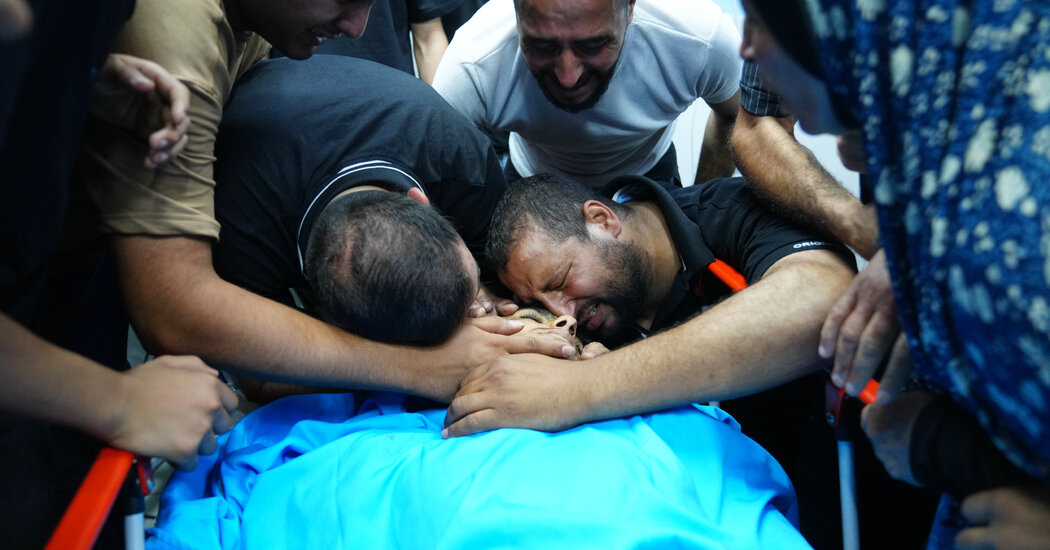
The occupied West Bank witnessed another tragic day of violence on Friday as a Palestinian teenager was killed during an incident involving Israeli settlers near the city of Hebron, marking yet another grim chapter in what has become an increasingly volatile period for the region. Local officials confirmed that 17-year-old Kareem Shlaldeh lost his life when a large group of settlers entered the village of Sair, with witnesses reporting that property was also set ablaze during the confrontation. The incident comes at a time when the territory is experiencing a dangerous surge in settler-related violence, creating mounting challenges for Israeli security forces who find themselves caught between protecting Palestinian civilians and managing the actions of their own citizens in the occupied territories.
Conflicting Accounts Emerge From the Deadly Confrontation
The circumstances surrounding the teenager’s death remain murky, with Palestinian and Israeli authorities presenting sharply divergent narratives of what transpired that fateful morning. Saad Shlaldeh, the mayor of Sair, provided a harrowing account of the events, describing how a substantial group of settlers descended upon the village around 10 a.m. and unleashed a wave of destruction. “These people are thugs and more,” the mayor stated emphatically during a phone interview, basing his characterization on detailed conversations with witnesses who observed the attack unfold. The Palestinian official painted a picture of unprovoked aggression, with settlers moving through the village leaving a trail of burned property and, ultimately, a young life cut tragically short.
However, the Israeli military offered a starkly different version of events, claiming that their soldiers were dispatched to the area in response to reports of Palestinians hurling rocks at Israeli civilians. According to the military’s statement, the Israelis present in the area lacked advanced authorization, suggesting a spontaneous escalation rather than a premeditated attack. Perhaps most significantly, the military acknowledged that a “security official” had opened fire during the incident, resulting in Palestinian casualties, though they stopped short of clarifying whether the shooter was a soldier or a civilian settler acting in a security capacity. This ambiguity has only deepened the confusion and anger surrounding the incident, with each side firmly entrenched in their own interpretation of the day’s tragic events.
The conflicting reports have become emblematic of the broader information war that accompanies nearly every violent incident in the region, where the same set of facts can be molded to support entirely different conclusions depending on who is presenting them. What remains undisputed is that a 17-year-old boy lost his life, another Palestinian man was wounded and transported to a hospital in Hebron for treatment, and the village of Sair is now grappling with the aftermath of yet another violent intrusion that has left its residents feeling increasingly vulnerable and unprotected.
Escalating Settler Violence Creates Security Dilemma
The deadly incident in Sair represents just the latest manifestation of a troubling trend that has seen settler violence against Palestinians rise dramatically in recent months, presenting Israeli military commanders with an increasingly untenable situation. The Israeli Defense Forces find themselves in the unenviable position of being responsible for maintaining law and order in the occupied territories while simultaneously facing criticism from multiple directions—accused by Palestinians and the international community of not doing enough to protect civilians, while also facing pressure from settler groups and right-wing politicians who view their presence in the territories as legitimate and their actions as justified.
This dual pressure has resulted in a pattern of hesitant responses and inconsistent enforcement that critics argue has effectively created an environment of impunity for settler violence. Human rights organizations have documented numerous instances where settler attacks go unpunished or result in minimal consequences, and the military’s reluctance to take forceful action against Israeli citizens in the territories has been cited as a key factor enabling the escalation. The dilemma is particularly acute because it places soldiers in the position of potentially having to confront their own citizens—a politically sensitive situation that no military commander wants to navigate, especially under a government that includes ministers who are themselves settlers or vocal supporters of the settlement movement. The situation has become so severe that some Israeli security officials have reportedly warned that the unchecked violence threatens to destabilize the entire region and could spark a wider conflagration that would ultimately harm Israeli security interests as well.
Controversial Settlement Expansion Adds Fuel to the Fire
The violence erupted against a backdrop of heightened political tensions following the Israeli government’s recent decision to publish a tender for the construction of new housing units in the E1 settlement area, located near Jerusalem in the highly sensitive West Bank corridor. This particular project has long been considered one of the most explosive issues in the Israeli-Palestinian conflict, primarily because its location would effectively sever the geographic contiguity between the northern and southern parts of the West Bank, making the creation of a viable, contiguous Palestinian state virtually impossible. For nearly two decades, the E1 plan remained dormant, stymied by intense international opposition and pressure from successive American administrations, including both the Obama and Biden presidencies, which recognized the project’s potential to destroy any realistic prospects for a two-state solution.
However, the political landscape has shifted dramatically under Israel’s current government, widely described as the most right-wing in the country’s history. This coalition, which includes extreme nationalist parties with close ties to the settlement movement, has shown little inclination to honor previous constraints on settlement expansion, and the advancement of the E1 project represents a clear signal of their intentions. The timing of the tender announcement, coming just as tensions were already running high, has been interpreted by many observers as a deliberate provocation designed to assert Israeli claims over the area and fundamentally alter the facts on the ground in a way that would be nearly impossible to reverse. Palestinian officials and analysts have warned that the combination of accelerated settlement activity and rising settler violence creates a dangerously combustible situation, with each element reinforcing the other and pushing the region ever closer to the brink.
International Condemnation and Diplomatic Fallout
The international community has responded with swift and forceful condemnation of both the settlement announcement and the escalating violence, with eleven nations issuing a joint statement expressing their deep concern over the developments. Among the signatories were major Western powers including France, Canada, and Britain, whose foreign ministers have been particularly vocal in their criticism. Ed Miliband, Britain’s foreign secretary, took to social media to denounce the settlement tender as “unacceptable and destructive,” language that reflects the growing frustration among Israel’s traditional allies who view the settlement expansion as fundamentally incompatible with the pursuit of peace. The joint statement emphasized that the settlement project “will undermine the prospect of the two-state solution by driving a wedge through the West Bank and harming the territorial contiguity of the Palestinian Territories,” a formulation that gets directly to the heart of why the international community views this particular project with such alarm.
The diplomatic fallout has been immediate and significant, placing additional strain on Israel’s relationships with key allies at a time when the country already faces numerous foreign policy challenges. Israeli officials, for their part, have dismissed the criticism and doubled down on their position, with Gideon Saar, the Israeli foreign minister, pushing back against the British criticism by asserting that “the Jewish people have the right to live throughout the Land of Israel”—a statement that appears to lay claim to all territory between the Mediterranean Sea and the Jordan River, effectively encompassing the entire West Bank and rejecting any notion of Palestinian sovereignty over the area. This exchange highlights the fundamental disconnect between the international community’s vision of a two-state solution and the current Israeli government’s increasingly explicit rejection of that framework, raising profound questions about the future trajectory of the conflict and the viability of diplomatic efforts to resolve it.
A Region on the Brink: The Human Cost of Escalating Violence
As the sun sets on another day of violence and recrimination, the human cost of the escalating tensions becomes ever more apparent, with families shattered, communities terrorized, and hope for a peaceful resolution growing increasingly scarce. For the residents of Sair, the death of young Kareem Shlaldeh represents not just a personal tragedy but a stark reminder of their vulnerability in an environment where they feel they have no one to turn to for protection. The village’s mayor spoke of “thugs” descending on his community with impunity, a characterization that resonates with many Palestinians who see the settler violence as part of a broader system of oppression and displacement backed, either explicitly or implicitly, by the state. Meanwhile, Israeli settlers frame their actions as self-defense against Palestinian attacks, pointing to incidents of rock-throwing and other violence as justification for their actions, creating a cycle of retaliation that shows no signs of abating.
The situation on the ground has deteriorated to such an extent that senior Israeli security officials have begun speaking publicly about their concerns, with some warning that the combination of settlement expansion and settler violence is creating conditions for a potential uprising similar to previous intifadas that resulted in years of bloodshed. The military’s position is becoming increasingly untenable, as they are tasked with enforcing order in a situation where the political leadership appears to be deliberately inflaming tensions for ideological reasons. For the international community, the events of this week represent a critical test of whether there is still any meaningful role for diplomacy in a conflict that seems to be sliding inexorably toward greater violence, with the two-state solution that has formed the basis of international policy for decades appearing increasingly like a distant memory. As the bodies are buried and the rhetoric intensifies, the question that lingers is not whether more violence will come—that seems all but certain—but rather whether there remains any force, internal or external, capable of pulling the region back from the brink before the situation spirals completely out of control.