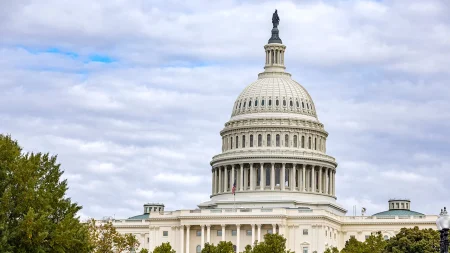






The quiet, marble-lined corridors of the United States Senate are bracing for a storm of historic proportions this coming Thursday, as a congressional committee prepares to cast a momentous vote that could fundamentally alter the relationship between public science and political power. At the center of this escalating drama is Dr. Anthony S. Fauci, the retired immunologist who became the nation’s most visible, praised, and vilified public health official during the darkest days of the COVID-19 pandemic. The committee is set to decide whether to hold Dr. Fauci in contempt of Congress, a rare and severe punitive measure triggered by his recent refusal to answer specific, highly charged questions during a tense, closed-door hearing. For casual observers, the upcoming vote may look like just another piece of political theater in an era defined by partisan warfare. However, beneath the dry procedural mechanics of congressional oversight lies a deeply human struggle—a clash of duties, values, and legacies that reflects the profound polarization of a nation still grappling with the physical and emotional scars of a global health crisis. To truly understand how a once-celebrated doctor arrived at the precipice of a criminal contempt citation, one must look past the headlines and examine the complex web of personal conviction, systemic distrust, and raw political ambition that has brought Washington to this boiling point.
To humanize this conflict, one must first look at the man himself, whose life has been defined by decades of tireless, round-the-clock service to the American public. Long before he became a household name during the coronavirus outbreak, Dr. Fauci was a dedicated physician-scientist who walked the wards of the National Institutes of Health, comforting dying patients during the terrifying early days of the HIV/AIDS epidemic in the 1980s. For nearly forty years, under seven different United States presidents of both political parties, he served as the Director of the National Institute of Allergy and Infectious Diseases, navigating complex health emergencies from Ebola to Zika with a steady, soft-spoken determination. Yet, the very qualities that earned him the Presidential Medal of Freedom—his unwavering commitment to scientific consensus and his direct, plain-spoken communication style—ultimately thrust him into a cultural firestorm during the COVID-19 pandemic. Today, at over eighty years old, an age when most people are enjoying a quiet, well-deserved retirement, Dr. Fauci lives a life of exhausting, high-alert isolation, accompanied everywhere by armed security detail due to a relentless barrage of death threats against him and his family. The looming contempt vote on Thursday is not just a legal challenge for him; it represents the painful, bitter culmination of a career spent trying to protect a public that is now deeply divided over whether he is a hero who saved millions of lives or a bureaucratic overreach personified.
On the other side of this high-stakes confrontation are the lawmakers of the Senate committee, who are themselves driven by a powerful mix of constitutional duty, constituent pressure, and political calculation. To view these politicians merely as partisan actors is to miss the genuine, deep-seated frustration that exists among a large portion of the American electorate they represent. For millions of citizens, the pandemic era was defined not by medical triumph, but by a series of confusing, shifting mandates, prolonged school closures that derailed their children’s education, and economic lockdowns that destroyed family businesses. These lawmakers argue that their constituents deserve absolute transparency regarding the origins of the virus, the funding of high-risk scientific research, and the decision-making processes that governed daily American life for years. From their perspective, Dr. Fauci’s refusal to answer certain questions is not an act of principled resistance, but an exercise in bureaucratic evasion and institutional stonewalling. They believe that no public official, regardless of their stature or past achievements, should be allowed to operate above the law or shield themselves from the rigorous, uncomfortable scrutiny of the public’s elected representatives, making Thursday’s vote a necessary assertion of congressional authority.
The crux of the current impasse lies in the specific, highly sensitive nature of the questions Dr. Fauci declined to answer during his recent testimony, highlighting the delicate balance between scientific confidentiality and public accountability. Investigators have focused heavily on the internal communications of public health officials during the early weeks of 2020, seeking to determine whether there was an active, coordinated effort to suppress the theory that COVID-19 may have leaked from a laboratory in Wuhan, China. Dr. Fauci has repeatedly defended his actions and those of his colleagues, asserting that their conclusions were based entirely on the rapidly evolving scientific data available at the time and that he has always acted in good faith. However, when pressed on details regarding personal emails, informal discussions, and the precise oversight of federal grants to foreign research entities, Dr. Fauci drew a firm line, citing legal advice, ongoing investigations, and the need to protect the integrity of the scientific enterprise from political distortion. This refusal to comply fully has set off a dangerous game of political chicken, where a scientist’s defense of academic independence is interpreted by lawmakers as a cover-up, leaving little room for compromise or nuance in a room designed for aggressive, adversarial cross-examination.
If the committee decides to hold Dr. Fauci in contempt on Thursday, the systemic and legal ramifications will ripple far beyond the immediate political fortunes of those involved, signaling a dangerous escalation in the weaponization of congressional power. Legally, a contempt of Congress citation is a referral to the Department of Justice, which must then decide whether to indict and prosecute the individual—a process that is historically slow, highly politicized, and rarely results in actual jail time for high-profile figures. However, the symbolic damage of such a move is immense, serving to further erode whatever remaining trust the American public has in its foundational institutions. When the country’s most prominent scientific figure is branded a potential criminal by a branch of government, it sends a chilling message to the entire scientific community, suggesting that public service in times of crisis carries the risk of personal and professional ruin. Conversely, if Congress fails to hold officials accountable when they refuse to cooperate, it weakens the legislature’s vital oversight role, leaving the public feeling even more disconnected from and cynical about the government agencies that wield immense influence over their daily lives.
Ultimately, the impending vote on Thursday is a poignant reflection of a broader, deeper cultural tragedy: the total politicization of science and the loss of a shared, objective reality. In a healthy democracy, scientific debate and political oversight should coexist as constructive forces that challenge assumptions and improve public policy; instead, they have been transformed into weapons of ideological warfare where there are no winners, only casualties of truth. As ordinary Americans watch the drama unfold on their screens, many feel a sense of profound exhaustion, wishing for a return to a time when public health decisions were guided by clinical empathy rather than political theater. No matter the outcome of Thursday’s committee vote, the legacy of this conflict will linger for a generation, serving as a sobering reminder of how easily trust can be dismantled and how difficult it is to rebuild. As Dr. Anthony Fauci prepares for the next chapter of this grueling ordeal, and as senators prepare to cast their historic votes, the nation is left to ponder a troubling question: how can we hope to confront the inevitable health crises of the future when the very machinery of our democracy has made enemies of the people who are trained to save us?