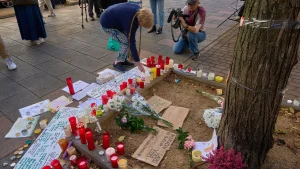


On a vibrant, sun-drenched Sunday afternoon that should have been defined by the shared joy of community, the annual Bite of Seattle food festival at Seattle Center shattered under a sudden, devastating rain of gunfire. What began as a peaceful celebration of local culinary culture beneath the city’s iconic skyline rapidly deteriorated into a scene of absolute terror, sending thousands of panicked families, tourists, and vendors scrambling for cover behind food booths, park benches, and concrete barriers. Investigators later revealed that a volatile dispute between small groups escalated in an instant, culminating in at least three shooters unleashing a hail of bullets directly into the dense crowd, with innocent bystanders tragically caught in the crosshairs. When the chaos finally subsided and the echoes of the sirens began to fill the summer air, three people lay dead and four others were hospitalized with physical injuries, though the emotional scars inflicted upon the collective consciousness of the city run far deeper. One of the deceased was later identified as an alleged gunman, but the true tragedy rested in the stolen futures of those who had simply stepped out to enjoy a weekend afternoon with loved ones, completely unaware of the danger lurking in the crowds. It was a heartbreaking manifestation of America’s persistent struggle with localized gun violence, where public spaces designated for peace and celebration are instantaneously transformed into active war zones. This senseless act of violence robbed families of their loved ones and stripped Seattleites of their sense of security, leaving behind a mourning community forced to grapple with the agonizing reality that no space, no matter how joyful or heavily populated, is entirely immune to the sudden flashpoint of human conflict. The profound grief radiating from Seattle Center in the wake of the shooting set off an immediate clamor for answers, accountability, and a reassuring presence from those sworn to protect the public.
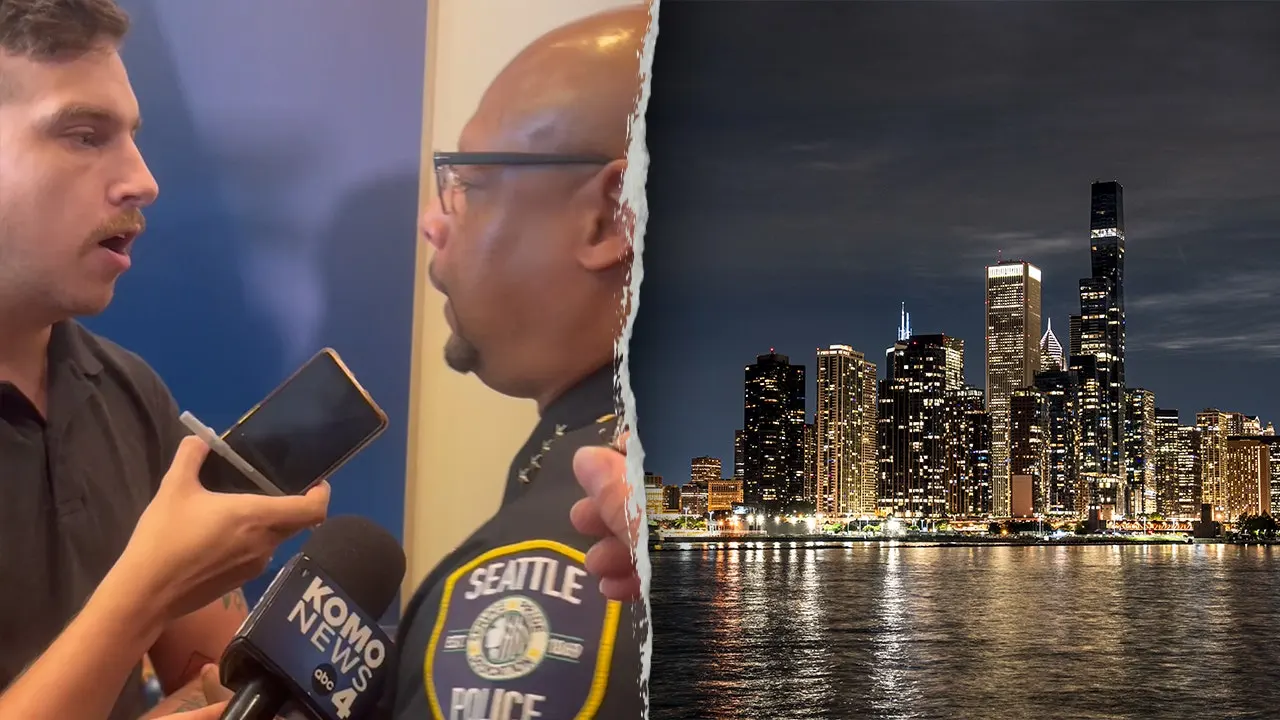
Yet, as the city reeled from the immediate trauma of this mass casualty event, a parallel storm of controversy began to gather over the leadership of the Seattle Police Department. Police Chief Shon Barnes was notably absent from the ground in the critical hours following the tragedy, a revelation that sparked intense public scrutiny and a wave of political backlash across the Pacific Northwest. At the time the first shots were fired, Barnes was miles away in Dallas, Texas, attending the annual conference of the National Organization of Black Law Enforcement Executives (NOBLE), an event dedicated to addressing systemic policing issues and developing progressive strategies for metropolitan safety. While professional development and national collaboration are standard, often vital, responsibilities for modern police chiefs, the timing of his absence created a damaging perception of detachment from a city in crisis. Critics and worried citizens alike questioned how the leader of a major metropolitan police force could be physically removed during one of the city’s most high-profile security failures of the year, leaving a leadership vacuum at a time when residents desperately needed reassurance. Barnes found himself trapped in the difficult, often unforgiving paradox of modern public service: the expectation of national leadership versus the intense local demand for immediate, visible crisis intervention. In his defense, Barnes noted with a mix of frustration and pragmatic realism that he lacked a “crystal ball” to predict or schedule the outbreaks of gun violence that plague urban centers. However, in the court of public opinion, the emotional need for a visible shepherd during times of communal grief often outweighs any logistical justification, leaving the chief to defend not only his strategic decisions but his fundamental commitment to the city he was hired to protect.
The scrutiny surrounding Chief Barnes’ absence was further complicated by deep-seated personal dynamics that highlight the profound sacrifices and exhausting realities of high-level civil service in the modern era. Behind the badge and the administrative authority lies a human being navigating a highly complex, bicoastal family dynamic; Barnes’ wife and children reside in Chicago, Illinois, leaving him to balance the immense, 24/7 demands of policing Seattle with the emotional pull of a distant household. This geographic separation has long been a quiet point of tension, but it became public fodder following media reports, notably by the local outlet PubliCola, which alleged that the chief routinely spends his weekends away from Seattle to fly home to his family. This accusation strikes at the very heart of the “humanized” dilemma of modern leadership: the delicate, often impossible tightrope walk between being a dedicated public servant to a demanding city and being an active, present father and husband to a family living thousands of miles away. The narrative of an “absentee chief” is a deeply damaging one in a field where trust and physical presence are considered paramount, yet it also exposes the harsh personal toll that high-profile leadership roles exact on individuals and their loved ones. Barnes vehemently defended his integrity, explaining that the financial and physical realities of constant long-distance travel make the claims of weekly Chicago trips not only false but practically impossible. His defense painted a picture of a man caught between two worlds, striving to give his all to a community he claims to love deeply, while silently carrying the heavy, quiet burden of missing the daily milestones of his own children’s lives back in the Midwest.
The boiling point of this atmospheric tension arrived during a highly charged press briefing, where the boundary between professional inquiry and personal boundary-crossing dissolved entirely. When a reporter directly confronted Barnes regarding the frequency of his trips to Chicago and his actual physical presence in Seattle, the chief’s professional composure fractured, revealing the raw, wounded humanity beneath his uniform. Displaying an intense burst of emotion that required a staff member to physically intervene and urge him to walk away, Barnes passionately defended his work ethic and dedication, snapping back that such reports were fundamentally incorrect and misrepresentative of his service. “I have been here working as hard as I can for this city from the day I got here, you got that?” he asserted, his voice shaking with a potent mix of anger, exhaustion, and defensiveness. This visceral reaction was a rare, unvarnished look at the immense pressure cooker of public safety leadership, where an official is expected to remain stoic and unflappable while their personal character, financial choices, and familial commitments are dissected in the public square. Barnes later sought to de-escalate the confrontation by clarifying that while he naturally wishes he could see his family more often, the assertion that he abandons his post every weekend is a gross exaggeration. His emotional defense revealed a leader who felt deeply misunderstood and unappreciated, presenting a stark contrast to the typical, overly polished public relations responses and reminding the public that even those in positions of immense authority are susceptible to the pain of having their dedication and personal life weaponized against them by critics.
Amidst the personal and professional drama unfolding around the police chief, the actual investigation into the Seattle Center shooting continued to move forward, revealing a troubling picture of youth violence and social instability. Democratic Socialist Seattle Mayor Katie Wilson publicly addressed the ongoing investigation, stating that law enforcement officials believe the violence erupted when a teenager drew a weapon and opened fire into the crowded festival following a clash between small, localized groups of young people. This detail cast a somber light over the tragedy, pointing to a broader systemic crisis where adolescent impulsivity, easy access to high-powered firearms, and unresolved social conflicts culminate in devastating loss of life. The realization that a young person could so easily pull a trigger in a crowded public venue added another layer of grief for a city already struggling to find solutions to youth radicalization and community violence. Our cities are increasingly forced to grapple with the reality that traditional policing models are often reactive, struggling to intervene before a personal dispute on social media or in a local neighborhood spills over into a public space like the Bite of Seattle. The involvement of multiple shooters, with one suspect eventually being found dead, underscores the cyclical and retributing nature of modern street violence, where gun battles are fought with little regard for the surrounding community. As the Seattle Police Department continues to piece together the forensic details and track down the remaining suspects, the political leadership of the city is left with the agonizing task of addressing the root causes of this violence, balancing the call for criminal justice reform with the immediate public demand for safer streets.
In the final analysis, the tragedy at Seattle Center and the subsequent firestorm surrounding Chief Shon Barnes serve as a powerful case study in the intersection of public tragedy, political leadership, and personal humanity. The road ahead for Seattle is one of cautious healing and necessary reconciliation, requiring both a compassionate understanding of the human beings who lead our public institutions and an unwavering demand for commitment and accountability from them. For Barnes, the path forward involves restoring a fractured sense of trust with a community that feels increasingly vulnerable to the unpredictable surges of urban violence, proving through consistent presence and strategic action that his heart is firmly rooted in the Pacific Northwest despite the magnetic pull of his family in Chicago. Meanwhile, the families of the victims are embarking on their own lifelong journeys of grief, forever changed by a few seconds of madness on a summer Sunday. As the city reflects on this dark chapter, the hope remains that this crisis will foster a more nuanced, empathetic dialogue about the realities of public safety—one that recognizes the heavy sacrifices made by first responders and leaders, while never losing sight of the primary goal: creating a city where children and families can gather in peace, free from the shadow of gun violence. Ultimately, the true test of Seattle’s resilience will lie not in the controversies that divide its leadership, but in its collective ability to support the victims, address the systemic roots of youth violence, and rebuild a community where safety and humanity coexist.