





The Passing of a Titan: Roy Hattersley and the Soul of British Labour
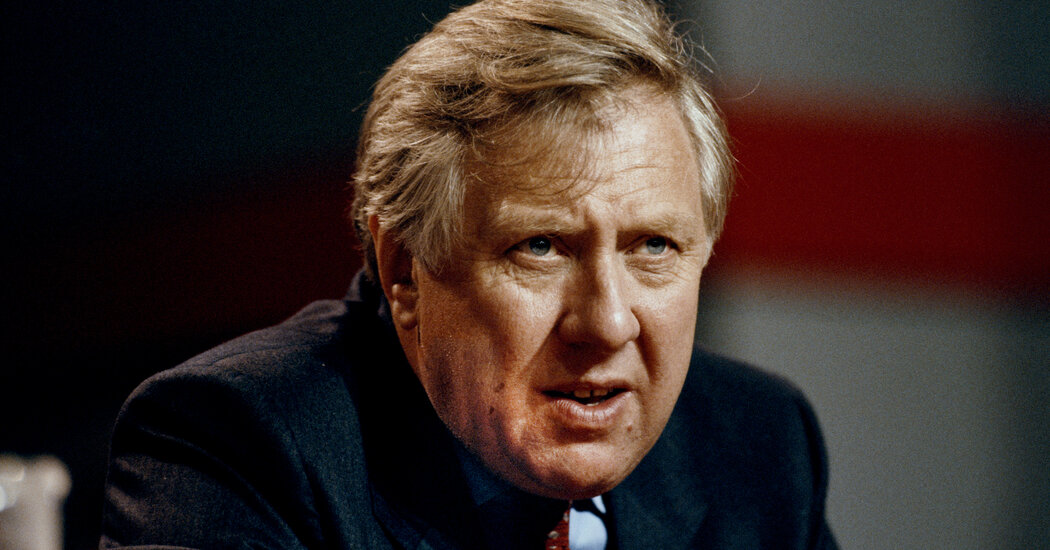
The death of Roy Hattersley at the age of 93 at his home in Derbyshire, England, marks the symbolic end of an era in British politics—a period defined by grand ideological battles, deep-seated party loyalties, and intellectual heavyweights who fought for the direction of the nation with fierce conviction and high literacy. Confirmed by his brother-in-law, the prominent American media executive Norman Pearlstine, Hattersley’s passing drew immediate tribute from across the political spectrum, with Prime Minister Keir Starmer remembering him as a true “giant of the Labour movement” whose life and career were inextricably linked with the struggles and triumphs of modern British social democracy. Born in Sheffield during the dark days of the Great Depression, Hattersley rose through the ranks of municipal politics to become one of the most recognizable, intellectual, and formidable figures of the post-war Labour Party. Though he lived through the party’s long, painful descent into the political wilderness during the rise of Margaret Thatcher’s Conservatism, his historical legacy is that of a master builder who helped salvage his fractured party from the brink of ideological self-destruction, guiding it back toward the pragmatic center-left and paving the way for its return to power. Yet, he was far more than a political strategist; he was a man of letters, a prolific author, a dedicated parliamentarian for Birmingham Sparkbrook, and a passionate defender of the working class whose commitment to democratic socialism remained unshaken even as the political world shifted beneath his feet.
The Guardian of Democratic Socialism: Fighting the Left and Resisting Blair’s Center
                  ┌────────────────────────┐
                  │    ROY HATTERSLEY      │
                  │ (1932 - 2024)          │
                  └───────────┬────────────┘
                              │
     ┌────────────────────────┴────────────────────────┐
     ▼                                                 ▼
┌─────────────────────────────────┐ ┌─────────────────────────────────┐
│ THE PARLIAMENTARY PATH │ │ THE INTELLECTUAL LEGACY │
│ • MP for Sparkbrook (33 years) │ │ • Author of 20+ Books │
│ • Deputy Leader (1983-1992) │ │ • “Endpiece” Columnist │
│ • Baron Hattersley of Sparkbrook│ │ • Prolific Biographer & Essayist│
└─────────────────────────────────┘ └─────────────────────────────────┘
Throughout his decades on the national stage, Hattersley’s intellectual anchor was a deeply moral brand of democratic socialism—a philosophy that rejected both the dogmatic, Marxist-adjacent extremes of the hard left and the unbridled, free-market neoliberalism of the right. As deputy leader of the Labour Party from 1983 to 1992 under Neil Kinnock, he spent nine grueling years working to purge the party of militant entryists and radical factions whose platform of unilateral nuclear disarmament and aggressive nationalization had rendered Labour unelectable to middle England. This long, exhausting effort to modernize the party’s policy framework ultimately laid the groundwork for Tony Blair’s historic landslide victory in 1997, yet Hattersley watched the emergence of “New Labour” not with triumphant pride, but with a growing sense of ideological betrayal. He became one of Blair’s most articulate and devastating critics from the backbenches and the House of Lords, publicly lamenting that New Labour had abandoned its historic mission to represent the British working class and had instead succumbed to a bland, market-driven managerialism that ignored systemic inequality. His lifelong battle against class privilege also manifested in his fierce opposition to Britain’s fee-paying independent schools, which he viewed as engines of social division, and his steadfast defense of the country’s integration with the European Union. In his later years, he continued to serve as the conscience of the moderate left, speaking out forcefully against Jeremy Corbyn’s leadership—particularly demanding institutional action against the anti-Semitism that festered within the party’s radical wing—proving that his allegiances were always to the foundational principles of social justice and parliamentary democracy rather than to any temporary party leadership.
A Secret Priesthood and the Sheffield Steel of His Early Life
The iron-willed determination that characterized Hattersley’s political career was forged in the industrial landscape of South Yorkshire, though his personal history contained a narrative twist worthy of the Victorian novels he so admired. Born on December 28, 1932, to Frederick and Enid Hattersley, he grew up believing his family background was entirely conventional, only to discover a shocking secret after his father’s death in 1973: Frederick had been a Roman Catholic priest who, in the late 1920s, had officiated at Enid’s marriage to another man before eloping with the bride just two weeks later and abandoning his ministry. This extraordinary revelation, which Hattersley later detailed with reflective warmth in his 2017 book The Catholics, explained his father’s profound, unexplained knowledge of church history and Latin liturgy, an intellectual curiosity that Hattersley inherited despite his upbringing in the Anglican church. His mother, Enid, was herself a pillar of the local community, serving as a Sheffield city councilor and eventually becoming the city’s Lord Mayor, introducing her twelve-year-old son to the realities of political campaigning during the historic 1945 general election that saw Clement Attlee’s Labour Party sweep Winston Churchill from power. Armed with a degree in economics from the University of Hull—chosen deliberately because he believed it was the most useful discipline for a future statesman—Hattersley entered local government at just 23 as the youngest member of the Sheffield City Council, before securing a seat in Parliament at 31 as the representative for Birmingham Sparkbrook in 1964, beginning a monumental 33-year tenure defending one of the most culturally diverse and economically challenged constituencies in the Midlands.
Power, Compromise, and the Heavy Burdens of Statecraft
  MID-CENTURY BRITISH LABOUR'S IDEOLOGICAL EVOLUTION

  [1945-1970s] ──────────────► [1980s] ──────────────► [1997-Present]
  Postwar Consensus            The Civil Wars           New Labour & Beyond
  • Welfare State              • Kinnock/Hattersley     • Market Reform
  • Wilson/Callaghan           • Militant Purge         • Starmer Centrism
For all his intellectual brilliance and parliamentary skill, Hattersley was frequently labeled by contemporary political commentators as the “nearly man” of British politics, a moniker that reflected his failure to attain the highest offices of state during Labour’s brief periods of power in the 1960s and 1970s. As a junior minister under Harold Wilson and James Callaghan, his rise was steady but constrained by the factional balance of the cabinet, though he was thrust into the center of historic crises, most notably in 1969 when, as a deputy to Defense Minister Denis Healey, he signed the fateful military order that deployed British troops onto the streets of Northern Ireland. What was envisioned as a temporary peace-keeping mission to protect civil rights marchers quickly evolved into the modern tragedy of The Troubles, a decision that weighed heavily on his legacy and underscored the complex, often devastating consequences of ministerial authority. Yet, Hattersley’s most enduring contribution during this era was his unwavering, early advocacy for European integration; in 1971, he was one of 69 courageous Labour rebels who defied their own party leadership to vote with Edward Heath’s Conservative government in favor of entering the European Economic Community (EEC). This historic vote solidified his reputation as a politician of deep principle who was willing to risk his own career advancement for the internationalist belief that Britain’s economic and social future was inextricably linked to the European project, a conviction he maintained until his death, long after the seismic shock of the 2016 Brexit referendum.
The Dream Ticket and the Long Reclamation of the Center
The true test of Hattersley’s political courage came in the wake of the 1983 general election, when a catastrophically divided Labour Party suffered its worst electoral defeat in decades under the left-wing leadership of Michael Foot, leading to a desperate struggle for the very survival of the party. Following the exit of the moderate “Gang of Four” to create the Social Democratic Party (SDP), Hattersley chose to stay and fight for the soul of the movement, entering the leadership contest only to finish runner-up behind the charismatic Welsh orator Neil Kinnock. By party tradition, Hattersley assumed the role of deputy leader, forming a partnership that was marketed to the public as the “dream ticket”—a balanced alliance between Kinnock’s soft-left passion and Hattersley’s intellectual, center-right economic credibility. Together, they spent nearly a decade in the shadow of Margaret Thatcher’s dominant administration, undertaking the painful, unpopular, but essential task of reforming the party’s internal structures, marginalizing the extreme left, and abandoning outdated policies to present an economically responsible alternative to the British electorate. Although their dreams of entering Downing Street were ultimately shattered by a surprising defeat in the 1992 general election, leading to the resignation of both men, Hattersley’s tireless work during these “wilderness years” built the platform from which New Labour would launch its historic return to government, earning him a life peerage as Baron Hattersley of Sparkbrook in 1997 and securing his place as a revered elder statesman of the House of Lords.
KEY MILESTONES OF HATTERSLEY'S CAREER1964 ──────────► 1969 ──────────► 1983 ──────────► 1997 ──────────► 2024
Elected to Signed NI Troop Formed “Dream Ennobled as Passed Away
Parliament Deployment Order Ticket” with Baron in House in Derbyshire
(Sparkbrook) Neil Kinnock of Lords at Age 93
The Man of Letters, Wit, and Legacy
Beyond the green benches of the House of Commons and the red leather of the House of Lords, Hattersley lived a rich parallel life as an acclaimed journalist, essayist, and the author of more than twenty books, proving that his intellect could not be confined to the rigid structures of party politics. His writing, which included his long-running, celebrated “Endpiece” column for The Guardian and The Spectator, displayed a warm, humanist wit and a masterly command of the English language, whether he was penning major biographies of David Lloyd George, analyzing the historical impact of the Christian church, or writing affectionate columns about his Yorkshire roots and his beloved dog, Buster. This capacity for self-deprecation and good humor was famously demonstrated when the satirical television show Spitting Image caricatured him as a blustering, spitting puppet—a cruel lampoon that would have wounded a lesser ego, but one that Hattersley embraced with characteristic grace, cheerfully posing for photographs alongside his rubber likeness to defuse the joke. His personal life found a quiet, professional stability later in life when, after his 2013 divorce from his first wife Molly Loughran, he married his literary agent Maggie Pearlstine, who remained his steadfast companion and sole immediate survivor until his death. In reflecting on the life of Roy Hattersley, Britain mourns not just a skilled politician or a former cabinet minister, but a rare representative of an era when politics was conducted with literary flair, intellectual depth, and an unswerving commitment to the civic good—a legacy that will continue to inspire the Labour movement and the nation for generations to come.