


1. A Campus Transformed by Tragedy
It was supposed to be a moment that embodied the free exchange of ideas, a chance for students and community members to hear from a polarizing but prominent voice in American politics. Instead, Sept. 10 became one of the darkest days in Utah Valley University’s history. Charlie Kirk, the founder of Turning Point USA, had come to speak in the school’s central courtyard, a space meant to be open, accessible, and alive with debate. But as he stood beneath a canopy, a gunman’s bullet fired from a nearby rooftop ended his life in front of a horrified crowd. What followed was not just a criminal investigation, but a deep, painful reckoning for a university that had to ask itself a bruising question: Could this have been prevented? For months, the Kirk family and the public demanded answers. Now, a massive independent report commissioned by the university and conducted by the Lake Forest Group has been released, offering the most detailed account yet of the security failures, communication breakdowns, and missed opportunities that allowed a young man with a rifle to turn a campus event into a killing field. The 158-page document is clinical in its findings, but its implications are deeply human. It tells the story of an event that grew more dangerous with each passing day, of warnings that were raised but not fully understood, and of a family forever changed by a tragedy that unfolded in a place that should have been safe. This is not just a story about policy and procedure. It is a story about trust, responsibility, and the hard lessons that universities across the country must learn before the next leader steps onto a stage.
2. An Independent Report With Sobering Conclusions
The Lake Forest Group’s report does not excuse what happened, but it also does not assign malicious intent. It concluded that no one at Utah Valley University acted in bad faith or displayed a willful and wanton disregard for the safety of others. That single line has brought some comfort to university administrators, but it has done little to quiet the grief or the anger of the Kirk family. The report identified ten key findings, each one a piece of a larger puzzle that, taken together, paints a picture of institutional unpreparedness. It found that UVU’s application of its own security policies was “significantly inconsistent,” meaning that the rules that should have governed an event of this magnitude were either ignored, misapplied, or simply not enforced. It also found that security was insufficient for a high-profile, outdoor gathering, a gathering that featured a figure like Kirk, who had long been a lightning rod and had attracted threats in the past. There was no dedicated person in the university police department assigned to monitor campus security cameras, meaning that even if someone had noticed suspicious activity, there was no one actively watching the feeds. The university, the report suggested, was simply not staffed or trained for the level of risk that an event like this presented. These are not abstract findings. They are concrete, fixable problems—problems that cost lives. The report also noted that the standard approach many universities have used to identify internal threats since the 2007 Virginia Tech shooting did not apply here, because the accused assassin, Tyler Robinson, had no connection to the school. He was an outsider, a ghost who slipped through a system not designed to catch him.
3. A Timeline of Missed Warning Signs
The report lays out a timeline that is both meticulous and heartbreaking, tracing the events from July 10 to Sept. 9, the lead-up to Kirk’s arrival, and then zeroing in on the critical decisions made between Aug. 25 and Sept. 10. On Aug. 25, despite concerns from UVU officials about their ability to control the outdoor courtyard, the location remained unchanged. Two days later, the event was approved, but without a documented security assessment plan. The university police and Turning Point USA security did not have their first direct coordination until Sept. 3, exactly one week before the event. That is not a lot of time to plan, to build trust, and to walk through the what-ifs. By Sept. 8, with just two days to go, Turning Point USA organizers had raised specific concerns about rooftop access in the area above where Kirk would be standing. According to the report, UVU Police Chief Jeffrey Long sent TPUSA security supervisor Dan Flood a text message that read, “We got you covered.” Those words would become a flashpoint in the aftermath, a phrase that captured the confidence, or perhaps the overconfidence, that permeated the planning process. But the report is careful to clarify that the text was in reference to the Hall of Flags outdoor pedestrian walkway, which was directly above the speaker’s canopy—not the rooftop from which the fatal shot was fired. On Sept. 10, Flood arrived on campus in person with his security team. Text exchanges between him and Long revealed that the primary focus of TPUSA’s security was the Hall of Flags walkway. That walkway was ultimately closed for the event. But a key fact remains: TPUSA security never met with university police in person before the event, despite the coordination that had supposedly been taking place. They were working at cross purposes, operating on assumptions, and communicating through text messages when the situation demanded face-to-face meetings.
4. The Hall of Flags Discrepancy and the Fatal Shot
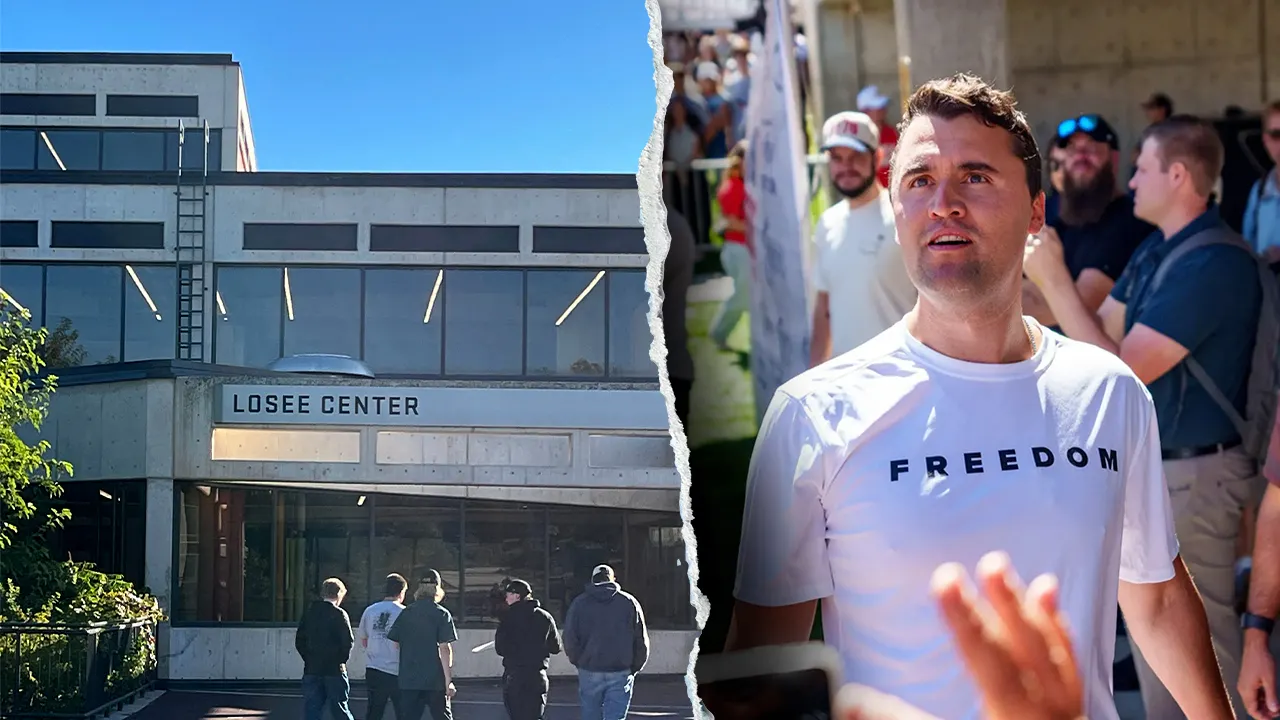
The distinction between the Hall of Flags walkway and the Sorensen Center rooftop is more than just a matter of geography. It is at the heart of the legal battle now brewing between the Kirk family and the university. The family’s notice of claim, filed last week, alleges that UVU was aware of a rooftop security risk in the Sorensen Center, which sits just north of the courtyard. But the university’s report insists the concern raised was about the Hall of Flags, which is directly above the speaking area. Robinson, according to prosecutors, did not fire from either of those locations. He climbed onto the rooftop of the Losee Center, a building to the northeast of the courtyard, and from there, he took the shot that killed Kirk. The layout is almost cruelly precise: the Hall of Flags walkway above the speaker, the Sorenson Center to the north, the Losee Center to the northeast. The security teams were focused on one area while the killer chose another. The report acknowledges that the text exchange with the phrase “we got you covered” has become a powerful symbol, but it maintains that the message was taken out of context, referring to the walkway and not the rooftop. For the Kirk family, however, the distinction is meaningless. They see a series of failures that began long before Sept. 10, a chain of decisions that left their husband and father exposed. The family’s attorney, Brett Parkinson, said the report reaffirms the facts they laid out in their own legal filing: that UVU was woefully understaffed and unprepared to manage the obvious risks of an event of this nature. “UVU hosted this event,” Parkinson said, “and in doing so, assumed responsibility for the safety of all in attendance, including Charlie.”
5. Family Outrage and the Demand for Accountability
The Kirk family’s grief is not just private; it has been channeled into a public battle for accountability and justice. In their legal notice, they have painted a picture of institutional negligence, alleging that university leaders knew about the threat and failed to act. They point to Chief Long’s text as proof that UVU had a false sense of security. They point to the lack of camera monitoring, the inconsistent policy enforcement, and the failure to conduct a documented security assessment. Taken together, they argue, these are not just administrative shortcomings—they are fatal mistakes. “The buck stopped with UVU leadership and law enforcement,” Parkinson said, drawing a line in the sand. “Justice for Charlie and his family requires true accountability for UVU’s fatal shortcomings that day.” It is a powerful message, and one that may prove difficult for the university to counter, no matter how many times the report exonerates its employees of bad faith. For the family, this is not just about a legal settlement. It is about ensuring that no other family has to bury their loved one because a public institution failed in its most basic duty: to protect those who walk through its doors. The pain in their words is palpable, a reminder that behind the policy language and legal citations is a real person whose life was cut short. And while the report’s authors may have found that no one acted with malicious intent, they also documented a series of decisions that, with the benefit of hindsight, look like a blueprint for disaster.
6. A University’s Vow to Learn, and a Nation Watching
Utah Valley University has not offered a lengthy public defense. Instead, its leaders have chosen a quieter path, one of humility and resolve. University spokesperson, speaking on behalf of President Jon Anderson, declined to comment further, but Anderson’s statement was released: “Sept. 10 will always be part of UVU’s history, but it will not define our future. Our responsibility is to care for our community, learn from the findings of this review and follow through on its recommendations. This requires humility, an honest examination of our policies and practices and a commitment to act on what we learn.” Those are the right words, but they will mean nothing unless they are followed by action. The report recommends reevaluating staffing levels and training, given the university’s size and potential for risk. It suggests that the school must build the infrastructure to monitor security cameras, to conduct proper risk assessments, and to coordinate more effectively with outside security teams. But the lessons here extend far beyond Utah Valley University. In an era of intense political polarization, campus speakers—especially those with controversial views—face threats that were unimaginable just a generation ago. The report is a stark reminder that universities cannot rely on good intentions or outdated policies. They must be proactive, not reactive. They must take every threat seriously, even when it comes from outside their community. And they must remember that the right to free speech is meaningless if those exercising it are not safe. The tragedy of Charlie Kirk’s assassination has sent shockwaves through the world of conservative activism, changing the way organizers approach hostile opponents and plan for the worst. But the most important legacy of this tragedy will not be measured in policy changes alone. It will be measured in the next speaker who walks onto a stage without fear, in the next student who feels safe, and in the next event that takes place without violence. Utah Valley University has a long road ahead. The scars from Sept. 10 will not heal quickly, and the legal challenges are far from over. But in the release of this report, there is at least an acknowledgment of what happened, a willingness to look into the abyss and begin the slow, painful work of making sure that it never happens again. For the Kirk family, however, no report can bring Charlie back. For them, the only thing that matters now is the promise of accountability, and the hope that his death will not have been in vain.