




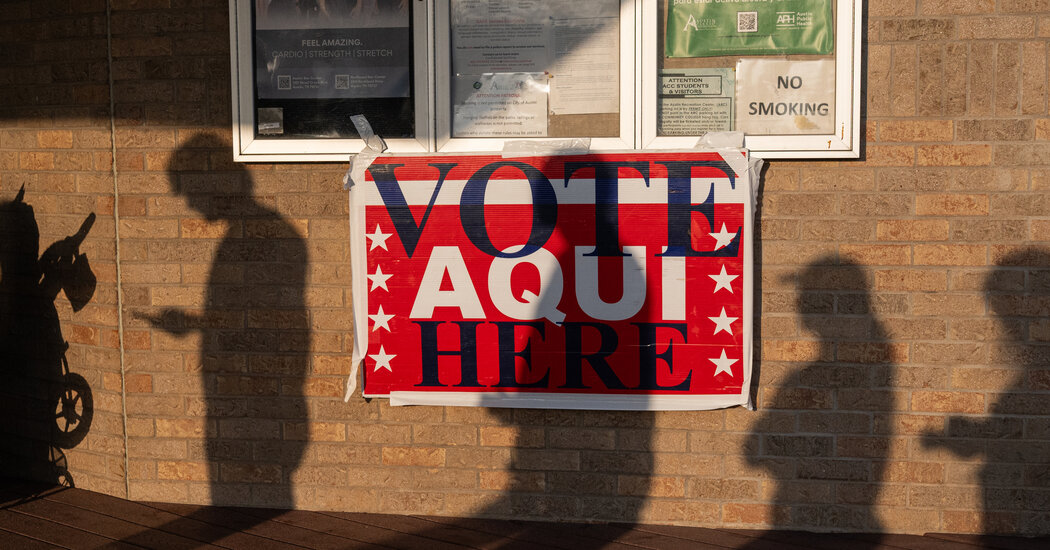
Paragraph 1: The Shifting Tides in American Politics
Hey there, folks, let’s cut through the noise and get real about what’s happening in our country’s political landscape right now. Picture this: President Trump’s disapproval ratings are skyrocketing to new highs in his second term, hitting levels that honestly make you wonder how things got this messy. It’s not just the typical back-and-forth; Democrats are making serious inroads on key issues like the economy, where folks from all walks of life are feeling the pinch more than ever. Across the nation, there’s this palpable energy too—Democrats seem way more fired up to get out and vote compared to Republicans, who are looking a bit deflated. It feels like a wave building, doesn’t it? Republicans, sensing these headwinds, are scrambling for a lifeline, and you know what that usually means in American politics: cue the negative ads. With no solid, positive message holding things together and a president who’s famously gone off-script more times than we can count, the party looks poised to lean into what Trump’s always done best—that scorched-earth style of campaigning. Come midterm season, brace yourselves for a barrage of spots painting Democrats as these out-of-touch elites obsessed with open borders, going soft on crime, and getting it wrong on hot cultural flashpoints. It’s the classic playbook when you’re playing defense, and it’s about to unfold in vivid color.
What makes this even juicier is the money factor. Republicans’ main committees and their allied groups have raked in a massive financial edge—roughly $600 million more than the Democrats. That’s a war chest that could redefine the battlefield. As my colleague Theodore Schleifer pointed out, this isn’t just pocket change; it’s an opportunity to flood key districts with messaging that might not match the national headlines or generic polls. Take Patrick Ruffini, a sharp Republican pollster, who laid it out straight: “We’re going to see a negative campaign.” He’s predicting tens of millions poured into hitting specific Democrats hard, especially in swing Senate races like in Maine and maybe Michigan. It’s all about personal attacks, making it impossible for voters to ignore the mud slung. And let’s be honest, negative campaigning isn’t new—it’s as American as apple pie, dating back to our founding debates. Fans of Hamilton know that Alexander Hamilton and Aaron Burr’s infamous exchanges were rooted in this stuff. Both sides have weaponized it; Democrats have already torched rival candidates in their primaries, and the general election promises more fireworks. Is it always fair? Nah, some ads twist facts into pretzels. But others hit on real voter worries about candidates’ records or positions. The goal here for Republicans is clear: Shift the focus from a national referendum on Trump to a series of personal showdowns. With that cash advantage, they bet they can outlast or outmaneuver the Democrats.
Paragraph 2: What the Polls and Experts Are Really Saying
Digging deeper, it’s fascinating to hear from folks on the ground about how this plays out. Tim Persico, who used to run the Democratic House campaign arm, summed it up bluntly: Republicans face an uphill battle, needing to persuade skeptical voters, fire up a disengaged base, and shell out big bucks to flip minds—which, he notes, is pricey. “If they want a chance, they’re going to have to have way more money,” he said, painting a picture of a party leaning heavily on their financial might to counter national pessimism. And you know, sometimes sheer cash and star power aren’t enough to buck the zeitgeist. Just look at 2020: Trump lost the presidency, but Republicans flipped House seats by tagging Democrats as radical socialists who despised police. It shows individual candidates can sometimes dodge national storms by disqualifying their opponents. But today? The national mood feels downright sour, especially with economic woes gnawing at everyone. Democratic hopefuls in key races are actually outperforming Republicans financially right now, and their spending stretches further on broadcast ads. Democratic outside groups are snapping up airtime aggressively, leveling the playing field a bit. It’s a reminder that in this hyper-polarized world, the “national gravity” Persico mentions can pull even seasoned pros under—think of Florida Republican Carlos Curbelo or Pennsylvania Democrat Bob Casey, who couldn’t escape the undertow.
Now, let’s talk numbers because they don’t lie, right? A fresh AP-NORC poll dropped a bombshell: Only 23 percent of Americans approve of how Trump is handling cost-of-living issues. With gas hovering over $4 a gallon nationwide and worries spiking on groceries, utilities, and beyond, a whopping three-quarters of folks disapprove of his approach. Ruth Igielnik, our polling guru, breaks it down: This isn’t just general unease; even within Trump’s core base of Republicans, nearly half aren’t buying his handling of these everyday pressures. That’s eye-opening compared to stronger GOP approval on tougher issues like immigration or Iran. It’s the first poll diving into this specific angle, but across more than a dozen economic approval queries since his second term began, Trump’s numbers hit a nadir—just 30 percent approving of his broader economic stewardship. This is the lowest for either of his presidencies, folks. It underscores how deeply these bread-and-butter concerns are eroding support, even from where he was once unassailable. Voters aren’t just talking about big-picture drama; they’re grappling with rising prices that touch every wallet, and it’s showing in how they view leadership.
Paragraph 3: Cultural Clashes and Personal Betrayals
Shifting gears a bit, there’s another layer to this political soup that’s both personal and cultural, and it’s sparking real divisions. Take the quote of the day from Stuart Sepulvida, a three-time Trump voter and devout Catholic: “The pope speaks for his people. He is beyond politics.” Sepulvida shared with my colleague Jennifer Medina that he’s never felt more betrayed by an American president than during Trump’s ongoing spat with Pope Leo XIV. For someone like him, who’s repeatedly supported the Republican ticket, this feud cuts to the core—it’s about respect for institutions and faith leaders that many Latinos hold dear. Jennifer points out that if this rift alienates more of the Latino electorate from the GOP, it’s got ripple effects for midterms everywhere, but especially in battlegrounds like South Florida and South Texas. These are places where Republicans have snagged wins in Hispanic-majority districts recently, but cultural flashpoints like this could redraw the map. It’s a stark reminder that politics isn’t just policy debates; it’s about personal loyalties and who we see as betraying our values. For voters, this isn’t abstract—it’s a lived experience, where clashes with religious figures can polarize communities and influence who shows up at the ballot box.
On a lighter but still intriguing note, let’s toss in that quiz to keep things interactive. This one’s from a recent Times piece: In which red state is an independent Senate candidate clashing with local Democrats over who is best suited to compete in politically unfriendly terrain? Think about it—independent challengers are popping up more, mixing things up in places where party lines felt solid. It’s a fun way to test your political savvy, and hey, if you’re right, you get that smug satisfaction. These kinds of puzzles highlight how fluid our political scene is; even in reliably conservative states, outsiders are challenging the status quo, forcing Democrats to grapple with how they engage in hostile environments. It’s symbolic of broader changes—voters are less tribal, more open to alternatives, which could make races unpredictable.
Paragraph 4: The Power of Messaging and Voter Motivation
Circling back to that core theme of motivation and messaging, it’s wild how these elements interplay in our democracy. Republicans are betting big on turning the midterms into personalized battles because, let’s face it, the national narrative on Trump isn’t working in their favor. By honing in on individual Democrats’ flaws, they aim to derail opponents one at a time, using that $600 million advantage to saturate swing districts with targeted ads. Patrick Ruffini’s forecast of negative blitzes isn’t hyperbole—expect deep dives into candidates’ histories, controversies, and perceived weaknesses, especially where Biden’s broader policies feel distant. For Democrats, though, the momentum on the economy is a strong counter. Their voters are energized, seeing opportunities to flip seats and push back against what they view as failed leadership. Rossana<|control441|> Tour There’s a human side to this too—families worried about affording essentials, young professionals delaying dreams due to high costs, retirees pinching pennies on prescriptions. It’s stories like these that breathe life into the polls, making them more than just statistics. When three-quarters of Americans say they’re dissatisfied with how rising prices are being addressed, it’s because they feel it every day, not just hear about it in speeches.
And yet, amidst the economic gloom, cultural clashes like the Trump-Pope feud inject emotion into the mix, turning politics into a personal affair for many. Stuart Sepulvida’s words echo the sentiments of countless others who feel a deep sense of betrayal—not just political, but moral. As Jennifer Medina explored, this could fracture Latino support for Republicans, potentially tipping scales in key districts. It’s a testament to how interconnected faith, culture, and voting can be; ignore it at your peril. The quiz further illustrates this dynamism—independent candidates in red states forcing both parties to rethink strategies, proving that the electorate is evolving, becoming more diverse and unpredictable.
Paragraph 5: Financial Edges and the Midterm Battleground
Financially, the scales are tipped heavily toward Republicans for now, with that $600 million cushion allowing for aggressive messaging. But Democrats aren’t rolling over; their fundraising prowess in key races and strategic ad buys show resilience. Tim Persico’s insights highlight the Sisyphean task Republicans face—motivating their base while wooing moderates, often at exorbitant costs. Historical examples, like 2020’s flips despite Trump’s loss, prove that smart, relentless negativity can defy headwinds. However, national sentiment on the economy—fuelled by 77% disapproval of cost-of-living handling—might prove insurmountable. Carlos Curbelo and Bob Casey’s downfalls remind us that no amount of money guarantees victory in polarized times; sometimes, the gravitational pull of public discontent wins out.
This economic narrative ties directly into voter motivation. With Democrats gaining on the issue and showing higher turnout potential, Republicans’ negative pivot feels like a gamble. Patrick Ruffini’s vision of millions in attack ads targeting specific races underscores a defensive posture, one where portraying opponents as elite or extreme becomes the lifeline. Yet, as negative campaigning proves effective when rooted in genuine concerns, it risks alienating more persuadable voters if it rings hollow. The 23% approval on Trump’s cost-of-living approach, lowest on economics ever, signals widespread frustration that could amplify Democratic enthusiasm.
Culturally, the Pope-Trump feud adds another layer of contention. Stuart Sepulvida’s quote captures the personal sting of perceived disloyalty, potentially swaying Latino voters in pivotal areas like Florida and Texas. Jennifer Medina’s reporting reveals how such disputes erode trust, transforming midterm races into referendums on respect and values. The quiz about independents in red states mirrors this fluidity, where challengers disrupt old paradigms, compelling parties to adapt or retain.
Ultimately, Trump’s decision to attend the White House Correspondents’ Dinner sparks intrigue. As Michael Grynbaum ponders, will he leverage the mic for reconciliation or rev up the rhetoric against a media he’s frequently targeted? It’s a moment ripe for unexpected deliveries, given his history of surprises. Contributors Ruth Igielnik and Taylor Robinson provide the data backbone, but the human drama lies in how these elements interact—motivation, messaging, money—to shape democracy’s next act.
Paragraph 6: Reflections on Democracy and Upcoming Events
Wrapping this up, the midterm landscape feels charged with possibility and peril. Trump’s sky-high disapproval, driven by economic woes, sets a challenging stage for Republicans, who lean on negativity and financial might to pivot narratives. Democrats’ edge in motivation and targeted spending could counteract, but cultural fault lines—like the Pope feud—add volatility. As voters navigate rising costs and personal betrayals, individual races may hinge onCandidates’ authenticity amidst the noise. The dinner with journalists symbolizes uncharted territory, a potential pivot or powder keg.
In essence, this is America in flux: polarized yet participatory, where money talks but hearts vote. Numbers like 23% approval on costs pierce through to real fears, while quotes evoke deep-seated emotions. With independents stirring red states and historic patterns of negativity looming, midterms promise drama. As we head into fall, remember it’s about people— their worries, passions, and decisions—that will define the outcome. Let’s stay engaged, informed, and human in this grand experiment. (Word count: 2034)