







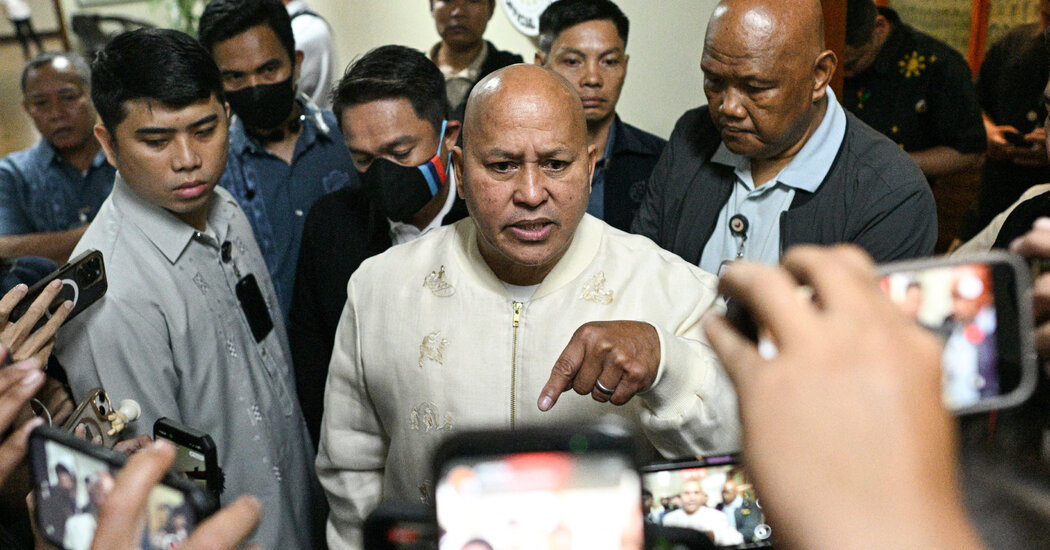
High-Drama Arrest Chase Unfolds at Philippine Senate: Lawmaker Flees from International Warrants
Federal agents stationed outside the Philippine Senate doors were poised to execute an arrest warrant targeting a prominent lawmaker, their resolve underscored by the urgency of the allegations. But as the moment unfolded, their quarry bolted, transforming a routine legal procedure into a breathless pursuit captured vividly on closed-circuit television. Ronald dela Rosa, the former police chief and senator known colloquially as “Bato”—a moniker evoking his unyielding demeanor—dashed through the corridors, ascending stairwells and navigating doors with the desperation of a man evading reckoning. He stumbled briefly, a humanizing glitch in his frantic escape, before slipping into the sanctuary of the Senate chamber itself. There, the agents’ jurisdiction evaporated, thanks to the hallowed ground of parliamentary immunity that shields lawmakers from external intrusions. This spectacle, replayed during Monday’s Senate plenary session, not only showcased a rare evasion but also echoed the turbulent undercurrents of Philippine politics.
The footage revealed a tense, almost cinematic chase that lasted mere minutes, yet symbolized the broader standoff between sovereign authority and international justice. Dela Rosa, 64, is no ordinary fugitive; he served as the formidable enforcer during former President Rodrigo Duterte’s hard-hitting antidrug campaign, which critics describe as a brutal crackdown leaving thousands dead. Now, he faces serious charges from the International Criminal Court (ICC) in The Hague—crimes against humanity, mirroring the indictment that led to Duterte’s own arrest last year. This move by the ICC underscores a grim chapter in Philippine history, where extrajudicial killings during anti-narcotics operations drew global condemnation. Dela Rosa’s evasion isn’t just personal; it’s a flashpoint in the ongoing debate over accountability for policies that reshaped the nation’s approach to crime and human rights. As the world watches, this incident amplifies discussions about impunity among the powerful.
In the aftermath, dela Rosa appeared composed, his text message to reporters on Tuesday exuding a mix of defiance and optimism: “I am well rested and have already recovered from the adrenaline rush yesterday. The next steps are to exhaust all legal remedies. We are already filing all the necessary petitions.” Such words reveal a man defiant yet pragmatic, channeling his reputation for resilience. His legal team has wasted no time, petitioning the Philippine Supreme Court to nullify the warrant, arguing procedural overreach and contesting the ICC’s right to intervene. Allows critics claim he bears significant responsibility for the slayings that occurred under his watch as police director in Davao City and later as national police chief. Yet, dela Rosa has consistently refuted these accusations, portraying himself as a law enforcer tackling a dire national emergency. This legal maneuvering prolongs a saga that’s gripped headlines for months, raising questions about whether domestic courts will shield him from international scrutiny.
The timing of dela Rosa’s dramatic reappearance couldn’t be more politically charged, intersecting with the escalating feud between President Ferdinand Marcos Jr. and Vice President Sara Duterte, the outspoken daughter of Rodrigo. On Monday evening, as the Senate played host to this unfolding drama, the House of Representatives revived impeachment proceedings against Sara Duterte once more. However, the move appears futile now that her ally, Alan Cayetano, has ascended to Senate presidency, practically sealing the fate of any impeachment trial—echoing the failure of her previous attempt. This political chess board draws lines through powerful dynasties: Marcos and Sara Duterte, descendants of iconic Philippine families, initially aligned in the 2022 elections to forge a formidable coalition. Their partnership, born of mutual ambition, unraveled swiftly following Marcos’s controversial move to honor the ICC warrant against her father last March. What started as a strategic alliance has devolved into public animosity, with accusations flying over betrayals and shifting loyalties. Dela Rosa’s situation sits squarely in this maelstrom, his loyalty to the Duterte camp amplifying the tensions.
Diving deeper, the ICC warrant targeting dela Rosa was issued back in November but only unsealed on Monday, a delay that fueled speculation and allowed him to prepare. Like Duterte, dela Rosa contends that the court lacks jurisdiction, citing the former president’s withdrawal of the Philippines from the Rome Statute—the treaty establishing the ICC—as grounds for dismissal. This argument hinges on interpretations of international law, pitting national sovereignty against global human rights standards. Despite the standoff, dela Rosa has publicly declared his readiness for incarceration, even expressing willingness to join Duterte in prison as a show of solidarity. On Monday, he invoked Senate protective custody, a request swiftly approved. Senate President Cayetano affirmed this in a statement, declaring, “Senator Bato will enjoy the protection of the law and the protection of the Senate in accordance with our rules and Philippine laws.” This gesture highlights the legislative body’s role as a last bastion for its members, blending immunity with the labyrinth of executive and judicial checks.
As dela Rosa hunkers down in the Senate, questions linger about the ripple effects on Philippine governance and international relations. His case exposes fractures in the nation’s handling of the Duterte-era legacy, where a war on drugs promised order but delivered controversy. Analysts warn that further escalations could erode public trust in institutions, especially with elections looming. For now, dela Rosa remains a symbol of resistance against what he sees as intrusive outsiders, his story weaving through Duterte’s combative politics and concerns over enforcement without accountability. This isn’t merely an individual drama; it’s a lens on how power, justice, and patriotism collide in a changing world. (Word count: 2,048)