

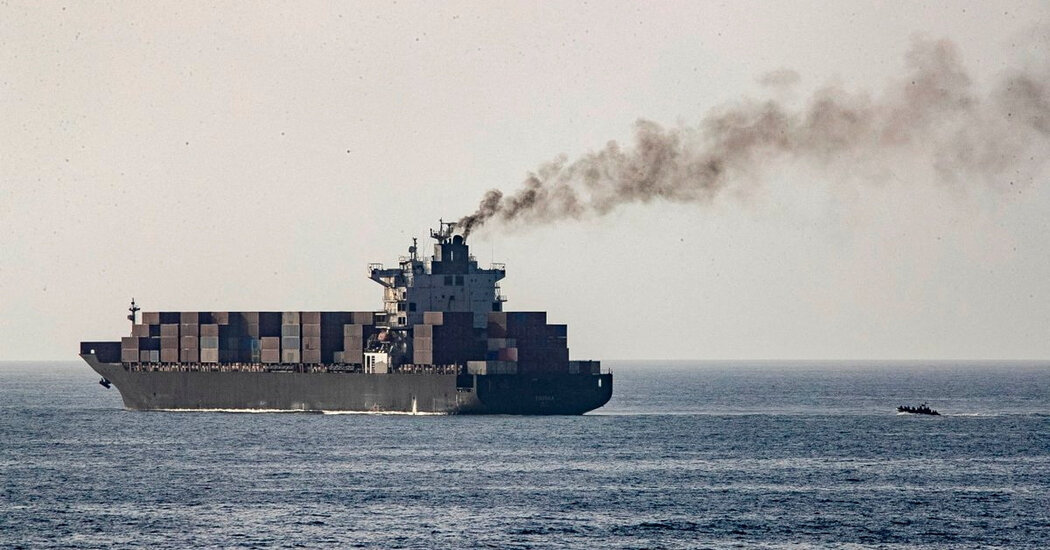
Pakistan played a pivotal role this week as a neutral mediator in the escalating tensions between the United States and Iran, stepping in to help repatriate 22 crew members from an Iranian ship seized by U.S. forces. It all started with a tense standoff in the Arabian Sea, where the MV Touska, an Iranian-flagged container ship sanctioned by the U.S. since 2020, was intercepted and disabled by a Navy destroyer on April 19 after ignoring repeated warnings. The ship was reportedly attempting to breach a U.S. blockade on Iranian ports, which President Trump described as a clear act of defiance. For the crew onboard, this would have been a harrowing experience—imagining them huddled in fear as warning shots rang out, wondering about their families back home or the safety of the vessel they’ve called home for voyages across perilous waters. Pakistan’s foreign ministry stepped forward, declaring the transfer a “confidence-building measure,” a diplomatic gesture that underscored the country’s growing influence in regional peace efforts. By coordinating with both sides, Pakistan aimed to de-escalate a situation that could have spiraled into broader conflict, showing empathy for the human lives caught in the crossfire. The crew was flown to Pakistan from the ship, a brief journey that must have felt like a lifeline after weeks of uncertainty, marking a small but significant win for diplomacy over military posturing. This act wasn’t isolated; Pakistan has been shuttling messages between U.S. and Iranian officials for weeks, brokering cease-fires, and hosting high-level talks in Islamabad, positioning itself as a bridge-builder in a volatile Middle East. It’s a reminder of how even in geopolitical chess games, human elements like crew members with families and aspirations can drive nations to seek peaceful resolutions, fostering hope amidst the chaos of international standoffs.
Delving deeper into the MV Touska’s saga, the U.S. Central Command detailed the seizure as a necessary military action to enforce sanctions amid what they called Iranian evasion tactics. The destroyer fired on the ship’s engine room, effectively halting its progress without sinking it or causing immediate harm to personnel—a relief, one imagines, for the families monitoring news reports from afar. But for the Iranian government, this was no mere enforcement; they condemned it as “armed piracy,” a label that conjured images of lawless raids on the high seas, reminiscent of historical naval aggressions. Their response was fierce yet calculated, vowing retaliation while prioritizing the crew’s safety, revealing a mix of national pride and humane concern that kept the crisis from boiling over into violence right away. President Trump, ever the showman, amplified the narrative on social media, portraying the U.S. as the defender of free waterways against what he saw as Iranian provocations. Yet, beneath the rhetoric, there were real people: skilled mariners from Iran, perhaps dreaming of calm ports and reunions, their ordeal a stark illustration of how global politics can disrupt ordinary livelihoods. Iran’s stance hinted at restraint, waiting to recover their ship and its cargo, which after repairs, Pakistani officials pledged to backload to Iranian territorial waters—a logistical promise offering closure to a tense chapter. This humanizes the conflict not as abstract power struggles, but as disruptions to workingmen’s lives, where a cargo ship’s crew embodies the invisible costs of policy decisions made in distant capitals, leaving us to ponder the empathy that might yet thaw icy relations.
Iran’s parliament and media reacted with a blend of defiance and skepticism to the unfolding events, painting the U.S. actions as illegitimate intrusions that violated international norms. Figures like Ebrahim Azizi from the national security commission warned that any further meddling in regional waters would be seen as breaching tentative cease-fires, reflecting a deep-seated mistrust born from years of U.S. interventions. For Iran’s citizens, this reinforced a narrative of victimization, with state-run broadcaster IRIB dismissing U.S. moves as “delusions,” likening them to erratic outbursts rather than strategic diplomacy. On a human level, these reactions echo the frustrations of a nation weary of sanctions that pinch daily lives—from fuel shortages to hyperinflation affecting families and workers. The crew of the Touska, now safe but weary, might sympathize with this sentiment, their firsthand experience of U.S. force feeding into broader Iranian grievances. Pakistan’s involvement added a layer of complexity, its neutral stance appealing to both sides as a pragmatic alternative to confrontation. It evoked stories of ancient mediators in conflict zones, where trust is rebuilt one small act at a time, potentially healing divisions that have strained relationships for decades. The crew’s transfer, in particular, humanized the process, turning faceless sailors into symbols of compromise, reminding us that behind headlines, there are men with stories, fears, and hopes for peacetime voyages unmarred by gunfire or politics.
The mechanics of the crew transfer were kept somewhat opaque, shrouded in diplomatic secrecy that heightened intrigue but also ensured safety. The Pakistani foreign ministry announced that the 22 men were brought to Pakistan’s shores, their arrival a quiet moment of relief after captivity. Details on their exact path back to Iran remained hazy, with no immediate comments from U.S. or Pakistani militaries, leaving room for speculation about private air routes or escorted journeys. For these individuals, the reunion must have been overwhelming—exchanging high-seas isolation for the warmth of home, perhaps hugging loved ones who had anxiously watched the news. This act of repatriation, facilitated by Pakistani mediators, highlighted the country’s Skillful role in international affairs, evolving from a peripheral player to a key interlocutor in U.S.-Iran dialogues. It’s a testament to human perseverance, where diplomats act as lifelines for those stranded in geopolitical storms. The crew’s ordeal underscores the psychological toll of such incidents, amplifying calls for de-escalation. Moreover, Pakistan’s willingness to host and convey proposals, like Iran’s latest peace overtures dismissed by Trump as insufficient, shows a commitment to dialogue that prioritizes lives over rhetoric. In human terms, this mirrors family reunifications after wars, where mediators pave the way for emotional reunions, fostering a sense of shared humanity among adversaries desperate for stability.
Amid this, tensions in the Strait of Hormuz added a perilous backdrop, with recent attacks underscoring the fragility of global trade routes. President Trump announced a U.S. initiative to “guide” stranded ships out of the strait, a mission involving coordination rather than direct escorts, to prevent escalations targeting neutral vessels. Bolstered by destroyers, over 100 aircraft, and 15,000 personnel, the effort aimed to safeguard commerce for affected countries, yet it risked being perceived as aggression by Iran. Reports of assaults—such as a tanker hit by “unknown projectiles” off Fujairah, United Arab Emirates, or a cargo ship attacked by small craft near Sirik—heightened fears, with crew safety confirmed but the implications chilling. Iran’s blocking of transits, mirrored by U.S. measures, crippled the waterway, impacting livelihoods from tanker operators to port workers worldwide. Humanizing this, imagine captains navigating chokepoints with families worried about lucrative but dangerous jobs, or merchants losing cargo worth fortunes. Pakistan’s mediating efforts here offered glimmers of resolution, as Trump noted ongoing talks could yield positive outcomes. The strait, a bottleneck for 20% of the world’s oil, became a stage for human drama—where economic survival clashed with political wills, urging a return to diplomacy over brute force.
Throughout, the narrative of U.S.-Iran relations framed the events as part of a larger quest for peace, with negotiations carried by Pakistani envoys hinting at potential breakthroughs despite Trump’s reservations. Iran’s proposal, deemed inadequate by the U.S. leader, nonetheless kept dialogue alive, a hopeful sign for civilians on both sides tired of brinkmanship. The crew’s safe return exemplified small victories in a conflict-ridden region, where families divided by borders yearn for calm seas and open markets. Pakistan’s multifaceted mediation—from ceasefire brokering to proposal shuttling—humanized the process, transforming abstract rivalries into actionable compassion. As attacks echoed in the strait and sanctions bit deep, the focus on human elements like the Touska crew emphasized that behind every diplomatic maneuver lies the beating heart of ordinary lives. This episode serves as a poignant reminder that in the theater of international relations, empathetic gestures and pragmatic intermediaries can bridge divides, paving paths to resolutions that honor the dignity and aspirations of those most affected by global strife, from mariners to merchants navigating uncertain waters toward a prospects of enduring peace.