



Redefining Dignity: Pakistan’s Bold Legislative Step toward Menstrual Equity
In a political landscape too often dominated by fiscal austerity and cultural stagnation, Pakistan is poised to make a historic leap forward for women’s reproductive rights by proposing the complete abolition of the 18 percent sales tax on menstrual hygiene products starting this July. Announced by Finance Minister Muhammad Aurangzeb, this momentous policy shift represents a rare consensus in Islamabad’s legislative halls, where the high-ranking official explicitly characterized sanitary pads and tampons as “indispensable for women’s health, dignity, and full participation in social activities.” For decades, pioneering advocacy networks and human rights groups have argued that placing a luxury-style tax on basic biological necessities is a form of institutionalized gender discrimination that systematically penalizes women for their biology. By framing menstrual health rights not as a niche welfare concern but as a matter of fundamental dignity, the Pakistani government is setting a critical legal and developmental precedent, signaling that female participation in public life, education, and the workforce is an indispensable pillar of national progress.
The Harsh Calculations of Survival: Quantifying Period Poverty in Pakistan
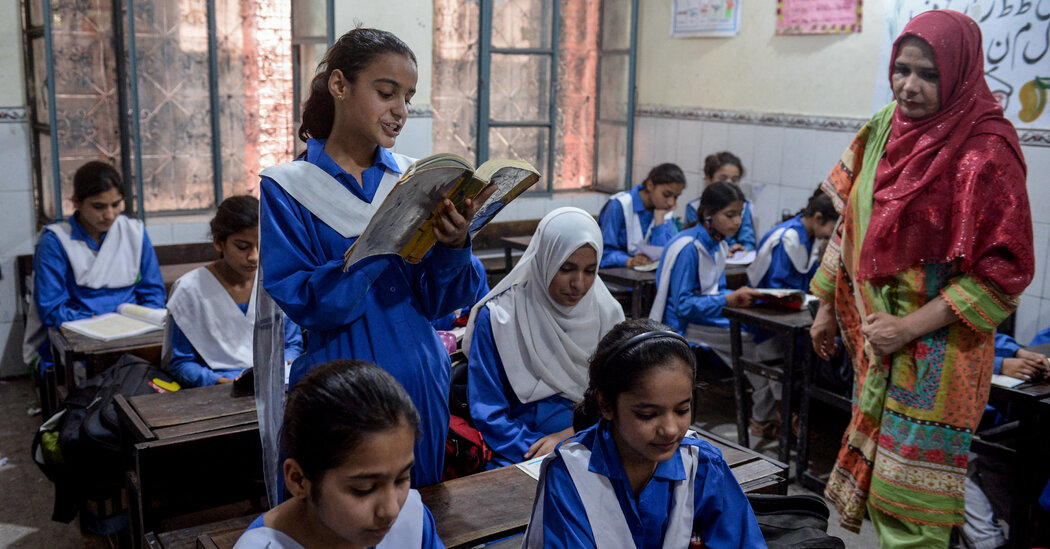
To appreciate the gravity of this impending policy shift, one must confront the stark, painful empirical realities that define daily life for tens of millions of Pakistani girls and women. According to troubling data compiled by UNICEF, only a meager 12 percent of menstruating girls and women in Pakistan have access to commercially manufactured sanitary pads—standing in stark contrast to neighboring India, where despite shared cultural hurdles, usage has risen to roughly 36 percent. For the remaining vast majority of Pakistan’s female population, the inability to afford basic menstrual hygiene products forces them to rely on deeply unsanitary alternatives, such as coarse, well-worn rags, ash, old newspapers, or leaves, which frequently lead to severe reproductive tract infections and chronic physical complications. This material deprivation is not only a public health crisis but also a major driver of educational and economic disenfranchisement; estimates reveal that one out of every five Pakistani girls regularly misses school during her menstrual cycle due to the absence of private toilets and affordable products. In a country where the average monthly salary hovers around $140, families are routinely forced into agonizing financial trade-offs, particularly in underdeveloped provinces like Balochistan, where mothers like Rabia struggle to cover a monthly price of nearly $40—over a quarter of her household’s total income—just to purchase menstrual supplies for her three daughters, highlighting how period poverty operates as a silent, devastating tax on female ambition.
The Legal Trailblazer: How a Single Petition Sparked a National Movement
The catalyst for this sudden legislative breakthrough can be traced directly to the courage of Mahnoor Omer, a tenacious 25-year-old lawyer and human rights activist whose landmark judicial battle successfully forced the mainstream political establishment to confront its history of systemic neglect. Disturbed by the compounding economic pressures facing women during Pakistan’s recent macroeconomic crisis, Omer took the unprecedented step of filing a comprehensive constitutional petition in a Pakistani high court, arguing with meticulous legal precision that sanitary pads and tampons should be legally reclassified as essential goods, akin to basic food items and lifesaving pharmaceuticals. Her legal challenge argued that forcing citizens to pay a premium tax on basic physiological functions violates the fundamental constitutional rights to life, dignity, and equality before the law, sparking a vibrant nationwide dialogue that quickly captured global attention and earned her a coveted spot on Time magazine’s prestigious “Women of the Year” list. While the high court’s final ruling on her petition is eagerly anticipated in the final quarter of this year, the pressure generated by her public-interest litigation has already yielded historic results, proving that strategic legal advocacy can dismantle decades of political inertia. By using the courtroom as a stage to amplify the voices of marginalized women, Omer has not only forced a change in the tax code but has also provided a masterclass in how young, determined citizens can write new chapters of social progress in deeply traditional societies.
The Economic Maze: Why Tax Relief is Only the First Step on a Long Road
While the impending elimination of the 18 percent sales tax is undoubtedly a monumental victory for reproductive rights, seasoned policy analysts and grassroots activists caution that tax eradication alone is not a silver bullet for a structural crisis of this magnitude. In a candid assessment, law advocate Mahnoor Omer pointed out that even with the removal of this specific sales tax, imported raw materials and manufacturing levies continue to inflate the retail prices of menstrual pads and tampons, with cumulative hidden duties still accounting for an estimated 40 percent of the final consumer price. This sentiment is echoed by Hira Amjad, the visionary founder and executive director of the DASTAK Foundation, who notes that while urban, middle-class consumers will experience immediate relief, the poorest segments of society in remote provinces remain completely decoupled from the formal retail economy. For these highly vulnerable communities, the stark choice is not between taxed and untaxed sanitary products, but rather between putting a basic meal on the table or purchasing any hygiene products at all in an era of hyperinflation and daily survival struggles. To translate this legislative win into a meaningful reality for rural populations, the government must couple tax relief with targeted domestic manufacturing subsidies, free distribution schemes in public schools, and the direct integration of menstrual products into the state’s social safety net programs.
Breaking the Shroud of Shame: Confronting Deeply Entrenched Societal Taboos
Beyond the formidable economic barriers lies a more insidious, pervasive obstacle to menstrual equity in Pakistan: the deeply entrenched cultural taboos that shroud a completely natural biological process in profound shame, secrecy, and biological ignorance. Young women across Pakistan, from metropolitan universities to conservative provincial towns, describe a daily reality of social ostracism and embarrassment, such as university student Abeera Mujeeb from Quetta, who recalls being publicly reprimanded by an educator simply for failing to adequately conceal a sanitary pad she was carrying. Similarly, in the western city of Mastung, computer science student Areeba Khan describes the agonizing social anxiety of waiting for hours for local markets to empty before feeling secure enough to ask a male shopkeeper for sanitary items, which are then routinely wrapped in opaque plastic or black newspapers like illicit contraband. The psychological toll of this forced secrecy is compounded by a patriarchal household structure where decision-making power and the control of financial resources rest almost exclusively in the hands of male family members who are often entirely illiterate regarding women’s physical health needs. Organizations like the DASTAK Foundation are working tirelessly to break this silence through community-based educational workshops, reporting a slow but incredibly encouraging shift where younger men and teenage boys are beginning to ask how they can support their sisters, wives, and daughters, proving that challenging patriarchal structures is key to liberating women from the shackles of inherited shame.
A Stepping Stone to a Broader Revolution in Women’s Rights
Looking forward, the official recognition of menstrual items as “indispensable” by Finance Minister Muhammad Aurangzeb provides a powerful new rhetorical and legal weapon for activists determined to revolutionize women’s public and private lives in Pakistan. By securing an official, high-level governmental declaration that menstrual health is directly linked to civil dignity and social participation, human rights lawyers and grassroots organizations plan to leverage this momentum to lobby for broader structural reforms, including mandatory comprehensive sex education in public school curricula and legally binding standards for clean, secure, and private sanitation facilities in all educational institutions and offices. This ongoing transformation proves that progress is never linear or passive, but rather the result of continuous, brave agitation that links economic policy to fundamental human rights. If Pakistan can successfully bridge the gap between progressive federal policy and conservative rural reality, it will not only lift millions of girls and women out of the shadows of period poverty but will also offer a brilliant, inspiring blueprint for gender justice and reproductive health reform across the developing world. Through the combined power of legal advocacy, community education, and sensible economic policy, a rising generation of Pakistani women is writing a new narrative where their biology is no longer their destiny, but a celebrated source of strength and dignity.