

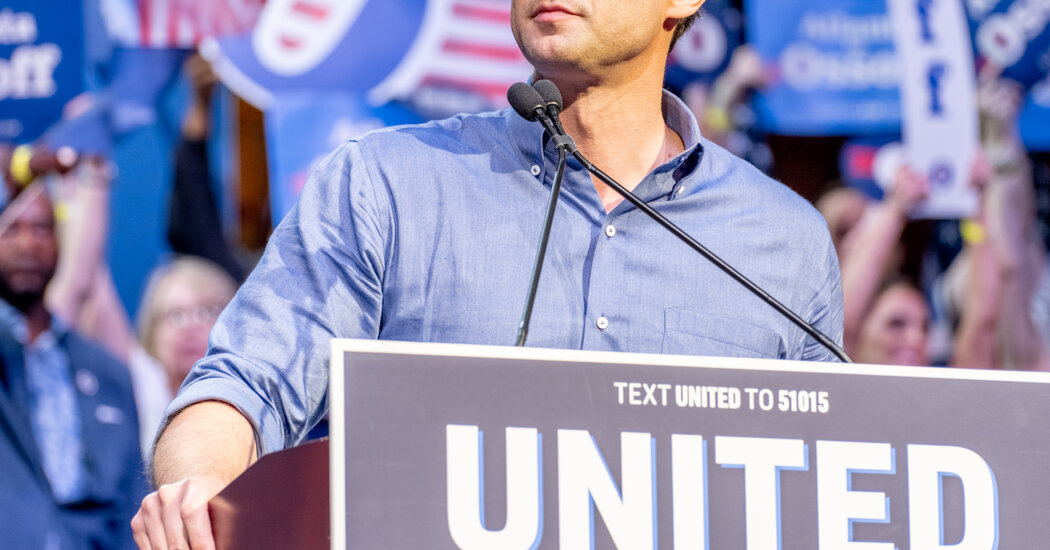
Every rising star in the halls of Congress eventually encounters the intoxicating whisper network of presidential speculation, but for Senator Jon Ossoff, the constant chatter surrounding a potential 2028 White House bid is not a badge of honor—it is a distinct, frustrating distraction. To hear him describe it, the endless media theorizing about his national future is nothing short of a “curse” designed to pull vital energy and focus away from the high-stakes, ground-level political battles he actually cares about. During a candid conversation with MS NOW’s Jen Psaki, Ossoff refused to play the traditional game of coy, smiling deflection, choosing instead to sound an urgent, sobering alarm about the fragile state of American democracy itself. He argued with absolute conviction that if his party fails to restore critical legislative checks and balances during the upcoming midterm elections, the country might not even have a recognizable, free, or fair presidential election in 2028 for anyone to run in. For Ossoff, political hubris is a luxury the country simply cannot afford, and he implores both his colleagues and the general public to keep their eyes firmly on the immediate, existential task at hand rather than daydreaming about future ballots and inaugural stages.
This intense, singular focus on the immediate horizon is particularly crucial given the volatile, high-stakes political landscape of his home state of Georgia, a battleground where political careers are forged and destroyed on razor-thin margins. Not long ago, conventional political wisdom pegged the youthful Democrat as one of the cycle’s most vulnerable incumbents, a prime target for a Republican party eager to reclaim its historic dominance in the Deep South. Yet, as the campaign has unfolded, Ossoff has defied expectations, consistently leading in the polls and establishing a remarkably resilient, steady position. Some of this strength is undoubtedly due to the brutal internal warfare consuming his opposition, where a vicious and deeply polarizing Republican primary has left two candidates locked in a bruising runoff, leaving their own base feeling fractured, exhausted, and demoralized. According to political analyst Sarah Longwell, Republican voters in Georgians focus groups are openly despairing, expressing a profound sense of resignation about their chances of unseating him. Yet, despite these highly favorable winds, Ossoff refuses to fall into the paralyzing trap of complacency; he knows firsthand how quickly Georgia’s political winds can shift, and treating his current lead as a guarantee of survival would be a catastrophic act of political malpractice.
Skeptics of modern politics will understandably argue that disavowing presidential ambitions is the oldest, most tightly scripted trick in the playbook, a ritualized exercise in false modesty that voters have learned to discount. After all, a young, charismatic Senator named Barack Obama famously brushed off any interest in a presidential bid while campaigning for his Senate seat in 2004, only to launch one of the most historic presidential campaigns in American history just a few years later. However, those who observe Ossoff’s daily rhythms, legislative priorities, and personal demeanor suggest that his reluctance is entirely genuine, rooted in a quiet personality type that is fundamentally different from the typical ego-driven politician. By all accounts, Ossoff is an introvert operating in a relentlessly extroverted, loudest-wins profession. Since his historic runoff victory in late 2020, instead of feeding the national media machine or positioning himself as a loud progressive firebrand, he has intentionally retreated from the national spotlight. He has dedicated his energy to the unglamorous, painstaking work of building a robust constituent services operation across Georgia—choosing to quietly solve local bureaucratic nightmares for ordinary Georgians rather than building a national fan club. While he eagerly engages with local Georgia broadcasters to speak directly to his home state, his advisors often have to push him to make appearances on national cable news programs.
This preference for quiet, tangible substance over flashy public performance is particularly striking when contrasted with his age and generation. When he took his oath of office at just thirty-three years old, Ossoff became the youngest individual elected to the United States Senate since Joe Biden’s landmark election in 1972. In an era where young politicians are widely expected to be digitial-native internet personalities who live, breathe, and campaign on social media, Ossoff stands as a fascinating and deeply counter-cultural anomaly: he is remarkably offline. While his generational peers spend their days crafting viral online moments, trends, and highly produced vertical videos, Ossoff’s TikTok account reads more like a dry, professional database of a diligent public servant, populated almost entirely by official speeches and unadorned clips of him methodically questioning corporate executives or government witnesses in quiet Senate committee rooms. On the rare occasions when he agrees to sit down for a podcast interview, he stubbornly refuses to engage in the personal storytelling or self-promotion that fuels the modern media landscape, treating his platform as a tool to discuss policy rather than a stage to perform his personality.
This deliberate reserve runs completely counter to the modern political playbook, which insists that surviving the current information ecosystem requires politicians to act like full-time digital influencers. Today’s successful candidates are expected to dominate our screens by mastering quick-cut vertical videos, oversharing their personal lives, and engaging in long-form, casual banter on popular podcasts to seem “relatable.” Ossoff, however, maintains an almost old-fashioned sense of personal boundaries and dignity that feels out of step with this influencer age. A telling example of this occurred when political commentator Tim Miller of The Bulwark tried to poke through his polite armor, attempting to get the senator to open up about his physical routine—noticing that Ossoff had significantly bulked up since his skinny, rainmaker-style 2017 congressional run. Instead of lean-in charm or a relatable workout anecdote, Ossoff gave Miller almost nothing, deflecting the lighthearted personal question with a polite but ironclad boundary. In a world that demands total transparency and constant vulnerability, Ossoff’s discipline is a rare quiet space.
Ultimately, this quiet, disciplined reserve may be the very thing that explains both his political survival and his refusal to look past the immediate horizon. Ossoff’s brand is built on a rare kind of modern seriousness—a belief that the job of a senator is to do the work, protect the institution, and respect the voters enough to focus on their real, day-to-day problems rather than his own potential career path. By centering his reelection campaign on local results and framing the upcoming midterms as a vital shield to protect the integrity of the American democratic process, he is trying to show that politics does not have to be a permanent reality show. Whether his refusal to run for the presidency in 2028 is a permanent stance or a temporary pause, Jon Ossoff is currently demonstrating a rare, humanizing truth: sometimes the most effective way to lead is to ignore the national noise, keep your head down, and focus entirely on the ground beneath your feet.