



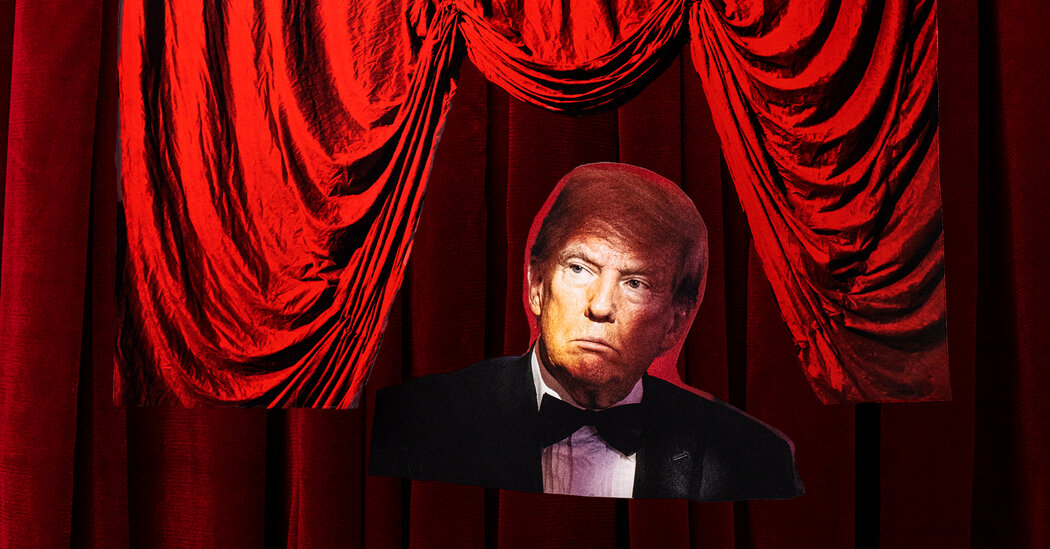
Historically, the primary domestic obligation of an American commander in chief during times of foreign conflict has been to foster a deep sense of national unity. When tens of thousands of American troops are deployed to volatile regions like the Middle East, their morale and focus are heavily dependent on the stability and solidarity of the nation they left behind. A country divided against itself not only demoralizes its own service members but also signals to foreign adversaries that they can simply wait out a fractured superpower. Yet, rather than building a broad coalition or seeking common ground with political rivals to support those in uniform, the presidency has increasingly chosen a path of aggressive internal division. Instead of acting as a unifying leader, the president has adopted a deeply transactional approach to governance, treating the office more like a vehicle for personal gain and political retribution. By prioritizing domestic power struggles, financial schemes, and private interests over collective national stability, the administration has swapped the noble duties of a commander in chief for the self-serving actions of a leader focused on dividing the country for personal benefit, signaling to the world that domestic cohesion is no longer an American priority.
This shift toward utilizing the presidency for personal and partisan benefit is starkly illustrated by the recent attempt to establish a massive, $1.776 billion taxpayer-funded financial reserve under the guise of patriotic justice. This proposed “slush fund” was ostensibly designed to compensate supporters who claimed to be victims of government overreach and weaponized lawfare. In practice, however, critics and legal analysts recognized it as an unprecedented effort to financially reward political loyalists, including individuals who took part in the violent attack on the United States Capitol on January 6, 2021. The proposal was so extreme that it drew sharp condemnation from within the president’s own party, with legislative leaders like Mitch McConnell calling the plan morally indefensible and completely counterproductive to the rule of law. Although intense public pushback and judicial hurdles eventually forced the administration’s legal team to withdraw the active proposal, the attempt itself remains a staggering example of institutional overreach. Furthermore, quiet efforts to secure permanent tax immunity for the president, his family, and his business entities through related legal agreements underscore a broader strategy of using public office as both a financial shield and a weapon of political patronage, placing personal protection above constitutional accountability.
In tandem with these domestic financial maneuvers, the presidency has broken with long-standing ethical boundaries regarding personal wealth accumulation, earning the president the reputation of being a high-volume “trader in chief.” For decades, modern presidents have systematically avoided active stock trading while in office to prevent even the appearance of a conflict of interest, often placing their assets in blind trusts. In stark contrast, this administration has shattered those norms by executing thousands of stock trades in companies whose financial fortunes are directly impacted by executive decisions, including major defense contractors affected by rising military tensions abroad. Ethical experts have pointed out that while a president may technically bypass certain conflict-of-interest laws that govern lower-level officials, doing so represents a fundamental breach of public trust that would be considered highly illegal for any other civil servant. This focus on personal stock portfolios and short-term financial gains is happening at the exact moment the administration has choked off vital military and economic assistance to democratic allies like Ukraine, who are fighting a desperate defensive war against Russian aggression. This dynamic reflects a deeply cynical worldview wherein international relations are stripped of moral or strategic value and reduced to mere tools for short-term profit.
Crucially, this transactional approach to global affairs has severely damaged America’s relationship with its most historically dependable international partners, transforming the nation from a reliable ally into an unpredictable global wildcard. For generations, the Western alliance was anchored by a shared commitment to mutual defense, democratic institutional stability, and cooperative economic growth. Today, however, traditional partners are routinely treated as targets for economic extortion, political bullying, and aggressive trade tariffs. From suggesting that Canada could be absorbed as another state to publicly demanding the acquisition of Greenland from Denmark, the administration’s foreign policy resembles a hostile corporate takeover rather than collaborative diplomacy. By instigating major geopolitical crises without consulting alliance partners and subsequently demanding their assistance to clean up the resulting diplomatic fallout, the leadership has eroded decades of carefully cultivated goodwill. This “Trump Doctrine” of punishing opponents with aggressive tariffs while demanding extortionate concessions from dependent allies—such as requiring emerging democracies to surrender valuable mineral resources in exchange for defense assistance—has signaled to the world that American support is highly volatile and carries a steep, unpredictable price.
In response to this radical instability, America’s traditional allies are undergoing an unprecedented and historical strategic shift in how they view their security needs. For the first time since the post-World War II era, democratic nations in Europe and elsewhere are realizing that they must dedicate as much energy to safeguarding their interests against an erratic United States as they do against hostile foreign adversaries like Russia. Geopolitical experts suggest that the most vulnerable position a country can inhabit under this administration is that of an integrated ally, as economic, energy, and military dependencies are routinely weaponized by Washington to extract narrow concessions. To protect their sovereignty, European allies have begun taking collective defense actions to deter potential American overreach, such as dispatching joint military contingents to stabilize regions threatened by unilateral American ambitions. The prevailing international strategy has rapidly transitioned from close alignment to “deter and diversify,” with foreign leaders concluding that relying on American technologies, financial networks, and security guarantees carries an unsustainable level of risk, leading them to build independent security frameworks to insulate themselves from Washington.
This erosion of international trust has profoundly impacted the global community, creating a deep sense of disorientation among foreign business leaders, policymakers, and ordinary citizens. Observers traveling abroad report a stunning loss of faith in American institutions, which have historically been viewed as the ultimate guarantor of global legal norms and international stability. There is a palpable feeling of disappointment among international partners who feel as though the global moral and legal compass has been shattered, leaving them to navigate a highly dangerous, fragmented world without a reliable anchor. By allowing the executive branch to be utilized as a tool for personal wealth, political revenge, and domestic division, the administration is actively dismantling the very alliance structure that won the Cold War and fostered one of the longest periods of global peace and economic prosperity in modern history. Every day that this volatile and transactional behavior is tolerated, the standing of the United States on the global stage is diminished. Ultimately, treating the presidency as a private business venture does not just degrade our domestic political culture; it actively compromises the international systems of security and cooperation that we spent decades building, threatening to leave a far more chaotic and dangerous world for future generations.