

The War Game That Felt Too Real
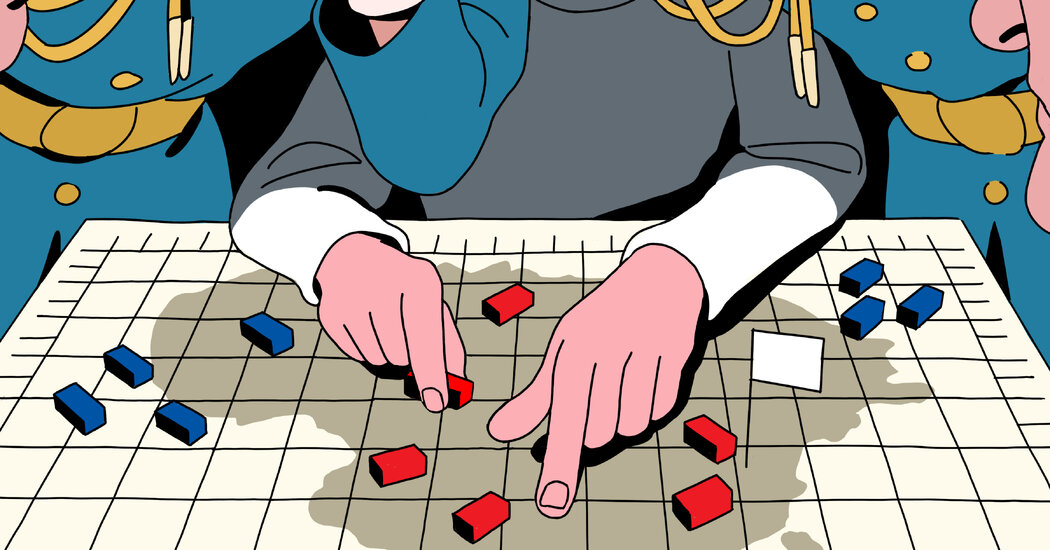
Imagine stepping into the shoes of the most powerful—and polarizing—leader on earth, Vladimir Putin, not in some Hollywood blockbuster, but in a tense war simulation organized by a German newspaper and their armed forces. That’s exactly what happened to me, a journalist from a former Eastern Bloc country, now an exile from Russia after his invasion of Ukraine. It was December, and I was playing Putin in a game designed to probe how ready Germany—and by extension, the West—was for a crisis sparked by Russian aggression and potential American withdrawal from NATO. As the game unfolded, I orchestrated a land grab in the Baltics, turning it into a diplomatic victory that rewrote Europe’s security map in Russia’s favor. But this was no glorious triumph; it left me with a chilling realization: the scenario was all too plausible, and the real-life stakes could be catastrophic. Sitting there in that room, pretending to be the man who upended my life, I couldn’t help but feel a mix of exhilaration and dread. The game’s outcome wasn’t just a simulation—it mirrored the geopolitical fractures I’m all too familiar with from years of covering Russian politics. It forced me to confront the isolation Putin lives in, surrounded by yes-men, and how that blind spot could lead to another disaster. My colleagues exiled like me whispered about it afterward, saying things like, “This could really happen,” and it hit home because we’ve seen Putin’s obsessions up close. He talks endlessly about NATO as an existential threat, a mantra that echoes from his earliest days in power. In the game, we exploited that mindset flawlessly, using deception and brinkmanship to neutralize the alliance. But reflecting on it now, it wasn’t just strategy; it was a personal reckoning. Playing Putin made me empathize with his warped world, where paranoia trumps reality, and ambition overrides caution. I thought of my friends back home, cowed by repression, unable to speak truth to power. If Putin could swallow such a blatant lie about Ukraine being the “real” war against NATO, what else might he convince himself of? The game made me worry not just for Europe, but for the global order, because if America falters, as it did in our exercise, the dominoes could fall fast. As someone who’s migrated west and built a new life, this simulation underscored the fragility of the peace I’ve come to rely on. It wasn’t victory I felt—it was a sobering wake-up call that another horrific conflict could be brewing, fueled by miscalculations and mistrust.
The setup of this war game was carefully crafted to mirror potential real-world flashpoints, pulling me deep into the role of a vengeful Russian leader licking his wounds after the Ukraine conflict. Set in October 2026, our team—me as Putin and my Russian “advisers”—assumed a Russia frustrated by a May ceasefire that fell short of maximalist goals, leaving the Kremlin hungry for retribution against Europe for aiding Kyiv. Under the pretext of a “security exercise,” we positioned 15,000 elite troops in Belarus and the exclave of Kaliningrad, separated by a thin 40-mile strip through Lithuania. This wasn’t just placement; it was a calculated gamble, exploiting a geographical quirk that’s been a sore point for decades. As I directed from a simulated Kremlin office, buzzing with adrenaline, I felt the weight of Putin’s legacy—his obsession with restoring Russian glory after perceived humiliations from the Soviet collapse. We seized that strip under the guise of a “humanitarian corridor” to Kaliningrad, claiming it was to deliver food amid imagined blockades. It was masterful misdirection, reminiscent of how Putin spins narratives to justify aggression. Drones scouted ahead, establishing control without a shot, while we miners remotely seeded the border with Poland to deter interventions. Then came the invasion: troops and tanks rolling in, with doctors and journalists tagging along to amplify any civilian casualties if NATO retaliated. Playing this out, I imagined the psychological toll on the real generals. There’s something intimate about strategizing invasion, feeling the pulse of decision-making that could unleash chaos. It evoked memories of my own escapes during the Ukraine exodus—a time of fear, when misinformation reigned and lives hung in the balance. In the game, our boldness paid off, highlighting Russia’s honed drone warfare tactics from the Ukraine grind. But it also showed vulnerabilities: Russia’s military, battered yet resurgent, produces more munitions now, but its leadership remains insular. As Putin, I leaned on that isolation, confident no one would challenge my delusions. The human element struck me—how personal grudges drive policy. Putin sees NATO as an encroaching monster; in the game, we embodied that paranoia, turning it into geopolitical leverage.
Executing the invasion wasn’t just about military muscle—it was a ballet of deception and diplomacy that highlighted the crumbling trans-Atlantic bond. As the Russian team, we invaded that Lithuanian strip with precision, knowing NATO’s fragility lay in American indifference. We publicized the “humanitarian” angle heavily, inviting in media to stoke outrage against any Western response. When NATO hesitated, we pivoted to talks with the White House, dangling the promise of withdrawal in exchange for concessions: scaling back NATO infrastructure and halting expansion—echoes of Putin’s 2022 ultimatums. It was brinkmanship at its finest, with nuclear threats implied. Playing Putin, I channeled his artful cadence, blending threats with flattery, targeting Washington’s nerves. The midterms loomed, and our simulated Trump administration opted for diplomacy, eager to avoid boots on the ground and claim credit for averting World War III. Without U.S. leadership, NATO allies like Germany demurred, refusing to deploy brigades or invoke collective defense. In that moment of the game, I felt a perverse thrill—the maneuver discredited Article 5, that sacred pact binding allies together. Isolation hit deep; if Europe couldn’t unite without America, was the alliance a facade? Reflecting personally, this mirrored real fractures I witnessed. During the Ukraine war, Trump’s rhetoric eroded trust, and in the Iran conflict mentioned in the briefing, his disengagement soared. As an immigrant, I cherish NATO’s promise of solidarity, yet the game exposed its brittleness. Drones, mines, invasions—it all felt eerily authentic, forcing me to confront how one man’s ego could unravel decades of security. Trump’s vanity, as portrayed, aligns with Putin’s view of the West as fickle; he might see an opening to divide and conquer. The human cost lingered: in the simulation, potential civilian deaths were weaponized, a tactic I’ve covered in reporting from conflict zones. It was unsettling, reminding me of Putin’s disinformation machine, where truths are buried under propaganda. Completing this phase, our “victory” felt hollow—a diplomatic coup born of Western paralysis, proving resolve might be NATO’s weakest link. Nonetheless, it underscored hope: if NATO played smarter, such tactics could be thwarted.
The game’s results were alarming, amplifying NATO’s vulnerabilities in a post-Ukraine world fractured further by the Iran war, which Russia exploited for advantage. Our Russian team’s success deactivated NATO effectively; without American buy-in, allies watched helplessly as alliances cracked. High-level U.S.-Russia talks ensued, nullifying Article 5 and elevating Russia’s European stature. In reality, this could embolden Putin, feeding his narrative of Western weakness. As someone who fled Russia’s repression, I pondered the cycle: invasion, diaspora, escalation. The simulation revealed intelligence gaps too—NATO spies might spot troop movements, but surprise still favors the aggressor if deception’s art is perfected. Putin’s perceptions matter immensely; he views NATO as aggressively expanding, justifying preemption. The game’s chilling outcome made me anxious for my adopted home, Germany, whose armed forces co-hosted it. While skeptical voices in NATO capitals dismiss such scenarios as improbable, the motives and means align disturbingly. Putin’s grievances, stewed over 25 years, fuel this drive, now intensified by Ukraine’s “success” in unifying the West against him. His military has adapted, fielding more drones and munitions, positioning Russia to outflank lightly defended flanks. Information isolation—pandemic-induced and war-amplified—deafens dissenting voices, leaving Putin unchallenged. Europe’s rearmament stutter, amid political controversy, opens a window for Russian advantage. Trump’s potential return looms large, his NATO skepticism a gift to Kremlin manipulators. Humanizing this, I imagined the toll: families on both sides displaced, economies shattered. My own story echoed—exile necessitated by Putin’s gamble rendered the game personal. It wasn’t just geopolitics; it exposed moral failings, where vanity trumps humanity. Warnings emerged starkly: without unity, another invasion looms, perhaps nuclear-tinged. Policymakers’ skepticism rings hollow against this backdrop; intelligence vigilance isn’t foolproof amid covert ops. Putin’s strength lies in narrative control, spinning aggressions as defenses. In the simulation’s aftermath, I debated with teammates—aging warheads, modern drones—pondering if deterrence could ever match ambition.
Diving deeper, reasons for a genuine Russian assault abound, rooted in Putin’s psyche and Russia’s evolving arsenal, making the game’s success a harbinger. Motive is clear: Putin perceives NATO as an existential foe, his rhetoric a constant drumbeat. Invading Ukraine amplified this, transforming a regional dispute into a global standoff. Now, Russia boasts a larger land force, churning out tanks and shells faster than pre-invasion levels. Drone proficiency, honed in brutal Ukraine battles, grants tactical edges over NATO adversaries. Putin’s echo chamber worsens isolation; repressed Kurds and elites stifle dissent, enabling reckless choices. His adversary calculus has shifted—Europe’s rearmament lags, unsure amidst costs and politics. Militarily inferior to NATO overall, Russia eyes windows of opportunity. Trump’s return could catalyze this, his alliance doubts enabling Putin to flatter and threaten simultaneously. In the game, this combo disarmed the West; in life, it could fracture cohesion. Humanizing, I recalled Putin’s gestures—denials of genocide in Ukraine, nuclear drills as saber-rattling. As an observer, this fear grips me: personal ambition overriding collective good. What stops Putin? Nothing rigid—his world is malleability. Incentives mount: retribution for Ukraine aid, territorial buffers. Europe’s hesitancy invites predation; without clear deterrents, aggression beckons. The Iran war’s fallout aids Russia, gifting strategic leverage. Putin’s belief in Western disunity, proven in 2022, persists. If he misreads again, calamity follows. Yet, critiques linger: surprise is elusive with vigilant INTEL. Still, conditions align for contemplation—motive, means, opportunity. For me, playing Putin illuminated moral voids, where power justifies peril. It urged urgency: fortify before isolation claiming another victim.
Fortunately, Europe can deter Russia effectively, even sans America, via pragmatic, resolute measures that the game itself revealed as game-changers. Simple fortifications—think World War I-style minefields along borders with Russia and Belarus—could stall invasions cheaply and swiftly. Pair these with a 21st-century “drone wall” on NATO’s eastern flank, a proposed barrier of surveillance tech to negate Russian aerial superiority. Most potent is unyielding resolve, mobilizing innate defenses without America. In our scenario, such steps would have inverted Russian gains, exposing vulnerabilities in their bold gambit. Time presses: Russia’s military resurgence and Europe’s arming teeter on precipice. As a voice shaped by exile, I advocate swift action—invest in tech, unify commands, reject appeasement. Putin’s calculus thrives on division; solidarity counters it. Historical parallels abound, from Cold War standoffs to current rifts. Humanly, this means sacrifices: funding rearmament, confronting political headwinds. Lives depend on it—mine, my family’s, countless others’. The game’s lesson: deterrence beats aggression. Without it, another invasion beckons. Europe must lead, America or not. Urgency defines the moment; delays invite disaster. Resolve isn’t optional—it’s existential.